
IN today’s digital age, smartphones, tablets and other electronic devices have become an integral part of children’s lives. From online learning and educational apps to social media and entertainment, screens are now a constant presence in daily routines. While technology offers many benefits, eye care professionals around the world are raising concerns about a growing vision problem among children – myopia, commonly known as short-sightedness.
Myopia is a condition in which distant objects appear blurry while nearby objects remain clear. It occurs when the eye grows too long from front to back or when the cornea is too curved, causing light rays to focus in front of the retina rather than directly on it. Traditionally, myopia was largely influenced by genetics but increasing evidence suggests that environmental factors including excessive screen use and reduced outdoor activity are playing a significant role in its rapid rise.
Globally, myopia has become one of the most common eye conditions affecting children and young adults. Health experts warn that if current trends continue, nearly half of the world’s population could be myopic by 2050. Although glasses and contact lenses can correct blurred vision, high levels of myopia increase the risk of serious eye diseases later in life, including retinal detachment, glaucoma, cataracts and myopic macular degeneration.
One of the major lifestyle changes linked to the increase in myopia is the amount of time children spend focusing on near objects. Smartphones, tablets, computers, and even prolonged reading require the eyes to maintain constant close focus. This extended near work may contribute to changes in eye growth, particularly during childhood when the eyes are still developing.
The COVID-19 pandemic further accelerated this trend. During lockdowns and school closures, many children spent hours each day attending online classes, completing homework on computers, and using digital devices for recreation. Studies conducted in several countries reported increased rates of myopia progression among school-aged children during this period. While digital learning was necessary, it also highlighted the importance of balancing screen time with healthy visual habits.
However, smartphones alone are not entirely to blame. Researchers have identified another important factor: reduced time spent outdoors. Numerous studies have shown that children who spend more time outdoors are less likely to develop myopia. Natural daylight appears to play a protective role in healthy eye development. Outdoor activities encourage children to focus on distant objects and expose them to brighter light levels than those found indoors.
In many communities, children today spend less time playing outside than previous generations. Academic pressures, safety concerns, urban lifestyles, and the attraction of digital entertainment have all contributed to this shift. As a result, opportunities for natural visual development may be reduced.
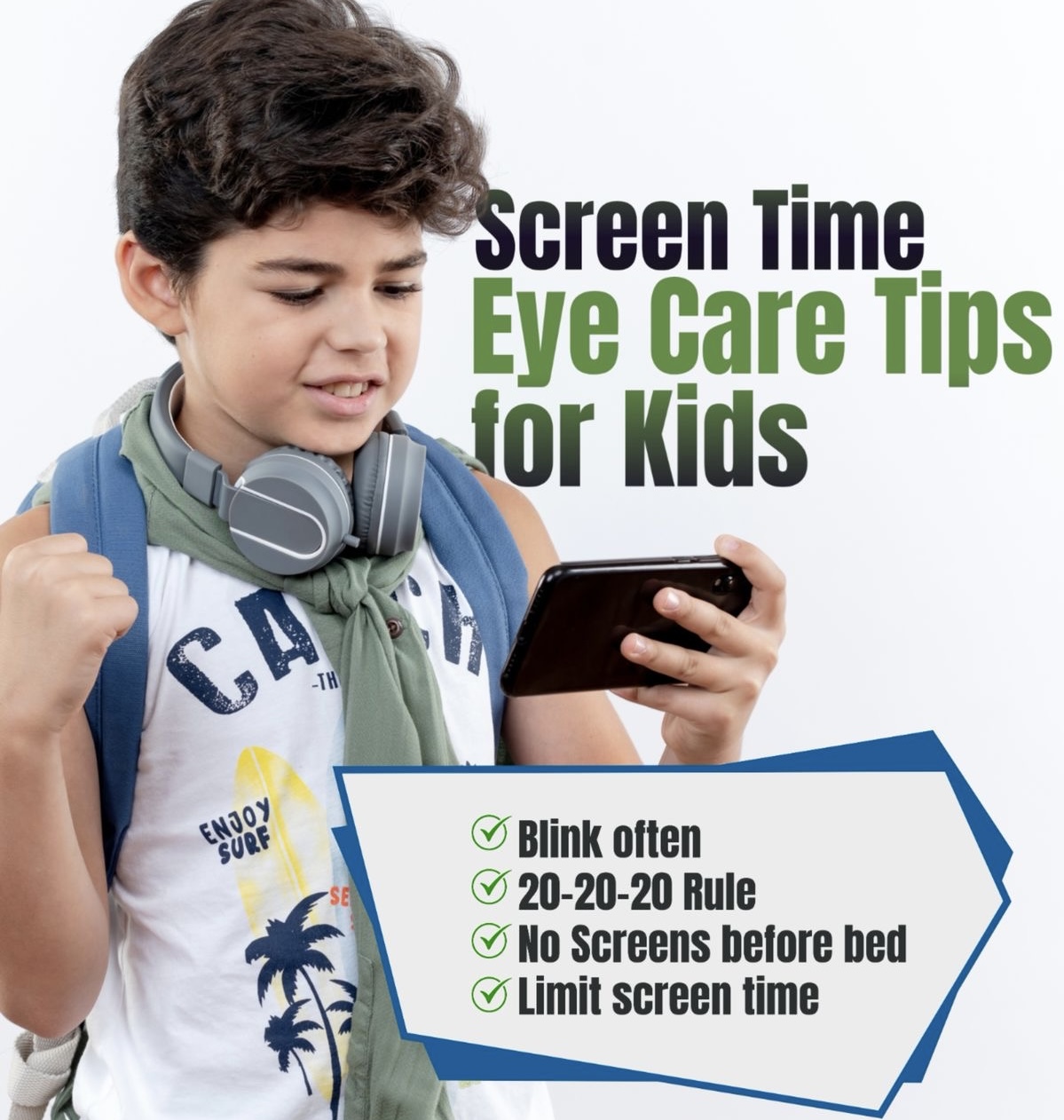
Parents often ask how much screen time is too much. While there is no single answer, eye health professionals generally recommend regular breaks during prolonged near work. One simple guideline is the “20-20-20 rule”: every 20 minutes, look at something at least 20 feet away for 20 seconds. This helps relax the focusing muscles of the eyes and reduces digital eye strain.
It is also important to encourage children to hold devices at a comfortable distance rather than very close to their faces. Good posture, adequate lighting, and limiting recreational screen use before bedtime can further support eye health. Parents should monitor not only the quantity of screen time but also the quality of activities children engage in while using devices.
Regular eye examinations remain one of the most effective ways to detect vision problems early. Children may not always realise that their vision is changing, and they may not complain of symptoms. Signs of myopia can include squinting, sitting very close to screens, holding books near the face, frequent headaches, or difficulty seeing the classroom board. Early diagnosis allows appropriate management and monitoring.
Modern eye care has also introduced new approaches to slow myopia progression in some children. Depending on individual circumstances, eye care professionals may recommend specialised spectacle lenses, contact lenses, or other treatment options designed to reduce the rate at which myopia worsens. These interventions are becoming increasingly important as myopia rates continue to rise globally.
For countries across the Pacific, including Fiji, awareness of childhood eye health is essential. Access to digital technology is expanding rapidly, bringing educational and social opportunities for young people. At the same time, families, schools, and healthcare providers must work together to ensure that children develop healthy visual habits. Encouraging outdoor play, promoting balanced screen use, and supporting regular eye examinations can help protect children’s eyesight for the future.
Technology is here to stay and smartphones will remain part of modern childhood. The goal is not to eliminate digital devices but to use them wisely. By understanding the relationship between screen use, outdoor activity, and eye development, parents and communities can take practical steps to reduce the risk of myopia and help children enjoy a lifetime of healthy vision.
As we continue to embrace the benefits of technology, safeguarding children’s eye health must remain a priority. The choices made today regarding screen habits and outdoor activities may have a lasting impact on the vision and well-being of the next generation.

