
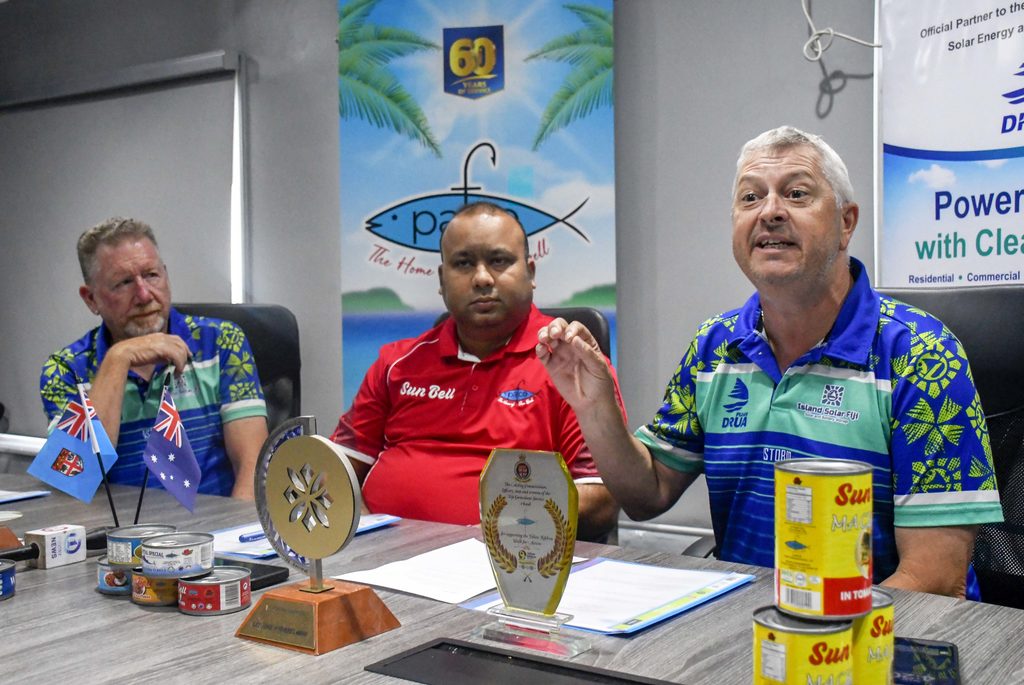
Levuka-based Pacific Fishing Company (PAFCO) and Australian-owned renewable energy company Island Solar Fiji (Pte) Ltd have officially signed a memorandum of understanding (MoU) – a strategic alliance that forms a private-public partnership with Energy Fiji Limited (EFL) to transition Ovalau Island away from fossil fuel reliance and toward 100 per cent renewable energy.
The agreement that was finalised at PAFCO’s Suva office last week is the culmination of eight months of intensive planning between the two entities.
As the primary economic lifeblood and largest employer in Levuka, PAFCO’s operational stability is directly linked to the socio-economic survival of the wider Ovalau community.
PAFCO chief executive officer Saiyad Raiyum said the decision to transition towards green energy was a proactive measure designed to insulate the business from external shocks while protecting local jobs.
“PAFCO is taking a lead in committing to renewable energy and ensuring that, just like we have been part of the Levuka and Ovalau team and the family for generations, we are ensuring and securing the future for the generations to come,” Mr Raiyum stated during the signing ceremony.
Island Solar Fiji directors Eddy May and Rob Manson highlighted the partnership as a profound testament to bilateral cooperation.
“For Rob and I, this is a real opportunity to prove the partnership between Australia and Fiji in being able to deliver this project,” Mr May said.
He said the project demonstrated how private enterprise could work collaboratively with EFL to transition to 100 per cent renewable energy.
Energy security
At present, Ovalau Island relies completely on industrial diesel generators for its daily power supply. This dependence exposes the island’s community, businesses, and public services to volatile global oil markets and fuel delivery vulnerabilities. The operational stakes are uniquely high for PAFCO, whose massive tuna canning and cold-storage operations require a continuous supply of electricity.
“We utilise around 90 per cent of the electricity that is generated right on the island easily,” Mr Raiyum revealed, highlighting the massive footprint the factory holds over the local grid.
To de-risk the island’s economic backbone, Island Solar is deploying a sophisticated technology mix engineered for heavy industrial demands.
The Fiji Times has established that the infrastructure will feature a combination of rooftop solar photovoltaic (PV) arrays distributed across seven factory rooftops, ground-mounted solar arrays, utility-scale battery energy storage systems, and intelligent smart controllers.
Rather than executing an abrupt switch from the grid, the transition will occur through a phased integration. In the initial phase, the solar installation will absorb 18 to 20 per cent of PAFCO’s total energy load, allowing engineers to test and stabilise the system.
“There will not be a day when a big switch gets turned and we go from 100% diesel to 100% renewables,” Mr May explained.
“It’ll blend and the diesel will slowly turn off. The renewables will stay on with the diesel there being as a backup.”
To eliminate any risk of downtime or fish stock spoilage, the factory’s existing on-site diesel generators and EFL’s regional backup systems will remain fully operational alongside the new battery banks, ensuring maximum uptime.
Economic and environmental impact
The financial architecture behind this energy transition represents a major departure from conventional, capital-intensive corporate infrastructure rollouts.
Industrial solar projects of this scale typically demand millions of dollars in upfront capital—a reality that stalled PAFCO’s previous green initiatives.
“Four and a half years back, we had approaches from other organisations that were selling solar,” Mr Raiyum told this newspaper.
“Unfortunately, it was not a partnership like what it is with them (Island Solar).
“It was not fully funded. We would have had to invest at that point $7million roughly just to get the panels up on our roof and get 20 per cent to 40 per cent of the energy supplies done.”
To overcome this bottleneck, the project is structured as a fully funded, zero-CAPEX Power Purchase Agreement (PPA) spanning 20 years. Island Solar and its financial partners assume 100 per cent of the financial risk by funding, constructing, owning, and maintaining the infrastructure.
In return, PAFCO simply purchases the generated clean electricity as an operational expense at a fixed tariff rate. According to Island Solar, this locked-in rate is projected to be roughly one-third of the current cost required to generate equivalent energy using diesel fuel.
EFL currently operates the diesel-powered grid on Ovalau at a heavy loss due to skyrocketing fuel costs, yet sells that power to industrial clients at subsidized rates.
“The cost of producing electricity on Ovalau is probably above $1 a kilowatt hour for EFL in the current energy crisis, with diesel having doubled,” Mr Manson said.
“But they’re selling that at a great loss to PAFCO. So by PAFCO being able to offset EFL consumption with their own consumption, they’re saving EFL a great deal of money, which will impact their bottom line in a positive way and, therefore, be a benefit to the wider community in all of Fiji.”
Additionally, the 20-year agreement creates local employment, committing to a 50-50 operational split between its core engineering team and locally trained Ovalau residents.
Social justice and the global market
While the localised benefits focus on operational savings and grid relief, the long-term vision prepares PAFCO to navigate a rapidly changing global marketplace.
Modern international seafood consumers—particularly those within high-value European, American, and Australian markets—increasingly demand transparency regarding product supply chains.
Consumers and global buyers want verified data detailing how a product moved sustainably from ocean to table.
While a carbon-neutral processing environment is not yet a legal mandate in purchasing contracts, the corporate auditing landscape is shifting quickly.
“It is slowly getting ingrained, and soon we expect in the next three to five years, that will become potentially a large part of some major buyers wanting this as a prerequisite before they start dealing, just like what they do with the MSC and other matters,” Mr Raiyum said.
He said shifting to renewable energy would also ensure domestic brands like Sunbell Red retained premium global market access. To safeguard this supply chain against intensifying climate change, the structural components are intentionally over-engineered.
Coastal industrial facilities in Fiji face severe seasonal threats from tropical cyclones, making structural resilience non-negotiable.
Mr May said their mounting systems were specifically designed to withstand Category 5 cyclone winds of up to 260 kilometres per hour.
“What we deliver when we deliver a 20-year agreement with solar isn’t necessarily just solar panels and batteries and an inverter. We’re delivering peace of mind,” he said. By aligning PAFCO’s transition directly with EFL’s parallel regional solar rollouts—which include plans for 4 megawatts of solar and 6 megawatt-hours of battery storage—the project ensures commercial advancement does not come at the expense of the public grid.
For Mr Raiyum, this unified approach represents true corporate citizenship.
“The idea is social justice also has to prevail,” the CEO said. “My staff should not come to work under electrical LED lights and go home and have to light a candle. That’s the bottom line. So the timing was right.”
Through this holistic framework, Levuka is poised to lead Fiji’s green industrial revolution, proving that commercial profitability, environmental sustainability, and social justice can successfully advance together.
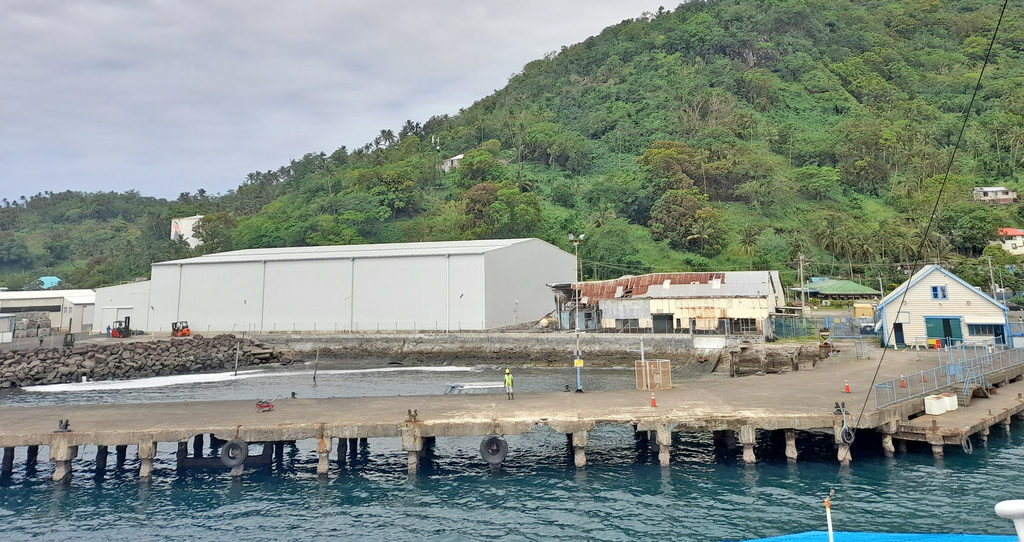
The Pacific Fishing Company Limited (PAFCO) factory in Levuka. Picture: FILE/ SOPHIE RALULU

