
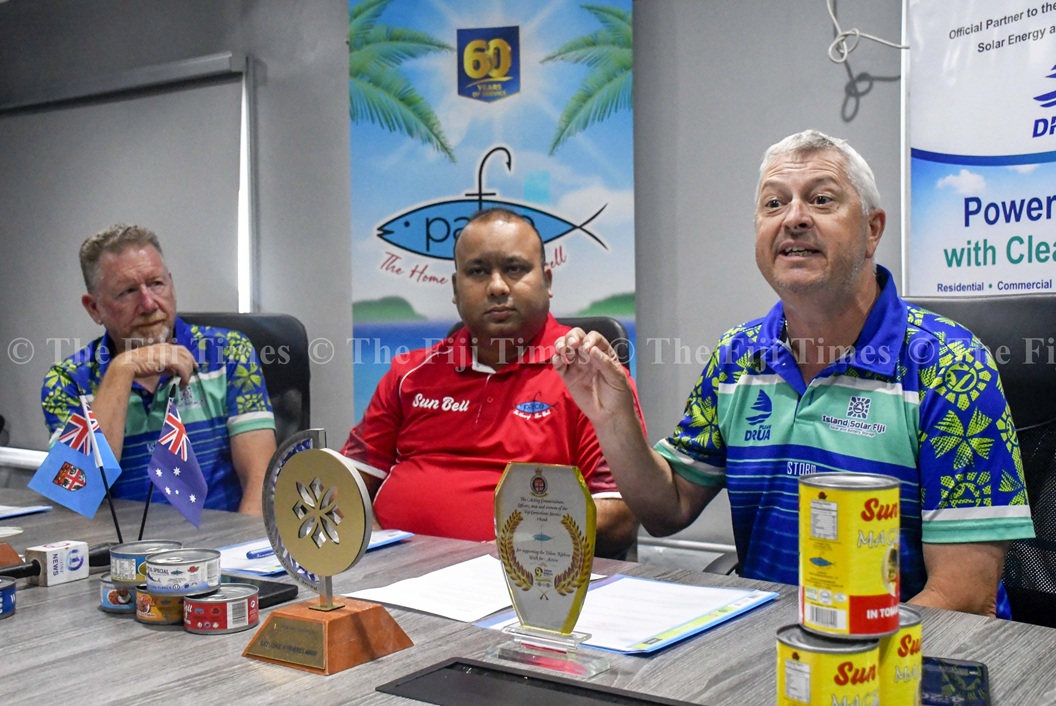
The Pacific Fishing Company (PAFCO) is positioning its seafood products to capture high-value global markets following its move to fully transition to renewable energy through a partnership with Island Solar Fiji (Pte) Ltd.
While international buyers do not currently mandate carbon-neutral supply chains, PAFCO management expects sustainable production to become a strict prerequisite for major global tuna brands within the next three to five years.
The shift also mirrors the industry’s widespread adoption of Marine Stewardship Council (MSC) certifications.
PAFCO chief executive officer Saiyad Raiyum said that green credentials were brand differentiators that significantly enhanced marketing, sales, and rigorous chain-of-custody audits.
In an interview with this newspaper, he said modern global consumers, particularly in premium European and Australian segments, now opted for strict transparency from sea to table.
“The consumers around the globe nowadays, especially in the European markets, etcetera, they want to know how you caught the fish from the sea to the table. So like the farm-to-fork approach kind of thing,” Mr Raiyum said.
“And these things really augur well not only for us but in terms of marketing and sales as well.”
He said at this stage, there was not any specific clause in any contract or specific requirement for carbon neutral supply chains.
“However, these do provide a lot of positivity around the company, as well as getting any audits and other things organised, chain-of-custody requirements.
“So these are slowly getting ingrained.
“It is slowly getting ingrained, and soon we expect in the next three to five years, that will become potentially a large part of some major buyers wanting this as a prerequisite before they start dealing, just like what they do with the MSC and other matters.”
Asked whether PAFCO was targeting certain high-value markets that demanded certain ‘green’ accredited products, the CEO said: “Of course. I mean, irrespective of whether we sell Sunbell Red or even if you take it to Australia where the requirements are very much aligned with what the requirements usually are in the US or some parts of Europe as well, the consumer wants to know more and more about what is inside the can, how sustainably it has been caught, and how sustainably and efficiently, and also how much more greener environment it has been produced in. So it will definitely help.”
Meanwhile, Island Solar representative Eddy May said the primary value of the project extended beyond direct utility savings.
He said reliable solar power created a powerful marketing narrative that would allow PAFCO to target lucrative, sustainability-focused niche markets.
This market strategy follows a landmark memorandum of understanding (MoU) signed by both entities in Suva a few days ago.
The agreement outlines a phased transition to 100% renewable energy for PAFCO’s Levuka processing plant via a 20-year Power Purchase Agreement (PPA) fully financed by Island Solar Fiji.

