
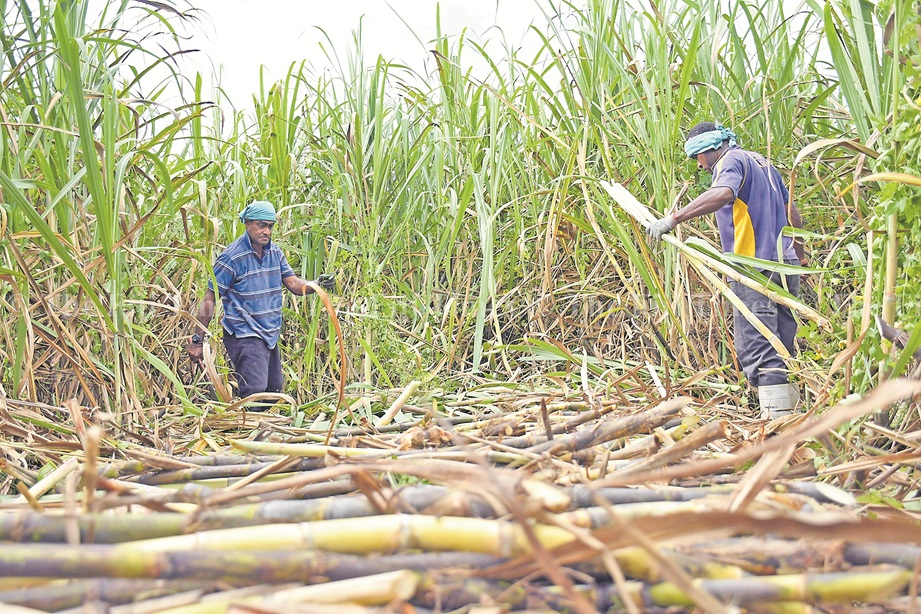
Western Division sugarcane farmers have labelled the Government’s guaranteed cane price of $85 per tonne for the 2026 crop season as unrealistic.
While growers agreed with the government’s recent statement acknowledging that the Sugar Industry Tribunal’s Master Award forecast price of $57.40 per tonne fails to cover basic expenses, they insist the current guaranteed baseline is not enough to cover the rising fuel, harvesting, and transportation costs.
Drasa sector farmer Mahendra Prasad, who dedicates 14 of his 18-acre farm to sugarcane, said he expects to harvest 149 tonnes of cane this season.
“This $85 is still not enough, the cost of living and fuel will go up, the harvesting cost will go up, we would probably need $100,” he said.
“We also request for fuel subsidy, if there is no fuel subsidy, it will be very hard for us.”
Mr Prasad highlighted a widening generational gap and severe cash-flow disparities that are driving people away from the land.
“The cane farmers are getting their cane paid in two years. Whereas FSC is paying their workers in a fortnight, the government is paying a fortnight, but the cane farmers are getting it in two years. How can we manage when they give it in instalments?
The frustration has led many growers to reconsider their future with the Fiji Sugar Corporation (FSC).
“Most of the farmers are saying they won’t sign the MOGA (memorandum of gang agreement). If we sign it, we are bonded in the agreement.
“So slowly, they want to give up sugarcane farming. We want to turn now to vegetables and other crops.”
In Lomawai, Sigatoka, sugarcane farmer Krishna Murti Gounder, who manages three farms, said the $85 per tonne offered no real relief to struggling families.
“The guarantee price is from the FijiFirst government. So, what is the use of this $85,” he said.
“The government has promised to give $100, but has given about $80, when are they going to pay our $20, that’s another long wait.”
Mr Gounder said manual harvesting costs reach $35, and lorry transport adds another $35.
“Our cost is about $70 to $80, manual harvesting $35, lorry $35, you include all that one, and the machine harvesting is $18, $19.
“The diesel price can’t match our system. We want to cut that cane, but the price should match with our harvesting cost.
“In the future, the industry could close. We must change management and look for a good market for sugar. We want to do cane farming and harvesting, but the price is not matching with us.”
Mr Gounder questioned the viability of continuing to invest labour in fields that yield no financial return.
“If we harvest this year, we are not getting any benefit. We are just supplying the sugar because that is our business.
“Farmers are hungry to harvest the cane. They don’t want to leave the cane field, but they need to match the payment to the forecast price, and it should be $90 plus.
“Everybody knows what the problem is, but nobody is listening to the farmers. I’m preparing my machine, so everything should be ready. When the price is agreed, we’ll start harvesting, but how can we harvest the cane when the cost is high and the income is low.”
In Rarawai, Ba, ten-acre sugarcane farm owner Jasveer Lal confirmed that growers are mobilising to formalise their grievances and present a united front to the State before the 2026 harvest begins.
“We are not happy with that amount, so we farmers are gathered here, we are going to make submissions to the government about that amount, and we will let the government look into that price so that we are ready to negotiate, then we will be ready for harvesting in 2026,” he said.
“That $85 given by the government is nothing new. It was also given in 2016, so we farmers are proposing $110.”

