
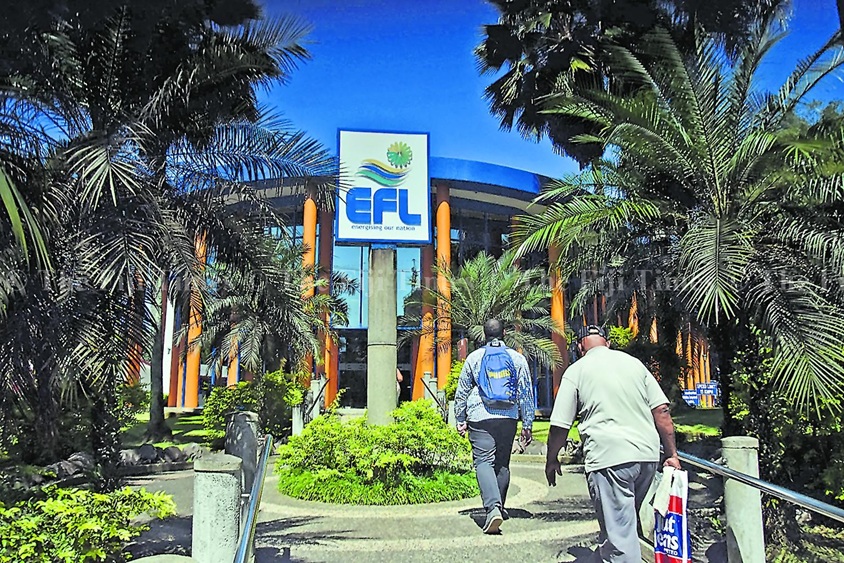
As the country continues to face rising global fuel costs, the Consumer Council of Fiji is calling for a rigorous and independent scrutiny regarding Energy Fiji Limited’s (EFL) proposal to implement a fuel surcharge of approximately $0.11 per kWh.
While the council recognises the impact of rising global fuel prices, it has expressed conditional opposition to the surcharge in its submission to the Fijian Competition and Consumer Commission (FCCC).
Council chief executive officer Seema Shandil said an $0.11 cents increase on the current tariff of $0.34 cents per kWh represented a significant rise, which would drive up electricity costs for both households and businesses.
She said a family using 300kWh a month could face an additional $33 on their bill.
However, she added that before any surcharge was considered, EFL must provide more information for consumers because several critical areas still lacked sufficient disclosure.
She said the Government had announced fuel subsidies of $0.20 cents a litre on diesel and $0.12 cents a litre on heavy fuel oil.
“EFL must, therefore, present a detailed reconciliation demonstrating how these public funds have been accounted for in its reported $12.26 million fuel cost variance,” Ms Shandil said in a statement. She said they had outlined essential conditions to protect consumer interests.
“First, the Council demands full transparency from EFL to justify the necessity of these charges. Secondly, any surcharge must be strictly temporary, with a mandatory rollback once global fuel prices stabilise. And third, robust safeguards must be implemented to ensure that businesses reverse any direct or indirect price hikes linked to energy costs, once the surcharge is lifted.
“Consumers must not be made to carry an unchecked or poorly explained cost burden.
“If the FCCC finds an adjustment is necessary to prevent a national energy crisis, it must be reasonable, targeted, and accompanied by the strongest possible consumer protections.”
Ms Shandil said a temporary shock to become a permanent burden on Fijian households could not be allowed.
She said they would continue to advocate for the rights of all consumers during this consultation process.

