Visa free arrivals and unchecked expansion threaten Fiji’s sovereignty and survival. Behind the promise of billions lies a fragile nation burdened by future leakage, crime, and cultural erosion. Rabuka and Gavoka’s tourism crusade ignore the costs that may be borne by ordinary Fijians in future, for this crusade on their part.
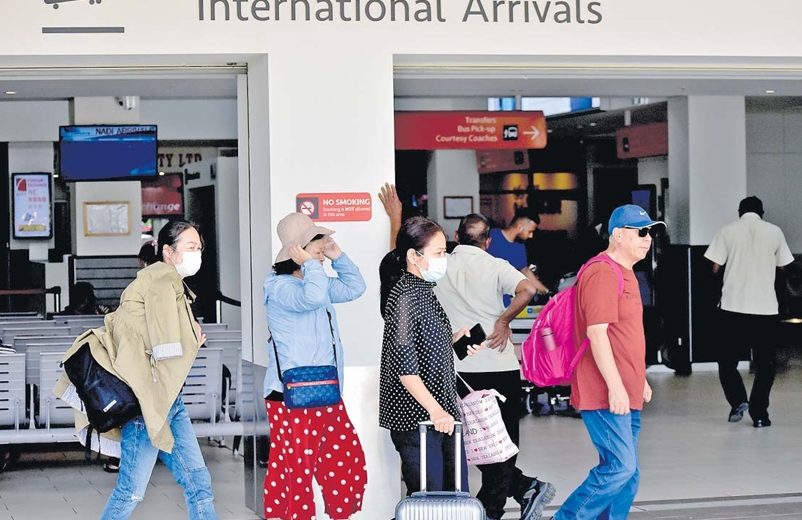
Fiji’s leaders are chasing raw arrival numbers with a zeal that borders on fanaticism. Deputy Prime Minister Viliame Gavoka, who also holds the Civil Aviation and Tourism portfolios, has become the chief evangelist of this crusade. He fought openly for the 5 per cent levy to bail out Fiji Airways, defended unchecked spending on six luxury four wheel drives, and dismissed calls for due diligence. Today, Fiji Airways sits on more than a billion dollars in government guarantees, yet Gavoka insists the airline can spend “as they please” — even though this money will be siphoned directly from the tourism sector. This is not leadership. It is surrender. And it comes at a time when Fiji’s fragile environment and small population of 930,000 are being asked to absorb the full weight of visa free tourism, a policy that invites not only visitors but criminals, drug traffickers, fraudsters, and untreated mental health cases.
Vietnam’s harsh lesson
Vietnam welcomed 22.8 million visitors last year, but the influx has brought chaos. Foreigners accused of gun violence, drunken driving, drug use, and fraud have overwhelmed detention centres (NYT 28/08/26). The case of Shaymus Lilly, an Australian who rampaged through a café in Da Nang while suffering a bipolar episode, illustrates the risks of visa free entry. Vietnam’s Ministry of Public Security admitted bluntly that “foreign nationals’ exploitation of relaxed visa policies… has become increasingly complex.” If Vietnam, with its far larger population and stronger state apparatus, is struggling to contain imported disorder, what chance does Fiji have? The answer is obvious: none at all. Fiji’s leaders should be studying Vietnam’s experience carefully, but instead they are blinded by the promise of VAT earnings and raw arrival statistics.
Paradise lost elsewhere
The cautionary tales are everywhere. Bali, once pristine, is now polluted and overbuilt, its culture commodified into nightly performances for tourists. Hawaii has seen locals priced out of their own land, sacred sites commercialized, and health systems strained by tourist influx. Venice has become a caricature of itself, cruise ships clogging canals while residents flee. In Spain, cities like Barcelona now openly resent tourists, graffiti declaring “Tourists go home.” These destinations prove a simple truth: mass tourism is not a gift; it is a burden. Fiji risks becoming the next cautionary tale, a paradise transformed into a playground for outsiders while its own people are left with the costs.
Chasing billions, ignoring costs
Prime Minister Sitiveni Rabuka has now joined Gavoka in the chorus, promising that tourism earnings will reach $4 billion by 2027 and visitor arrivals will climb to 1.25 million. He speaks of hotel construction, jobs for young people, and opportunities for farmers and tradespeople, but nowhere in his speech is there mention of the 70 per cent leakage of profits overseas, the collapsing water and sewage systems, or the cultural degradation already underway. Rabuka’s optimism mirrors Gavoka’s blinkered crusade: both men see only VAT receipts and raw arrival figures, not the lived reality of ordinary Fijians. The promise of billions is seductive, but it is built on sand.
Global backlash rising
Across the world, communities once celebrated for their hospitality are now openly resisting the weight of mass tourism. In Venice, residents have staged protests against cruise ships that clog canals and overwhelm fragile infrastructure, turning the city into a theme park where locals are priced out. Barcelona has seen rents skyrocket as apartments are converted into short term tourist lets, sparking anger among families who can no longer afford to live in their own neighbourhoods. In Hawaii, indigenous communities have fought bitterly against the commercialisation of sacred lands, arguing that tourism has stripped cultural sites of meaning while leaving locals homeless and marginalised. Bali, meanwhile, faces a water crisis as resorts drain aquifers to fill infinity pools, leaving villages without reliable supplies. These examples show that resentment is not a fringe reaction but a global backlash, a warning Fiji ignores at its peril.
Two worlds emerging
Tourism has already created two parallel realities in Fiji. On one side are hyper insulated luxury enclaves where foreigners enjoy manicured beaches, endless amenities, and nightly cultural performances. On the other side are everyday Fijian families, facing escalating living costs, failing water supplies, clogged roads, and restricted access to their own natural heritage. Resort developments increasingly privatise qoliqoli, customary fishing grounds, excluding locals from resources their ancestors preserved for centuries. The hospitality industry did not build Fiji’s pristine environment; it merely monetises it. And while tourists pay thousands of dollars per night, Fijian workers earn five dollars an hour, barely enough to survive. The ‘Bula spirit’ is delivered by hardworking Fijians, yet hoteliers extract immense surplus value from their labour while offering stagnant wages.
Imported crime and disorder
Visa free entry means no vetting of criminal records, health status, or deportation histories. Fiji risks importing organised crime, drug syndicates, and fraud networks. Vietnam recently detained 83 Chinese nationals for transnational fraud. In Bali, drug trafficking has become endemic. In Hawaii, methamphetamine use surged alongside tourism expansion. Fiji’s justice system is even less equipped than Vietnam’s to handle mass foreign offenders. The risk is not hypothetical; it is imminent. The government’s open door policy is effectively an invitation to bad actors who see Fiji not as a paradise but as a soft target.
Health system under siege
Visa free tourism also imports health crises. Tourists arrive without medical screening, bringing infectious diseases, untreated psychiatric conditions, and substance abuse problems. Lilly’s case in Vietnam shows how untreated mental illness can spill into violence. Fiji’s fragile health system cannot absorb these shocks. Hospitals already struggle with limited resources, and the influx of visitors with complex health needs will only deepen the strain. Yet Gavoka and Rabuka ignore the national health consequences of their tourism crusade. They see only headline earnings, not the pressure on clinics, doctors, and communities.
Environmental reckoning
Unchecked resort expansion leads directly to sewage effluent leakage, reef bleaching, mangrove destruction, and groundwater depletion. Fiji’s reefs are already under stress from weather and climate natural variability; mass tourism accelerates the damage. Protecting pristine ecosystems is not a secondary marketing strategy; it is the foundation of Fiji’s national survival. Villages near resort corridors already suffer water cuts and blackouts while luxury enclaves run backup generators. The imbalance is stark, and the consequences irreversible if left unchecked.
The economic illusion
Tourism is touted as Fiji’s lifeline, but 60 to 70 cents of every tourist dollar leaks overseas through imported food, building materials, and offshore booking commissions. Remittances already surpass tourism in economic importance. Chasing volume under high leakage is macroeconomic folly. The government’s obsession with headline earnings blinds it to the reality: Fiji is mortgaging its culture and environment for a false promise of prosperity. FHTA CEO’s rhetoric about tourism as a heavily taxed sector collapses under scrutiny. Value Added Tax is paid by consumers, not hoteliers. The 5 per cent tourism levy is ring fenced to subsidise Fiji Airways, not to repair roads or water mains. Ordinary Fijians pay VAT on groceries without receiving tax holidays or infrastructure carve outs. The truth is stark: tourism is not paying its way. It is draining the nation.
Sovereignty or surrender
Fiji stands at a crossroads. Gavoka and Rabuka are selling the nation into chaos. The 5 per cent levy siphoned to Fiji Airways, the billion in guarantees, the visa free entry importing crime, drugs, and sickness, the cultural rituals degraded into nightly entertainment, and the 70 per cent leakage of profits overseas all point to a model that is fundamentally broken. The choice is stark. Fiji can protect its people, culture, and environment, or surrender sovereignty to the false promise of mass tourism. Fiji does not need to import chaos to survive. Visa free tourism is not a gift; it is a Trojan horse.