
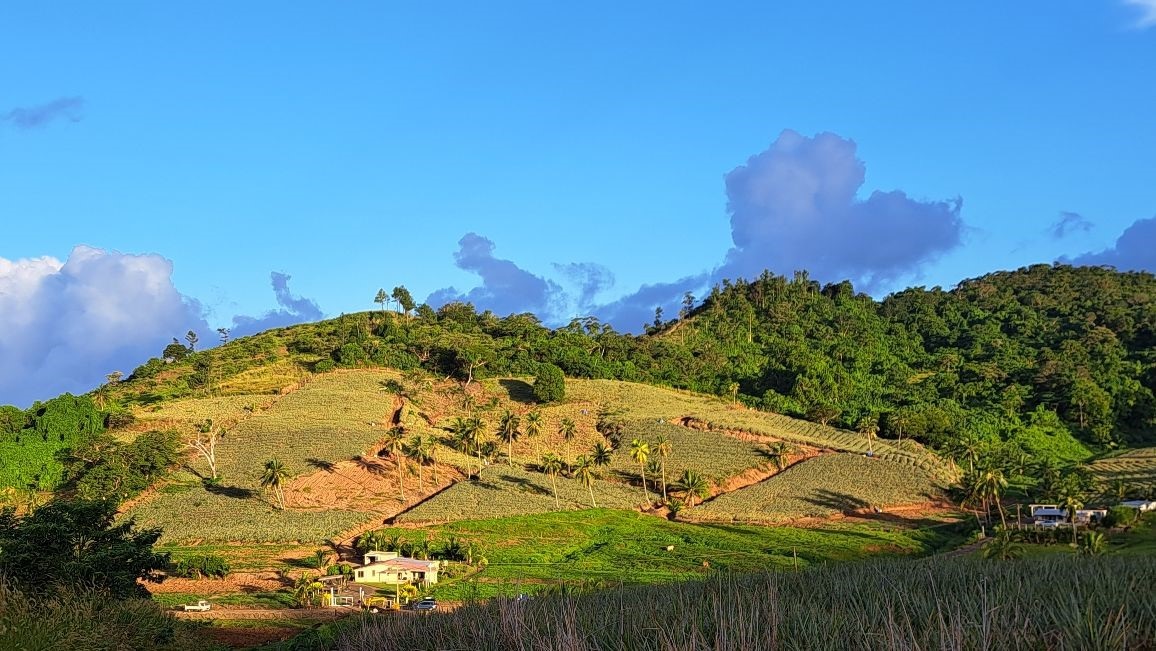
A few minutes away from the Natovi Jetty in Tailevu, among green hills, field of crops and the salty breeze of the ocean- a few families thrive in their venture as pineapple farmers.
One of these households belongs to Balbir Singh who has been farming for more than 30 years.
As a second generation farmer born and raised in Vulagi settlement in Tailevu, he credits his success to his father’s legacy.
Balbir said they specialise in commercial pineapple farming cash crops and vegetables.
He shared fond memories of farming with his father who played a major role in the success of his business.
“My father used to tell us to wake up early in the morning,” he said.
“Then we would go milk the cows and separate it for daily consumption and ghee for our family.”
His dad was a hard worker and instilled in his children the value of dedication and perseverance.
There was no space for being idle. In the weekends, the family would sweat it out in the field at about half six or seven in the morning before returning home at 10.
They would then spend time at home till 2pm before retuning to the field until 6 in the evening.
Balbir said as tough as they may sound, these were some of his most treasured memories.
“We started small scale farming back in 1987,” he said.
“My father was a very hardworking person, he taught me how to plant and farm. We own about 80 acres of land which was bought by him.”
The former Queen Victoria School student said pineapple has remained their main produce.
“We chose this crop (pineapple) because it doesn’t depend entirely on the weather.”
“Whether it is dry or wet… pineapples will still grow. On the hillside where you may not be able to grow vegetables or other root crops, pineapples will.”
Balbir’s farm produces pineapple every week, even during off season.
During off season, hormones are added to fertilise his crop and during pineapple season, at around November and December, they bear fruits on their own.
“So, if you’re consuming pineapples at the moment , its produced by the chemicals on the field.”
Balbir said they usually sold their produce on the roadside and also at the Suva and Nausori municipal markets.
Despite the back-breaking challenges of farming, Balbir believes there is money and success in tilling the land.
“You can earn a lot… you just have to work hard!
“God has given us two things, a mind and stomach. We use the mind for praying and stomach for eating and if you don’t eat you can’t work.
“Food is very important for survival and farmers help put food on the table for us.”
Balbir said one of the advantages of taking up farming was that it allowed flexibility.
“Being a farmer means you are your own boss, and the duration of your work depends on you, compared to an office job,” he said.
“Farming is not easy either but if you are dedicated and have the willpower…. you can do it.
“You might have cracked hands and feet from tilling the soil and people might look down on what you do but you can make a good living.”
Adverse changes in weather patterns and the effects of pests and diseases can affect any crop, including pineapples. Balbir shared some of the ways in which he protects his crop.
“We are also feeling the effects of climate change… but some of the ways to curb these include going back to the basics of farming and cultivation.
“We use a small greenhouse, learning how to fertilise and what time to do planting because there is very little irrigation in Fiji. If the irrigation is there, we can do more farming.”
He said planting cash crops as a second source of income helps as well.
During peak season when there is an oversupply of pineapples, Balbir reduces his price in order to make more sales.
He acknowledges the agriculture ministry’s assistance through the provision of information but hopes there could be more one-on-one interaction and trainings for farmers to boost production.
“Considering the fact that farming is our main source of income, they (ministry) can collect and record data and provide professional analysis which could help us (farmers).
Balbir said establishing a farmers network allowed them to share knowledge for enhancing their yield.
With the availability of farming information online, Balbir engages in self-research.
“With the help of technology, I can educate myself on farming tips and much more,” he said.
Balbir also uses social media to interact with his buyers.
The father of two encourages families to explore farming as a source of livelihood and a means of taking families out of poverty.
He said, some children were blessed with skills which they could put to good use by contributing to the family farm.
“Some are meant to work in an office, while some can do great with outdoor tasks. Don’t compare them to others.”
“Teach your family members and children about farming, it may open greater doors of opportunities,” he said.
So where to now for Balbir?
The Tailevu farmer is exploring fruit juice extraction with the hopes of bolstering the battle against non-communicable diseases (NCD’s).
“I came up with this idea when I noticed how my mother would use the smaller pineapples for jams and pies.
“So, I thought, why don’t we make fresh juice out of this.”
He hopes to kick-start his juice extraction project in the near future, once all the necessary equipment and requirements are procured and sorted out.

