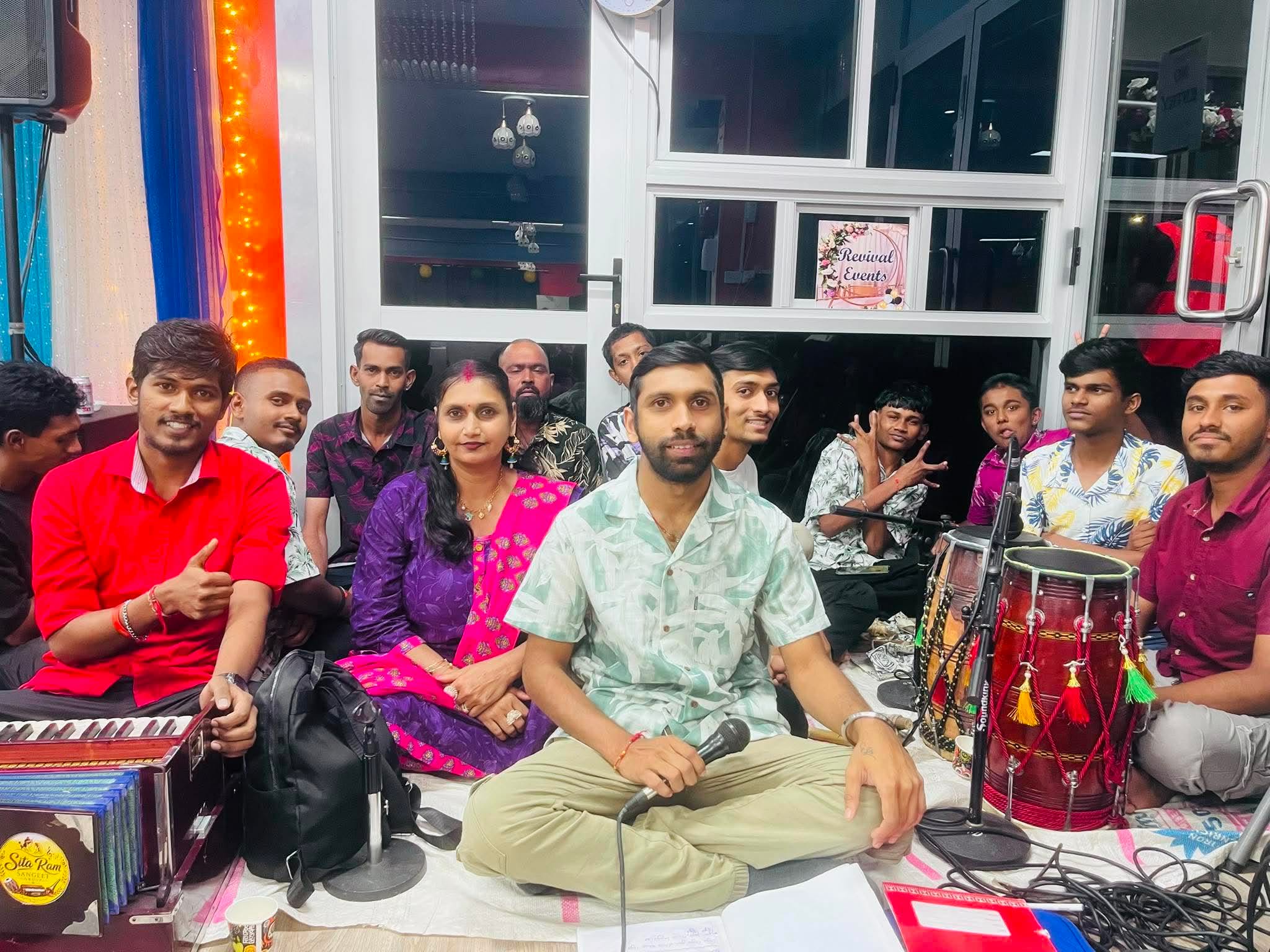
LONG before he began performing Lokgeet and Sohar (folk music) himself, Sonal Govind remembers hearing the music of his elders at family gatherings.
The songs would fill homes and community celebrations, carried by familiar voices and shared across generations. For Sonal, those early sounds became more than memories — they were his first introduction to a musical tradition deeply rooted in the lives, stories and customs of Fiji’s Indo-Fijian community.
Now, at 29, the Nasinu resident is part of a growing generation of Fijians determined to keep the songs of their ancestors alive — songs heard during weddings, births and community celebrations.
Lokgeet and Sohar have long been woven into the cultural fabric of Fiji’s Indo-Fijian community.
As he explained, Sonal’s musical journey began during his teenage years, when an interest in traditional singing slowly grew into a passion.
“I was attracted by the energy, storytelling, humour and cultural meaning of Lokgeet,” Sonal said.
“I especially enjoy how it brings families and communities together.”
Unlike music learned through formal lessons, much of Sonal’s knowledge was gathered by listening to experienced singers and elders, observing their performances and practising himself.
He credits senior singers, elders, family and friends for encouraging him and helping him develop the confidence to perform publicly.
For Sonal, Lokgeet and Sohar are a bridge between generations.
“To me, Lokgeet and Sohar are a connection to our roots, ancestors and Indo-Fijian identity.
“They preserve traditions and stories that have been passed down through generations.”
His repertoire includes Lokgeet, Sohar and traditional wedding songs, carrying stories of family, marriage, relationships, humour, emotions and customs.
While traditional performances have evolved with modern music and technology, Sonal believes the essence of the music must remain intact.
“I try to preserve the traditional foundation while presenting it in a way that remains engaging for today’s audiences.”
One of his most memorable experiences has been performing at a Lokgeet Ramjhalla program, where he has seen audiences of different generations enjoy traditional music together.
For Sonal, perhaps the most rewarding part is seeing young people take an interest.
“Seeing young people watching, recording and becoming interested in Lokgeet makes me feel that our performances are helping reconnect them with their cultural roots.”
But he recognises the challenges facing traditional music. The growing popularity of modern and Bollywood music, he said, means there is a risk that Lokgeet and Sohar could be forgotten unless deliberate efforts are made to preserve them.
His answer is not to reject modern music, but to ensure young people are exposed to their own heritage.
“Young people can enjoy modern music while still learning and appreciating their traditional music and culture.”
Sonal believes competitions, workshops, recordings and opportunities for young singers could play an important role in keeping the traditions alive.
He also sees social media as a powerful tool for documenting and sharing traditional songs with a new generation.
His message to young Fijians is simple.
“Never be ashamed of your culture or think tradition is outdated. Enjoy modern life, but also learn about your roots and help carry them forward.”
For Sonal, preserving Lokgeet and Sohar is both a source of pride and a responsibility.
“It makes me proud and gives me a sense of responsibility.
“I hope my involvement inspires others, especially younger people, to keep Lokgeet and Sohar alive for future generations.”