
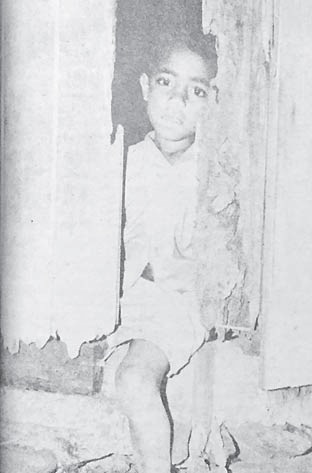
Poor school facilities were a common problem in Fiji in the 1960s and were often reported by this newspaper.
School conditions in certain areas were so bad that it often affected students’ ability to learn. An article on poor school conditions was reported by this newspaper on Thursday, July 31, 1969.
About 309 children went to Kalabu Fijian School that year and its facilities consisted of two wooden buildings, two tumble-down bure and a tin shack which was worse than any copra shed.
Class 1 pupils who attended the school – all of which were six-year-old – sat on the cold concrete floor in one of the wooden buildings with its walls partly fallen out.
The Class 7 and Class 8 pupils had the privilege of using the second wooden building which was no better than the first.
The children who attend the school were Fijian and part Chinese and they come from Suva, Samabula, Laqere and the Kalabu settlement and its environs.
To get to the school during weeks of rain, the children had to first walk about 400 yards in ankle-deep foulsmelling mud and often they would fall into it and would later spend the rest of their day in a mud caked uniforms.
The article highlighted that the school was run by a management committee within the Kalabu settlement and the committee was dormant for some time during which the school rapidly deteriorated. The school had applied for Government aid in 1965, but was turned down and a second application in 1959 was also rejected, but luckily the Government then surprised the school with a grant of $2200.
“The Government’s rejections were disheartening for the committee because they had raised $2400 and could not get any further, but even worse the children were passing,” the school head master Iliesi Nasedra said during an interview with this newspaper.
“They wanted to come to school despite the conditions not only because they were eager to learn, but also because they could not get into other schools,” Mr Nasedra said.
“The school has been in such bad shape that three weeks ago when a health inspector came to visit the school I asked him to close it.
“He only condemned the watersealed toilets which were a disgrace, but would not commit himself to say anything else about the rest of the school.”
The school had no electricity or running water although pipes were set up. Conditions had affected academic progress to such an extent that the school never had a 50 per cent pass in the Secondary Schools Entrance Examination.
In 1959 results were the best for the school as seven out of 24 students passed the exam, but the children weren’t the only sufferers in trying to survive in poor school facilities. The nine teachers in the school – all women except for the headmaster – had more complaints than they care to make.
During the last three weeks before the article was published it was almost penance for them to brave wind, rain and mud to go to school. Another teacher, a young mother of three, had to wear rugby socks during the cold spell to protect a rheumatic leg. She had taught in the tin shack where 36 children were crammed into eight desks.
For another teacher who lived in the teacher’s quarters which she described as “worse than the school,” lived with her husband and four children.
They struggled without electricity and running water. Mr Nasedra said the school had got to such a state because the management committee had received no proper advice on running it.
“They were at a loss for someone to advise them on how to go about things because they had a little money and wanted to know how to use it.
“For the committee to put up a decent school building they are going to need at least $10,000.”
Nine-year-old Lore Talemaisuva of Tovata, Nasinu described the hardship she went through on a rainy day. Talemaisuva simply tramped a mile through bush and squelched mud to school.
Her small bundle of books tightly clutched to her breast as she held her books on another hand her only protection from the rain – a banana leaf. Lore had one ambition – to go to university – and then to find a good job, but the conditions under which she was learning was so bad that she could possibly end up a hospital case by the time she had reached secondary school.
The daughter of a casual labourer attended Class 4 and it meant she was learning in a tattered makeshift bure with damp soil for its floor.
She with 52 other children sat squashed into the classroom and when it rained water would drip on her head from leaks in the roof or rain blown through the walls and her bare feet dangling in little streams in the earthen floor.

