
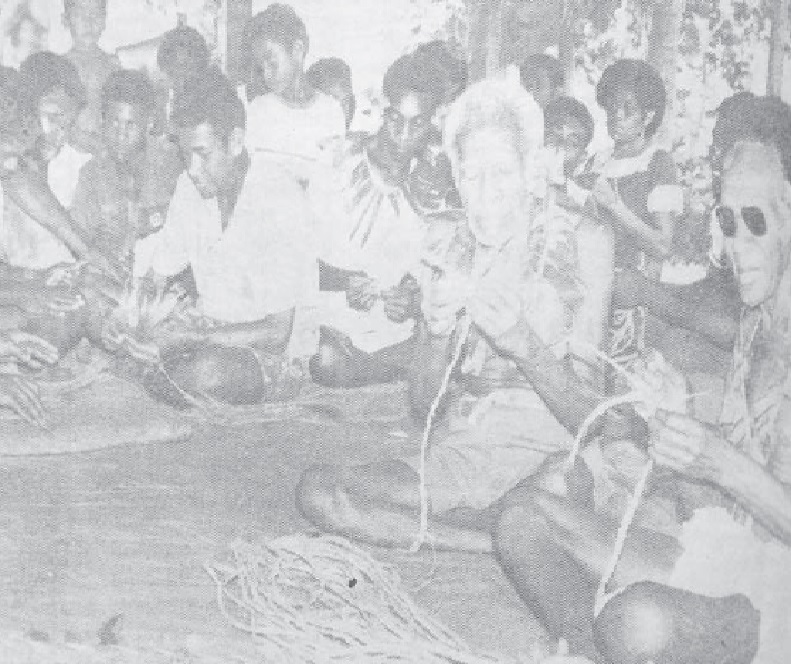
IN a small village on the outskirts of Labasa, a traditional art was being revived after almost 50 years.
And according to a report in The Fiji Times of March 23, 1986, Bulileka Village was buzzing with excitement as young and old moved about in confusion.
And amid sounds of laughter and the clapping of hands as the yaqona bowl passed around, came the echo of wood against boulders.
Youths beating coconut fibres with all their might.
At the brink of urbanisation sat an ageing man, cross-legged in the traditional village square, his sinewy hands guiding more youthful hands.
It had been a very long time since Manoa Kalouniviti, 83, had heard the familiar sounds of ‘real traditional activity’ in his village.
As a villager he had been summoned to teach the younger ones the art of making magimagi ( ropes) from coconut fibre.
The magimagi would eventually be used by the villagers for dining the frame of a bure.
The bure, which was to be constructed beside the home of the Tui Labasa, Ratu Tevita Ritova, in Naseakula Village, was to be used by the Labasa tikina for meeting purposes.
It would involve the strength and expertise of the whole village to erect the traditional bure.
Sitting in the corner of the volau (the traditional meeting place in the village), Mr Kalouniviti related the making of the magimagi from young fibre of a green coconut.
About 20 other youth and middle-aged people sat around in a circle attentively listening to Mr Kalouniviti as he explained that the youth in the village would have to pickgreen coconuts from around the village.
He said about 100 coconuts were picking for the rope-making job.
“It is then brought in and husked by the youths.
“From there the husked fibre is boiled in water for about 18 hours,” he said.
About 10 metres from the volau stood a 44-gallon drum, filled with water to the brim, and a youth stood beside it continuously stirring the contents.
Another youth kept stoking the fire to keep the water boiling. ”
The boiling process made the fibre just nice and soft for weaving purposes,” Mr Kalouniviti said.
A man quickly picked out a few husks and passed them to a group of women and men kneeling before large slabs of boulders and tree stumps.
Picking up their truncheon-like pieces of wood, the group went into motion beating a rhythm as the husk was levelled out.
Mr Kalouniviti said the group beat the fibre for about 10-15 minutes with the wood after it was boiled.
“This makes the fibre light and clears all the unwanted dirt and substances from it.
“After that the fibre is brought into the volau where I show the villagers the art of weaving the material into ropes.”
His nimble fingers went to work as he showed how the magimagi was plaited with two strands of coconut fibre.
First the women pull out the fibre strands apart before they are put together again and plaited. At first glance the twine –like rope looked very flimsy but a light tug, and later a heftier one, showed its strength.
“It may sound surprising to you, but even some of the older people in the village don’t know how to make the magimagi,” Mr Kalouniviti said.

