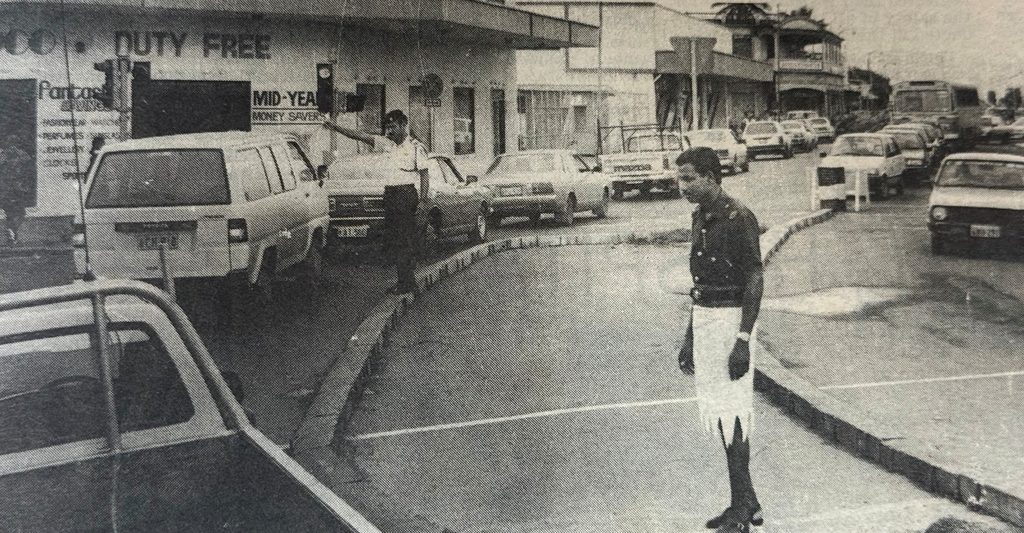
Confusion reigned in central Suva on August 7, 1991, as motorists adjusted to the new one-way traffic system.
According to an article published by The Fiji Times the following day, a random survey conducted around the city revealed that many drivers found the new directions confusing and made their commute into town longer.
One resident from Tamavua said it took him about 15 minutes longer to reach town, although he expected to eventually get used to the new routes.
Other motorists expressed mixed reactions. While some believed the system was a good idea, they felt its implementation was poorly timed, coming just before the Hibiscus Festival.
Taxidrivers in the city also complained about losing customers.
“I usually make $40 by lunchtime, but today I have only made $11,” one driver said.
Another driver recounted how a regular passenger got out of the taxi in the middle of traffic to walk to a restaurant, as movement along Waimanu Rd was extremely slow.
Drivers added that morning peak hours were particularly difficult under the new system.
Meanwhile, some pedestrians adapted quickly. One commuter said she studied the new traffic map and chose to get dropped off a block away from work to avoid delays and extra fares.
During peak hours, police were deployed to ease congestion, particularly at the intersection of Thomson and Marks streets.
At least one traffic accident was reported along Waimanu Rd during the busy period.
Suva City Council’s city engineer, Dipak Solanki, said such reactions were expected due to unfamiliarity with the new routes.
“It is important that people plan their journey, as by force of habit they will want to use the routes they have always taken,” he said.
He added the council would meet with electronic specialists TECAIR to review and adjust traffic light timings.
Police spokesperson Assistant Superintendent Aisake Rabuku said officers were assisting with traffic control and would continue to monitor the situation during the three-month trial period.