
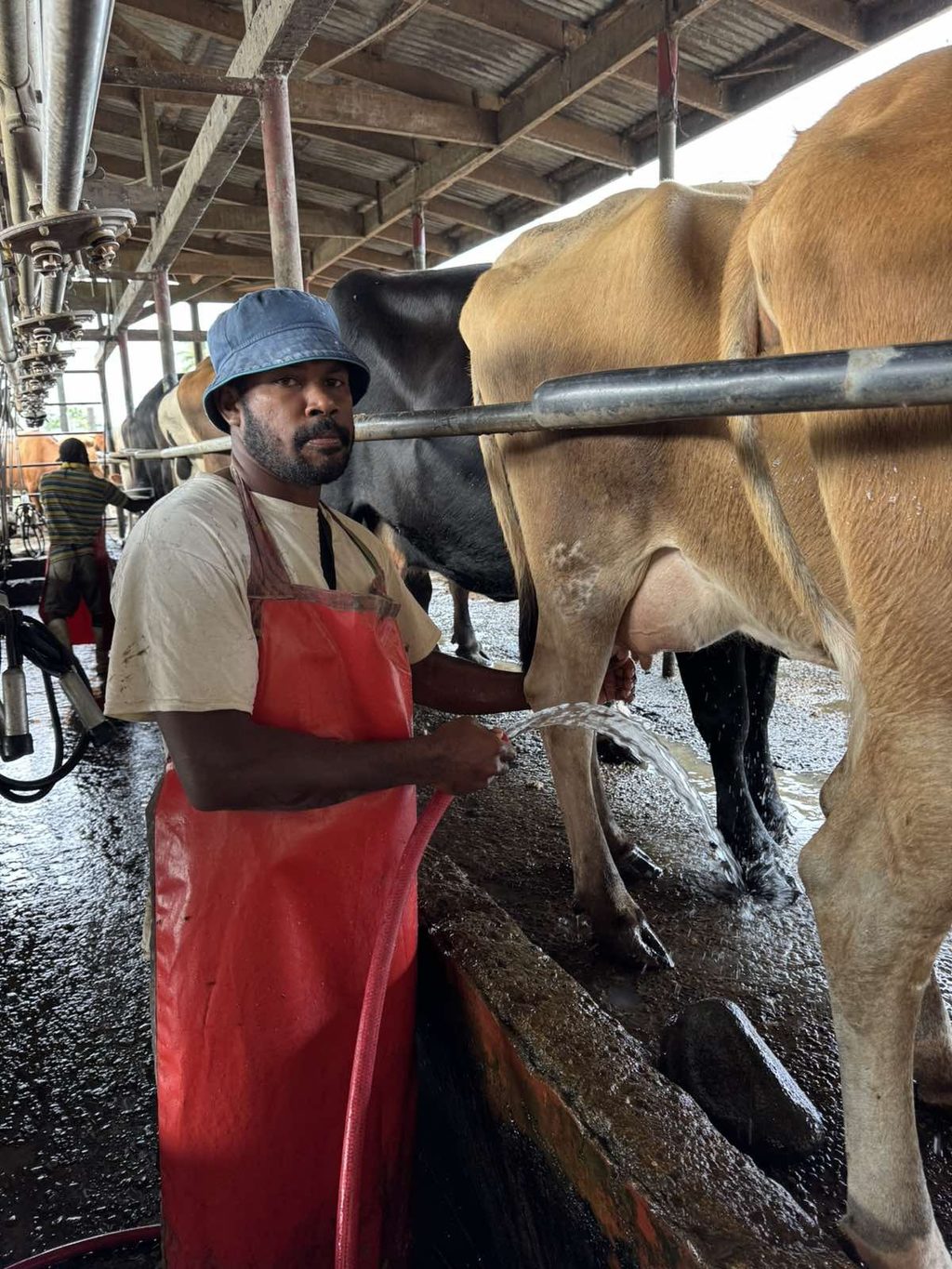
Fiji’s dairy industry is achieving an unexpected turnaround, with milk production rising to six million litres annually despite a sharp decline in the number of active dairy farmers.
According to the Fiji Cooperative Dairy Company Limited (FCDCL), the sector has shrunk to just 180 farmers due to land lease issues, disease outbreaks, and stock theft.
However, targeted government and cooperative support programs are successfully boosting the productivity of the remaining farmers.
In an interview with The Fiji Times yesterday, FCDCL chief executive officer Vimal Chand said the number of farmers had declined from 220 to 180 farmers; of which 60 are top suppliers, seven are bulk suppliers and others are smallholders.
He said the numbers had declined with smallholders struggling the most to rebuild herds post-disease outbreak.
“Most people operate small farms with fewer than 20 cows, limiting economies of scale,” Mr Chand said.
However, he said despite the decline in farmers, production was on the increase.
“The production is increasing due to the various motivational factors or various actions taken by the Government and FCDCL to encourage dairy farmers to produce more.
“So that means the farmers who are doing dairy at the moment, they have increased or maintained their production.”
Mr Chand added milk productions before the brucellosis and TB outbreak was 10 million litres a year.
He said productions post-disease declined to around three million litres a year but later increased to around 6 million litres a year.
He said Fiji produced around 25 per cent of the milk demanded while the rest of the 75 per cent was cushioned by imports through Fiji Dairy Limited and private businesses.
Meanwhile, dairy farmer Harvindar Singh of J Singhs Diary farm in Waimaro, Naitasiri said the dairy industry seemed like a dying industry with many youths opting for white colour jobs.
He said the reason behind this is because there is not much money in the dairy industry compared to the amount of hard work and expenses required.
“The young generation, when they ask what our forefathers have made from it, it’s nothing. So, they see the milk price and the amount of work required because it’s like you’re taking care of animals 24/7, 365 days a year,” Mr Singh said.
He said younger generations hardly want to return to dairy farming because they were making more money working for someone else.
Viria dairy farmers Ravindra Prasad said dairy farmers needed to invest more on their farms to reap good returns.
He said when they invested on their farms, they would attract support from the FCDCL.

