National airline Fiji Airways hosted the country’s first aviation-focused carbon market training aimed at building shared understanding across regulators and industry on the need to offset emissions on eligible international routes.
The national carrier is exploring whether high-integrity carbon projects developed within the country where conservation and community-based initiatives are already rooted could meet the Carbon Offsetting and Reduction Scheme for International Aviation (CORSIA).
The training – that brought together the Ministry of Environment and Climate Change, Ministry of Forestry, Ministry of Civil Aviation, the Civil Aviation Authority of Fiji and Fiji Airways teams across sustainability, government affairs and operations – supports the airline’s Maroroya Sustainability Strategy that guides the airline’s focus on protecting land, ocean and communities, while exploring how carbon markets can add to its conservation efforts.
“This training is about making sure Fiji isn’t just meeting an international obligation but building the local capability to shape how that obligation is met through projects that protect our environment and benefit our communities at the same time,” Fiji Airways managing director and chief executive officer Paul Scurrah said.
Deputy conservator of forests Apisai Rinamalo said the IATA Aviation-focused Carbon Markets Training provided the Forestry ministry with an excellent opportunity to strengthen its understanding of CORSIA’s market requirements and standards.
“Tourism is a major contributor to Fiji’s economy, and developing a carbon trading partnership with Fiji Airways would enable the forestry sector to directly support the aviation and tourism industries in achieving their net zero ambitions,” Mr Rinamalo said in a statement from the airline. “Through the ministry’s National Emission Reduction Programme, Fiji has generated high-integrity emission reduction units, creating an opportunity to support Fiji Airways’ CORSIA compliance while promoting sustainable forest management and delivering climate and socio-economic benefits for Fiji.”
CAAF executive manager Standards and Compliance Sereima Bolanavatu the training could not have come at a more critical time. “As we approach CORSIA’s mandatory phase, it is essential that all stakeholders fully understand our offsetting and emissions reduction obligations. I commend Fiji Airways for this initiative and look forward to our continued partnership as we navigate this transition together.”
The airline runs several community-linked environmental initiatives that sit alongside its formal carbon-offsetting work.
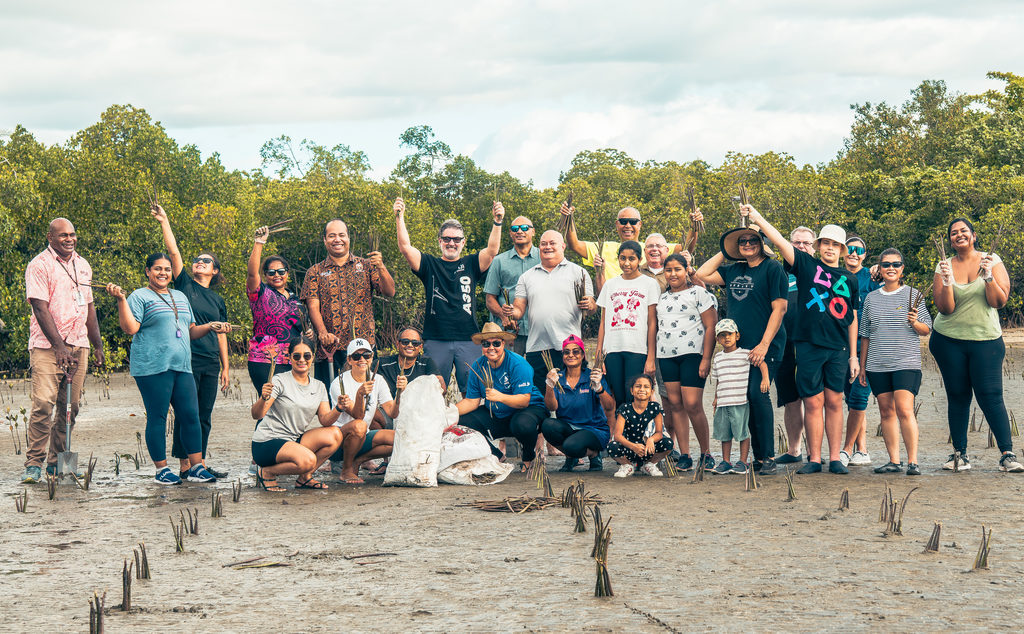
Its ‘Every Take-Off, One Tree’ program has planted a mangrove seedling for every international departure, with more than 101,000 trees planted to date; proceeds from seedling sales go to local women’s and youth groups.
The program is a long-term investment in coastal restoration and community benefit.
Mr Scurrah said looking ahead, participants would work with Government ministries to explore the development of CORSIA-eligible carbon projects in Fiji.