
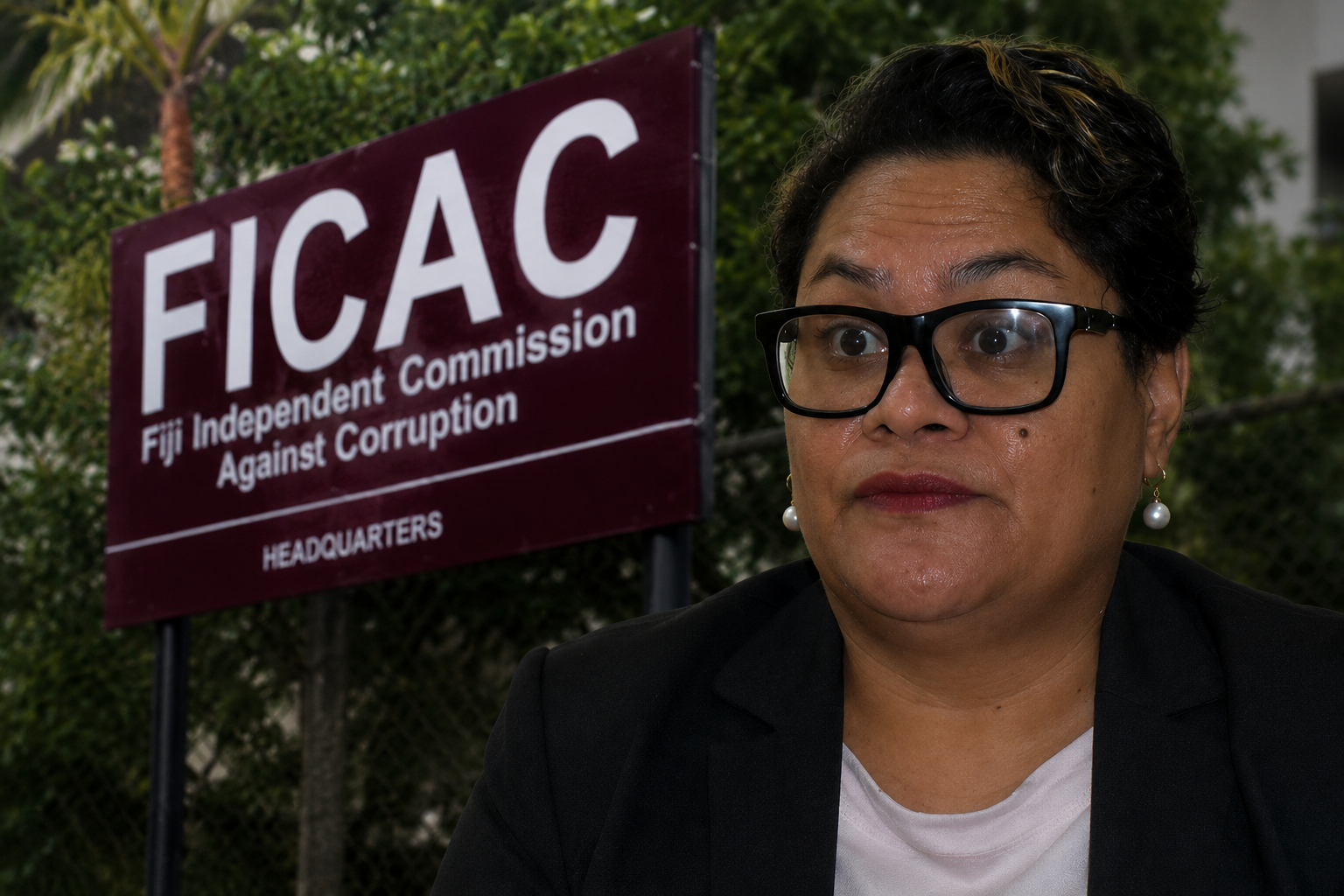
Acting Director of Public Prosecutions Nancy Tikoisuva has criticised FICAC’s handling of the Charlie Charters matter, submitting that the Commission transferred a criminal case involving former FICAC officers to police prosecution while bypassing the Office of the Director of Public Prosecutions.
Her submissions are contained in a ruling delivered by High Court judge Justice Pita Bulamainaivalu on August 17, in which he ordered the release of electronic devices belonging to Charlie Charters.
According to the ruling, Ms Tikoisuva appeared as amicus curiae and supported the orders sought in Charlie Charters’ application.
The Acting DPP submitted that despite an earlier High Court ruling on July 24 permanently staying the criminal case against Charlie Charters, FICAC had transferred the criminal case against former FICAC officers to police prosecution.
She argued that this was done by “bypassing the ODPP”.
Ms Tikoisuva further submitted that the transfer was “directly in violation of sections 54 and 55(3) of the Criminal Procedure Act 2009”.
Section 54, cited in the ruling, provides that police officers conducting prosecutions and public prosecutors appointed by the DPP are subject to the directions of the Director of Public Prosecutions.
The ruling also cited section 55(3), which provides for the DPP and FICAC Commissioner to transfer the conduct of prosecutions to each other.
The Acting DPP’s criticism comes amid scrutiny over the handling of the Charlie Charters investigation and FICAC’s subsequent referral of matters involving two former Commission officers to the Fiji Police Force.
FICAC has separately maintained that it referred the matter and its investigation file to police on July 1 for independent review after identifying two former FICAC officers as the alleged principal disclosers of Commission information.
That referral occurred before the High Court’s July 24 ruling.

