
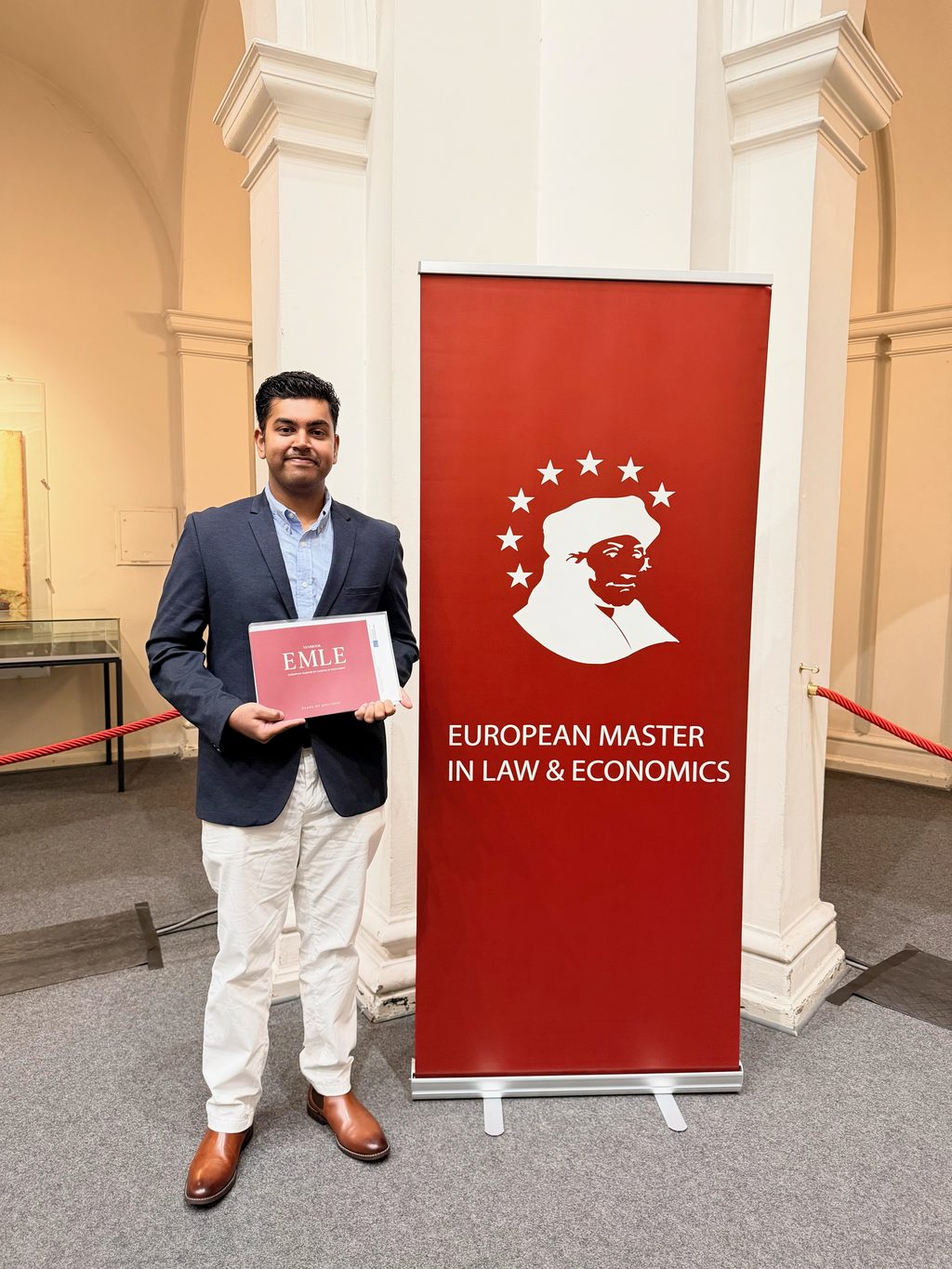
FOR lawyer, Deepesh Singh placing fourth in the prestigious European Master of Laws and Economics (EMLE) was never part of the plan, it was the outcome of persistence and a willingness to step into the unknown.
Singh’s achievement places him among the top performers in one of Europe’s most competitive interdisciplinary programs, where only 67 candidates were selected from 928 applicants.
His distinction ranking, awarded to the top 10 per cent of students in his cohort – also marks him as the first Fijian to complete the program, adding a national milestone to his personal success.
“To be completely honest, it did not feel real and in some ways, it still does not,” he said.
His path to EMLE was not linear. Coming from a commerce background in high school, Singh initially gravitated toward economics and accounting before deliberately choosing law as a challenge.
Over time, his professional experience revealed a natural convergence between the disciplines.
“As I moved through legal practice, I realised that I was adding a lot more value in work which had strong economic or accounting elements. This piqued my interest in pursuing the inter-disciplinary field of law and economics,” he said.
That realisation, coupled with what he describes as an “expertise gap” in Fiji, became a driving force behind his decision to pursue advanced study abroad.
He saw the intersection of law and economics not just as an academic pursuit, but as a way to contribute meaningfully to national development.
“The EMLE programcombines principles of law and economics and trains you to think across various legal systems and compare how (and why) different countries approach legal and economic issues in the manner that they do.”
The programitself is as demanding as it is diverse. Delivered across multiple European universities, it immerses students in different legal systems, cultures, and academic environments.
For Singh, this meant constant adjustment, not just academically, but socially and intellectually.
“During the programme, you are not thinking about where you will place or rank. I was just trying to keep up with the complete change in environment, the dynamic nature of the curriculum and the fierce competition from my peers,” he said.
Many of his classmates entered with one or more postgraduate degrees, a reflection of different education systems. Singh, however, brought something different to the table: practical legal experience.
“My experience as a lawyer dealing with real situations, clients and consequences allowed me to better apply the underlying principles to the global context or my national context and provide more valuable and realistic or practical approaches to the issues discussed,” he said.
Beyond academics, the experience reshaped his worldview.
Exposure to over 30 nationalities and multiple legal frameworks challenged him to think beyond national boundaries and appreciate the complexity of global issues.
“Studying in Europe has broadened my thinking in a way that is perhaps difficult to fully explain,” he said.
“This exposure helped me become more open-minded and analytical in the manner in which I approach issues.”
That intellectual shift was matched by a disciplined approach to study. Singh emphasised quality over quantity, focusing on structured, intentional learning rather than long, unfocused hours.
“When I studied, I made sure I was fully engaged or focused on understanding the material rather than just going through it.”
Underlying it all was a strong sense of personal accountability. In an environment defined by autonomy, Singh leaned into the responsibility that came with it.
“I see autonomy as a privilege. It gives me the flexibility to structure my own time and approach my work in a way that suits me. But autonomy comes with an equal level of accountability.”
Despite the intensity of the programme, Singh credits the people around him for shaping his journey, professors, peers, and mentors who provided both guidance and perspective.
Looking back, it was not the ranking alone that defined the experience, but what it represented.
“I also found out that I was the first person from Fiji to complete the programme. This is the point at which I felt a sense of achievement because I was not just completing a personal milestone, but I was representing my country or adding some value to it.”
With a broader lens and a deeper appreciation for how law and economics intersect, he returns with a clear purpose, to translate knowledge into practical impact and to be part of conversations that shape more informed, effective solutions at home.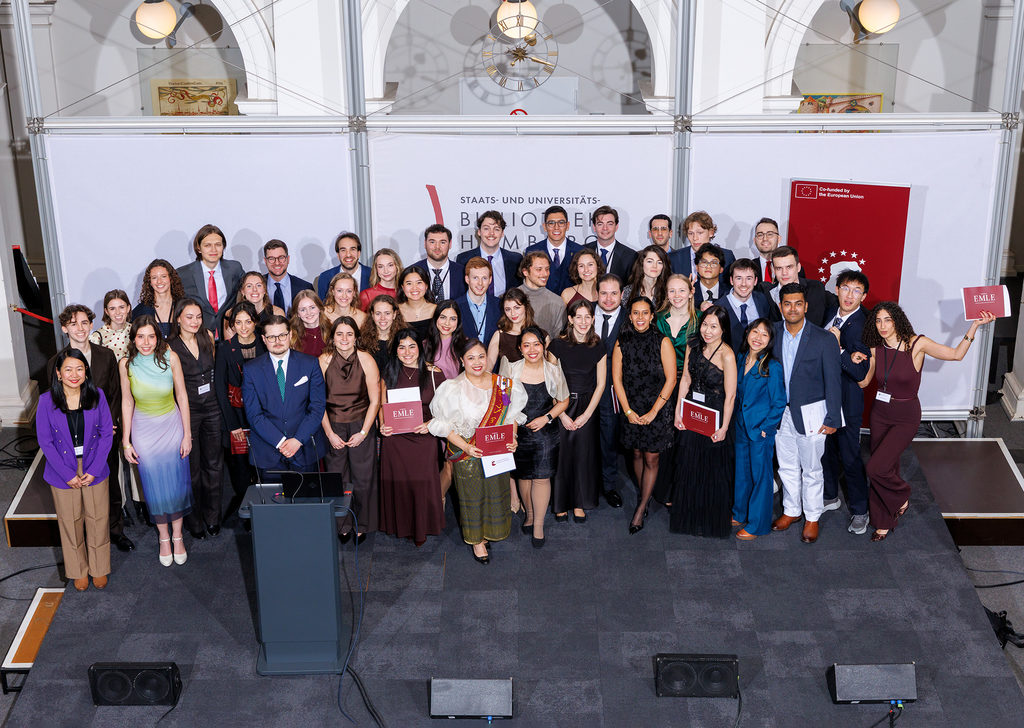
The EMLE cohort on graduation day. Picture: SUPPLIED

Deepesh’s parents, centre, Pradeep Singh (second from left) and Reshmi Lata and partner Noleen Narayan.
Picture: SUPPLIED
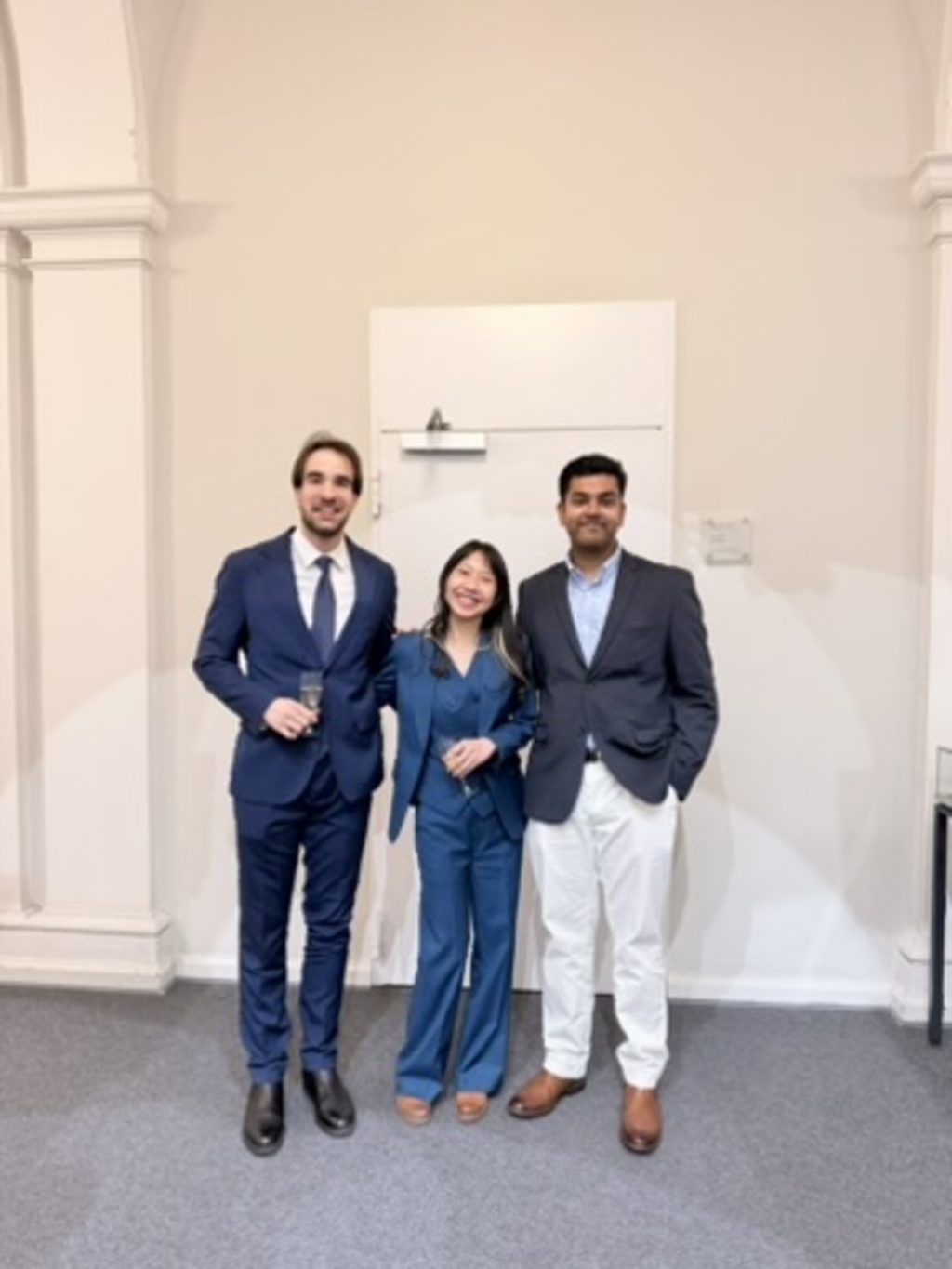
Deepesh with his colleagues (from left) Nikola Uzelac and Curie Wang. Picture: SUPPLIED

