
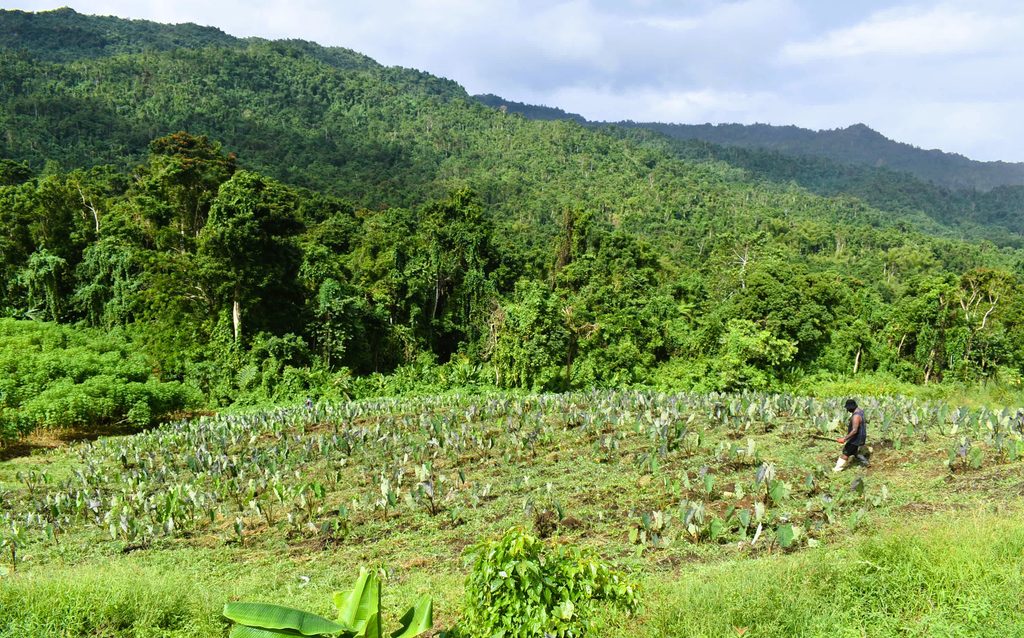
THE rich and fertile interior of Bucalevu in Ra is today the hub of a quiet agricultural experiment that could reshape how indigenous Fijians approach commercial farming, land use and rural enterprise.
Spearheading the initiative is Timoci Nacola, who believes Fiji’s traditional communal work ethic — solesolevaki — must evolve if indigenous landowners are to fully participate in modern commercial agriculture.
“In this area, Bucalevu and Ra, yaqona is and has been the major crop and commodity,” Mr Nacola said. “It has been this way since the days of our fathers and grandfathers.”
For decades, yaqona dominated the agricultural economy of the region, while dalo was treated largely as a subsistence crop sold informally at roadside stalls and markets. Today, however, Mr Nacola says attitudes are beginning to shift.
“A new idea is being put into action in Bucalevu,” he said, describing the integrated farming initiative now underway involving commercial dalo and yaqona cultivation.
Rethinking traditional farming
The project combines traditional communal values with modern agribusiness methods. Rather than relying solely on labour-intensive collective farming, the model encourages small groups to pool capital and operate as structured farming enterprises.
“I’d like to point out firstly, that of the iTaukei today, our concept of solesolevaki has become a bit outdated,” Mr Nacola said.
“What I mean is this: the general idea is that solesolevaki is done in the village, where we all join hands and work together. This is good, it’s our culture and it defines us, but it has become slightly outdated, and we need to adapt it to the modern world.”
According to Mr Nacola, one of the weaknesses of traditional farming collectives is that enthusiasm often fades once the physically demanding work begins.
“After a while one by one members of the group start losing interest and leave one by one, because we all get tired,” he said.
Instead, he advocates what he calls a modernised version of solesolevaki, where communal cooperation begins with pooled investment capital rather than manual labour alone.
“Let’s start the solesolevaki process with money,” he said. “Say five people come together, put their ideas together, brainstorm and then come up with a common vision and contribute $2000 each.”
Under this model, the pooled funds are used to hire machinery for land clearing, drainage and cultivation preparation.
“From that $10,000 pay for a mechanical digger to clear the overgrown farmland and improve the drainage,” he said. “It’s still the solesolevaki concept but modernised.”
The economics behind the model
Economically, the model reflects a broader shift from subsistence agriculture towards capital-driven agribusiness.
The Bucalevu initiative currently targets the planting of 4000 to 5000 dalo plants each month over a projected 10-year period. Alongside the dalo, yaqona is intercropped between rows to establish a long-term secondary revenue stream.
“If we have 10 dalo in a bundle, that’s around 500 bundles and each bundle sold for $30 would generate about $15,000 a month,” Mr Nacola explained.
At the same time, the group plans to plant approximately 8000 yaqona annually.
“So, in a nutshell: 5000 dalo plants a month for 10 years and 8000 yaqona plants a year for 10 years,” he said.
The commercial logic behind the integrated model is significant. Dalo provides relatively quicker returns while yaqona functions as a higher-value long-term investment crop. Intercropping also maximises land productivity and diversifies agricultural risk.
To sustain expansion, nurseries have already been established near the farm and within the village to ensure a consistent supply of planting material.
“The vision right now for this farm venture we have started, is for it to roll for 10 years,” Mr Nacola said.
Unlocking idle land
However, beyond crop production itself, the initiative also attempts to address one of Fiji’s most persistent economic issues — under-utilised customary land.
More than 90 per cent of land in Fiji remains under customary ownership, and access to productive use has often been constrained by leasing complications, financing limitations and management challenges.
Mr Nacola’s proposed framework attempts to bypass many of these obstacles while preserving customary ownership rights.
Under the model, a farming enterprise enters into an agreement with a mataqali to cultivate land without taking ownership. The enterprise manages machinery, development and operations, while landowners contribute the land itself.
Revenue is then shared between the enterprise, the mataqali and labourers according to agreed percentages.
“The mataqali is only required to supply the land,” Mr Nacola explained. “There’s no need for a lease. The landowners’ rights and ownership status remains the same. The only thing here is that idle land is being utilised.”
He believes the structure creates incentives for all parties involved while also encouraging broader participation in commercial agriculture.
“Part of the genius as well in giving the farmhands a 15 per cent cut is the fact that in this way they also become co-owners of the farming venture,” he said.
A hybrid communal-capitalist approach
The model also includes a long-term transition plan. After five to 10 years, the enterprise steps back and operational control is gradually transferred to the mataqali, while the original operators remain in a consultancy capacity.
“This concept is an avenue for fast and efficient returns both for landowners and aspiring commercial farmers,” Mr Nacola said.
From an economic perspective, the initiative reflects a hybrid communal-capitalist approach — one that attempts to merge indigenous communal values with modern business practices.
Still, major challenges remain. Scaling such models nationally would require access to financing, improved transport infrastructure, market development and stronger agricultural support systems.
Mr Nacola acknowledged that market expansion and diversification would eventually require government support.
“Right now, markets are available, but when this concept starts to catch on, I believe there will be a need for markets to be made available,” he said.
Nevertheless, the Bucalevu initiative highlights an important shift in thinking within rural Fiji.
Rather than viewing customary land solely through cultural or political lenses, the project reframes it as a productive economic asset capable of generating sustainable commercial returns while preserving indigenous ownership structures.
With enormous challenges still confronting the economy and as Fiji continues searching for pathways towards inclusive growth, integrated commercial agriculture models such as this may offer one possible direction — combining tradition, entrepreneurship and land productivity into a uniquely Fijian development approach.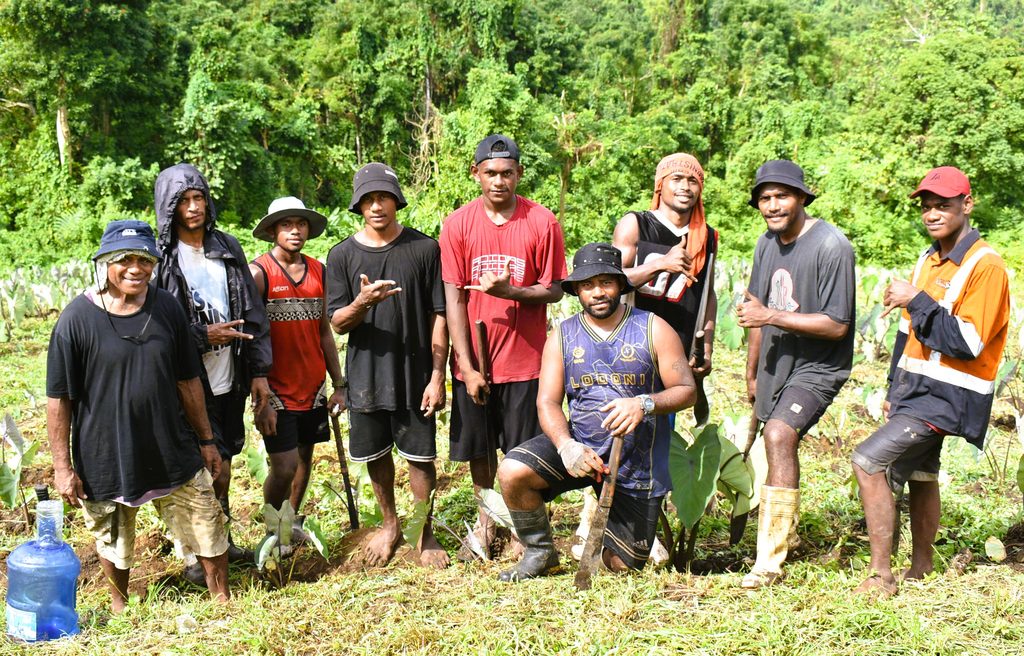
Nailega youth group from Wainibuka hard at work on their dalo farm in Bucalevu. Picture: ALIFERETI SAKIASI
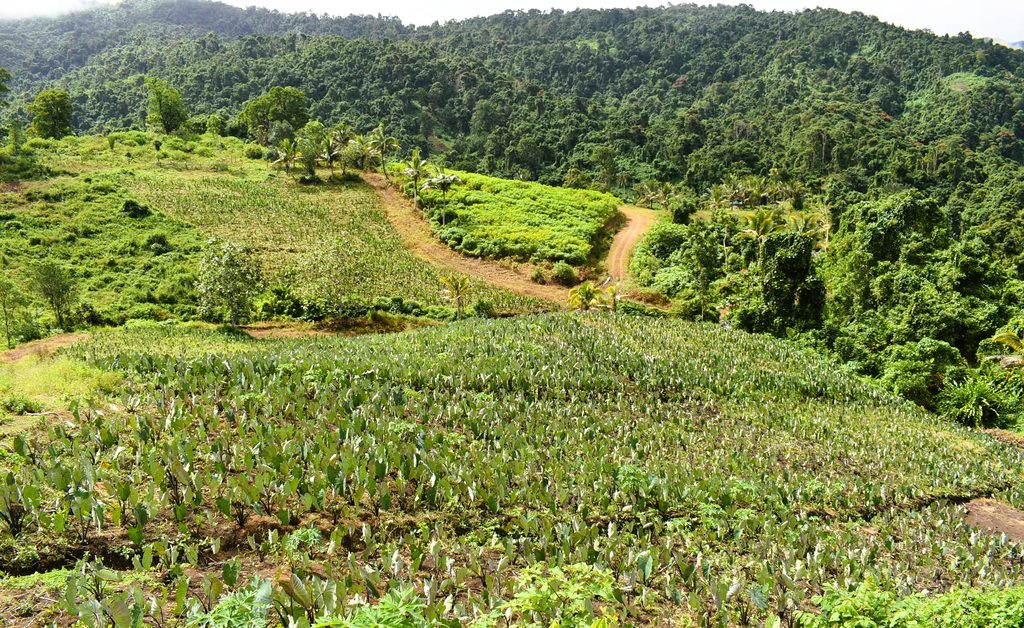
There are over 15,000 dalo plants already cultivated on a farming venture run by Mr Nacola and two others.
Picture: ALIFERETI SAKIASI
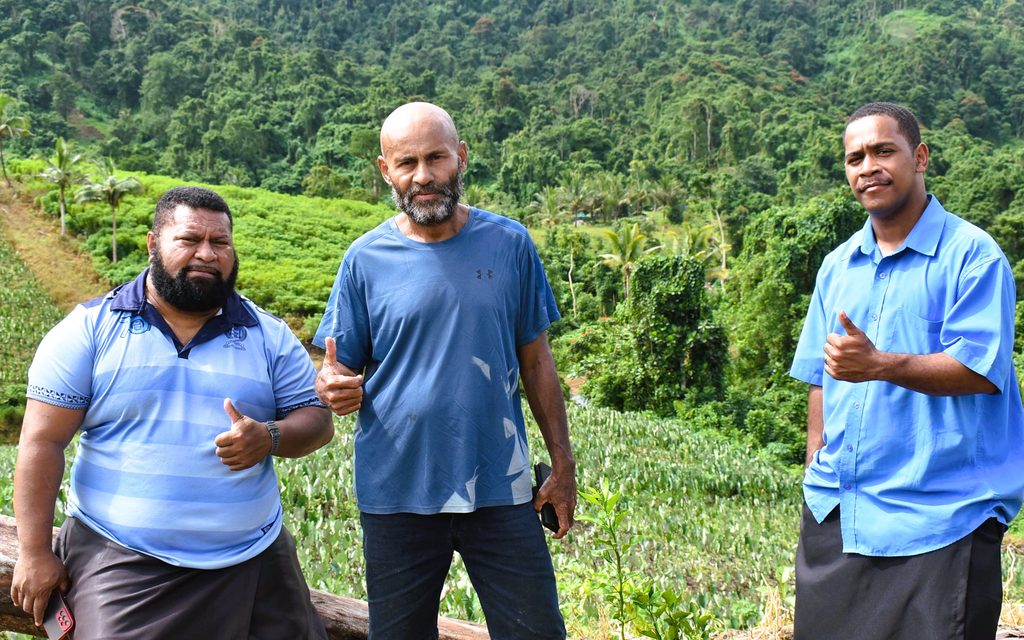
From left, Nai Lalakai senior journalist, Viliame Ravai, Timoci Nacola and The Fiji Times driver, Samu.
Picture: ALIFERETI SAKIASI
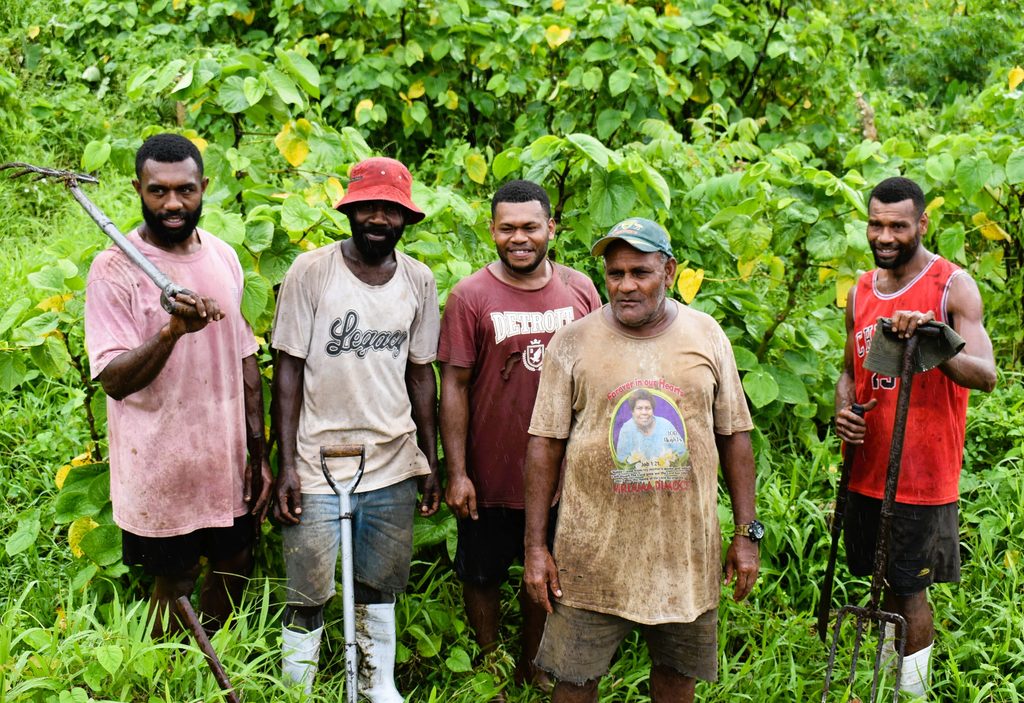
Yaqona farmers of Bucalevu pose for a group photo after a hard day’s work.
Picture: ALIFERETI SAKIASI
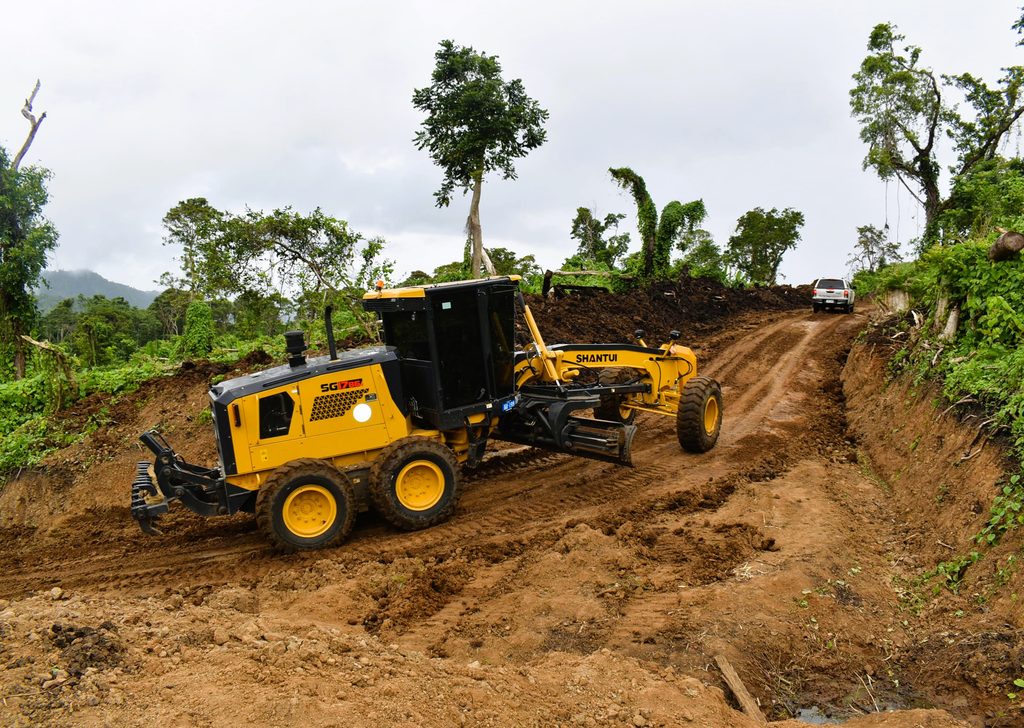
Roadworks by the PWD are ongoing in the Bucalevu area, greatly improving road
access for farmers and students. Picture: ALIFERETI SAKIASI

Bucalevu yaqona farmer, Semesa Kubau (left) and Timoci Nacola (right) discuss a point during an interview last month.
Picture: ALIFERETI SAKIASI
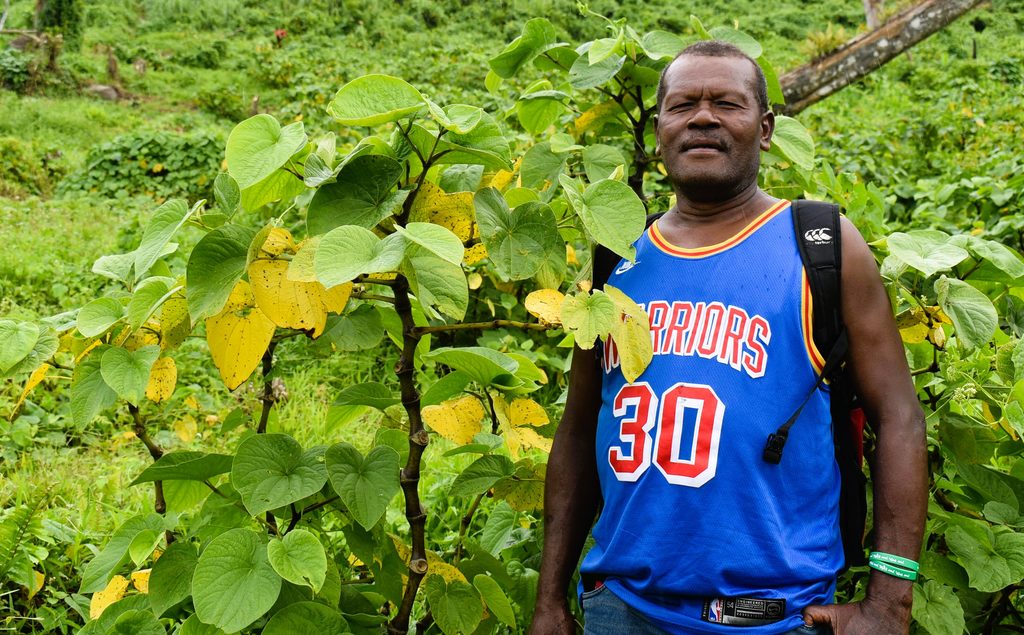
Yaqona farmer, Kaseni Vakayalia has about 12,000 plants on his farm valued at almost $1 million. Picture: ALIFERETI SAKIASI
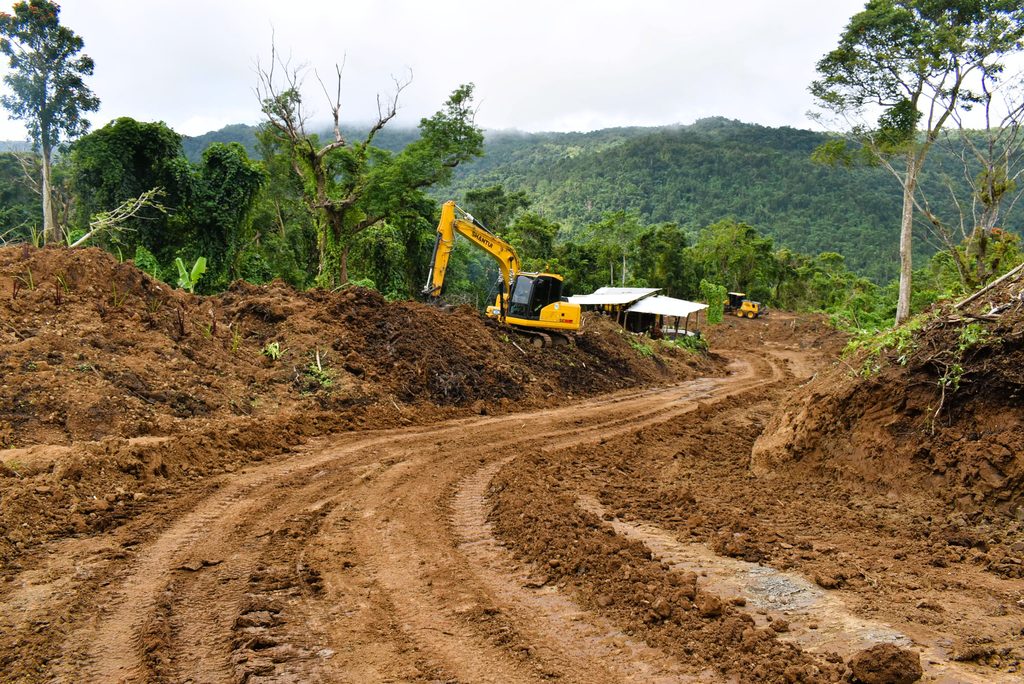
The recent ongoing road development in the Bucalevu is significantly improving access to markets and services for the farmers and people of the area. Picture: ALIFERETI SAKIASI

