
Human beings have already found a way to resolve premature birth while babies born prematurely fight to stay alive.
These are the reasons why humans are extraordinary.
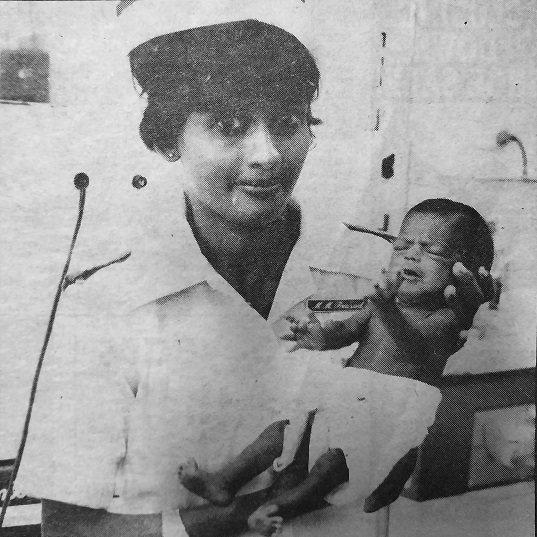
An article published by The Fiji Times on May 1, 1984, reported on a month-old baby girl born at Labasa Hospital weighing 790 grams (about 1¼ lbs) at birth, and was believed to be the smallest infant to survive in Fiji.
After spending 30 days in an incubator, the baby, yet to be named during publication, was reported to be in a “very good condition”.
The daughter of Chandrika Prasad and his wife, Sam Raji, 23, of Seaqaqa, the baby made remarkable progress, gaining 342 grams in 30 days.
According to medical authorities, baby girls have better chances of survival than boys in such situations.
Consultant gynaecologist at Labasa Hospital, Dr Mary Schramm, told The Fiji Times the incubator was a great help in giving the girl a chance at life.
The baby was delivered by a Caesarian operation after seven and half months of gestation and was in critical condition for the first five days. She was put in an incubator and fed intravenously.
Her mother, discharged two days after giving birth, spent weekends with her child. The baby was a third for the Prasads, who had two boys, one born in 1979 and the other in 1984.
Dr Schramm told of a similar case at Labasa Hospital in 1944 where a 908gram baby survived by being warmed with a wood-burning stove as there were no incubators then.
The baby girl’s father Harry Tikaram of Lami, had gotten in touch with Dr Schramm after reading an article in The Fiji Times about a girl being born to a childless Labasa couple after 17 years.
Describing the situation in which his daughter was born, Mr Tikaram said Labasa Hospital had no electricity and had to rely on fluctuating direct heat from the nearby sugar mill.
His daughter, Sarala, was born two and half months prematurely by Caesarean section.
Dr Schramm said a large hospital such as Labasa needed more than the two regular and two transporting incubators it had.

