
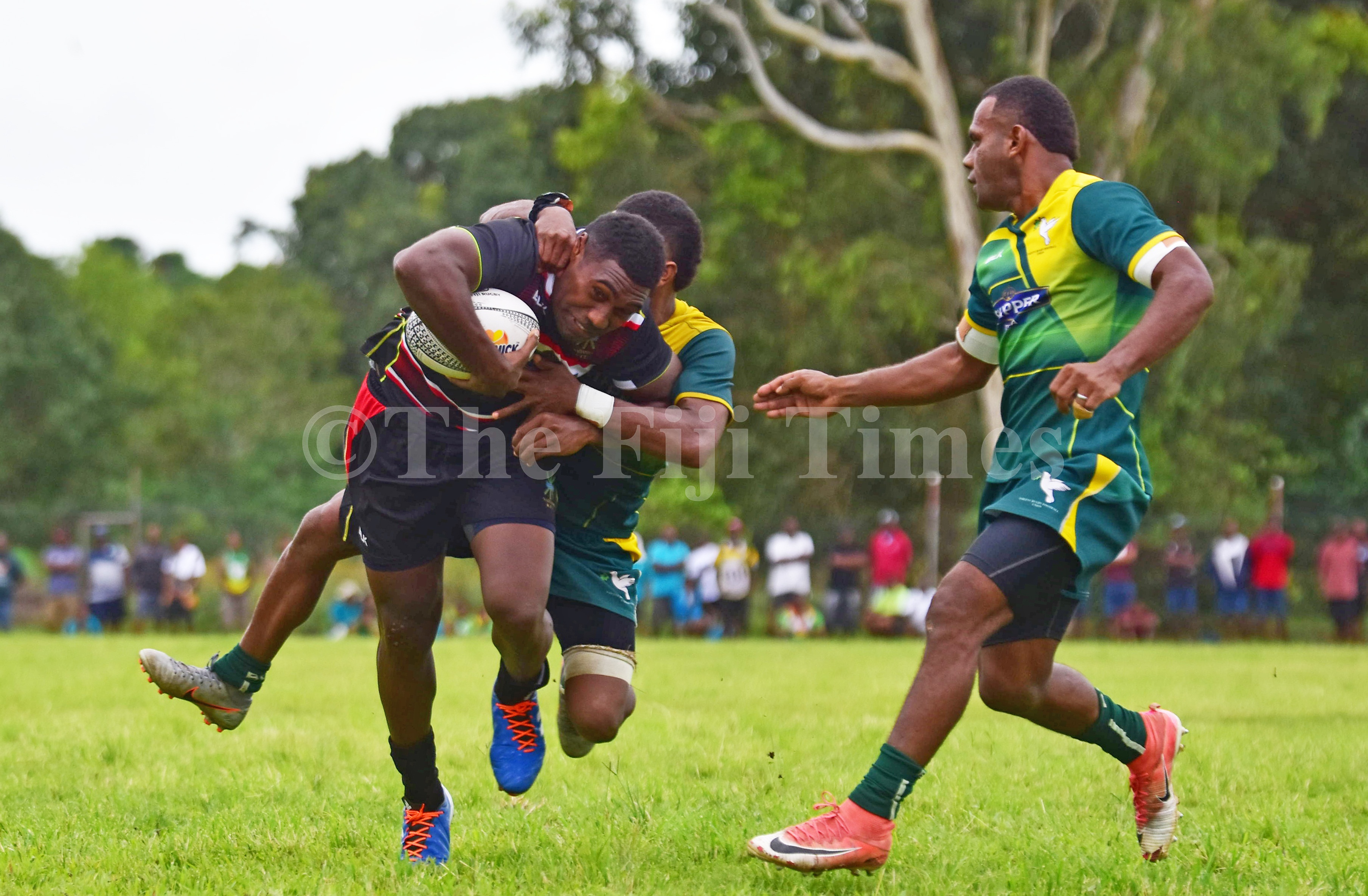
The Fiji Rugby Union should consider reviewing its current format of the Skipper Cup competition and the Vanua competition to ensure the game is sustainable and enjoyed throughout the land.
By saying this, we need to draw comparison with regional countries, especially New Zealand on how they run their competition.
There is a need in Fiji to increase teams in the Skipper from the current eight to 10 or even to 12 teams.
I believe the FRU is working hard to ensure Fiji become a Tier 1 rugby nation. One possible mean to achieve this is to increase players base at the top competition. Playing with only eight top teams will not help us attain top status as the current competition format would mean an average of around 320 to 350 players playing top level rugby in Fiji.
This number needs to increase to about 500 to 600 players to play top level rugby in Fiji on weekly basis.
For this to happen, please consider increasing the Skipper Cup teams to 12, which would give us six competition games in a week and maintain the annual competition to one round per season of 11 games for participating teams.
The current policy of bottom two and top two automatic promotion relegation is not helping the weaker teams in the Skipper Cup competition because of its current small size of eight teams competition.
In other words, these two weaker teams work very hard to gain promotion in one year, play in the Skipper Cup for another year, then drop back to the Vanua competition on the third year.
The consequences of this is, players are likely to move away from their team to clubs whose premier team plays in the Skipper Cup. When this happens, the demoted team find it hard to re-energise itself to the level they were with before gaining promotion.
Judging by the current competition, Yasawa and Lautoka are going to follow this cycle back into the Vanua competition come 2021. Northland, Rewa, Ovalau, Macuata, Malolo, Tavua, Vatukoula and Navosa went through this cycle once and let us be honest with ourselves, it kills momentum and the spirit of rugby in these geographical regions.
Malolo and Navosa faced this dilemma lately once demoted as players moved on to other teams such as Nadroga and Nadi. The current policies of FRU regarding its competition is not fair to weaker teams in the Skipper and it goes against the grain of rugby development in general. Increase the Skipper Cup competition teams to 12 would give weaker teams equal chances of survival in the top competition.
Draw comparison with NZ and you’ll see their top competition comprises of 14 teams, of which eight teams are traditional top teams. The competition for survival is among the bottom six and they have equal chances of staying in the top flight. They can lose to the top eight teams, but playing against teams of equal strength would give a different dimensions to the overall competition.
With no disrespect at all, Yasawa stood no chance in wining a game in the Skipper Cup competition this year because there was no team in the current Skipper Cup competition that have equal strength with Yasawa.
The Yasawa team played against well-established teams such as Suva, Nadroga, Nadi, Namosi and Naitasiri which had wider playing group to select players from.
Yasawa started off well with close losses in Round 1 against Nadi (17-7), Suva (10-3), Lautoka (14-12), Namosi (31-30), Tailevu (16-16), Naitasiri (26-17) and Nadroga (33-13). In the first round, Yasawa scored 98 points against 146 with points differential of -48.
Not a bad result for a newly promoted team. They started to slip in Round 2 and it is reflected in their home games against Suva losing very badly 51-3 and Lautoka 26-10. They also lost to Nadi 19-7 earlier in the round. Yasawa performance in the first three games of Round 1 and Round 2 resulted in big difference in points scored.
In Round 1 against Nadi, Suva and Lautoka, it was 22 points for Yasawa against 41 (points differential of -19), whereas in Round 2 against the same three teams, it was 20 points against 96 (points differential of -76). Over the last 10 games in the Skipper Cup 2020, Yasawa scored 118 against 242, and I salute them for putting up a brave show considering their lack of experience and thin players depth.
This scenario begs the question, can Yasawa build on their 2020 performance going into 2021. Sadly, they will not, for reasons expressed above: the current competition policies doesn’t support the momentum created by Yasawa in 2020 to build on into the future. Players and supporters base would dwindle and all effort created in the past three years by Yasawa officials would just die away and God forbid, Yasawa will just have to start again from square 1. The FRU must find a way to stop the cycle of Vanua finalists play one year in Skipper Cup and dropping out on the next.
Whoever becomes champion in the Vanua competition will stand to struggle in the top competition until and unless those at Rugby House reconsider its competition policies.
History has revealed the negative repercussion of FRU competition policies and personally, it is detrimental to rugby development, especially in areas that lack depth and resources.
There is no team from Vanua Levu in the Skipper Cup after Macuata got demoted more than five or six years ago. Increase the competition base to 12 teams would enable teams such as e Northland, Rewa, Macuata, Yasawa or Ovalau for that matter have fair chance to remain competitive in the Skipper Cup competition.
If nothing is changed, the Skipper Cup competition would be dominated by six premier teams and the last two positions would be rotated year in and year out by promoted Vanua Cup finalists.
In 2020, FRU registered eight teams in the Skipper Cup and 16 teams in the Vanua competition.
This article is suggesting to balance it by having 12 teams each in Skipper Cup and Vanua competitions. Another neglected area is the Island Zone. Islands such as Vanuabalavu, Lakeba, Moala, Matuku, Kabara, Koro, Gau, Kadavu, Beqa and Vatulele need a platform to participate in and the FRU needs to consider reviving the Island Zone competition.
Big Joeli Veitayaki from Matuku, Lau, who came into the scene during the Island Zone, now retired and is still considered today as one of the best prop forwards Fiji has produced.
Remember the 1999 RWC pool game against France, where ‘Big Joe’, Greg Smith and Dan Rouse held the fort against the powerful French front rows.
Simeli Cerelala and Ilaitia Vai of Natewa, Tevita Tukania and Emosi Tatawaqa of Labasa, the late Epineri Naituku of Wainibuka, Lagamu Telawa of Tavua, the Kenatale brothers of Vatukoula and Kaiava Salusalu of Yasawa, are other names that came into mind who played for Fiji and who came through the second tier competition.
Semi Radradra was plucked out of Taveuni by Inoke Male into the Fiji U20 team, played for Vatukoula and is now an icon in union and rugby league globally.
Those calling the shots at the Rugby House need to re-examine its annual competition. It needs to think outside the box and implement strategies that would ensure teams sustainability, maintain a strong fan base, expand its reach to far remote areas and continue to grow the brand.
On the flip side, rugby league is expanding its reach in Fiji and is now both a competition or an option to aspiring players.
The views expressed are those of the author and are not necessarily of The Fiji Times.

