
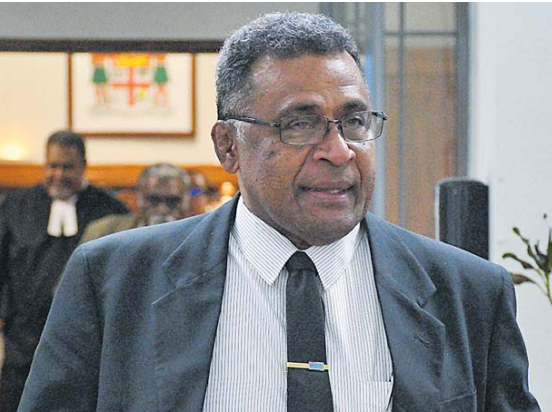
Finance Minister Esrom Immanuel has unveiled a wide-ranging package of health investments in the 2026-2027 National Budget, allocating $647 million to strengthen hospitals, expand specialist services, upgrade primary healthcare facilities and combat the country’s growing HIV crisis.
Delivering the Budget in Parliament, Mr Immanuel said Fiji’s health sector had suffered from years of underinvestment.
“Mr Speaker Sir, investment in our health sector has lagged behind due to years of neglect and underinvestment.”
Of the total allocation, $477 million will go directly to the Ministry of Health to fund doctors, nurses and allied health professionals, purchase medicines and medical supplies, and procure biomedical equipment.
A key feature of the Budget is the launch of the $500 million (US$242 million) Pacific Healthy Islands Transformation (PHIT) Project, supported by the World Bank, Asian Development Bank (ADB) and the OPEC Fund.
Mr Immanuel described the initiative as a major step towards transforming Fiji’s healthcare system over the next four years.
The first major project under PHIT will be Fiji’s first radiotherapy and cancer treatment centre at the Colonial War Memorial (CWM) Hospital.
Construction is expected to begin within the next year and the completed facility will include linear accelerator technology and chemotherapy services capable of treating up to 60 patients each day, reducing the need for overseas referrals.
The Budget also funds an expansion of acute care services at CWM Hospital with 56 additional beds for adults and children, helping relieve chronic overcrowding and eventually replacing the use of container walkways connecting maternity services to operating theatres.
Government will also begin upgrading and rebuilding 17 priority health facilities across urban, rural and maritime communities, including Valelevu, Nuffield, Balevuto, Kabara, Tukavesi, Lami and Nausori.
Mr Immanuel said the Government was also working with UNICEF to digitally connect at least 70 primary healthcare facilities, enabling real-time patient data, improved continuity of care and more efficient health services.
The programme will also introduce online training for frontline health workers and establish a national artificial intelligence risk mitigation framework.
The Budget allocates $41 million towards implementation of the PHIT project during the 2026-2027 financial year.
Mr Immanuel said the Australian Government was supporting master planning for Fiji’s new national tertiary hospital in Valelevu, while providing AUD10 million for urgent infrastructure upgrades at the existing CWM Hospital.
The first phase includes roofing and drainage improvements, installation of a 200,000-litre potable water storage system, sewer upgrades for the maternity unit and refurbishment of the Acute Patient Ward.
The Finance Minister said Government continued to work with Health Care Fiji Limited, a subsidiary of the Fiji National Provident Fund, and Aspen Medical to renegotiate the public-private partnership agreement covering Lautoka and Ba Hospitals, with assistance from the International Finance Corporation (IFC).
He said significant progress had already been achieved through investment in a state-of-the-art cardiac facility in Lautoka, upgraded hospital infrastructure, modern medical equipment and improved health services.
“We now also have our first JCI accredited hospital in Ba,” Mr Immanuel said.
Since 2022, Health Care Fiji has performed more than 300 open-heart surgeries and over 1,000 advanced cardiac procedures, while introducing services including a Cardiac Cath Lab, MRI, interventional radiology and expanded oncology treatment.
The Budget provides $120 million for the continued operation and maintenance of Lautoka and Ba Hospitals.
Mr Immanuel also announced that the Government of India was progressing plans for a 100-bed Super Specialty Hospital in Nasinu, with land acquisition completed and construction expected to begin early next year.
He said Government had also encouraged private investment through tax incentives and other support, resulting in expanded specialist healthcare services from providers including Pacific Specialist Healthcare, Oceania Hospitals, MIOT Pacific Hospital, Nasese Private Hospital and Sai Prema Hospital.
Addressing the country’s HIV epidemic, Mr Immanuel described the crisis as “a major existential threat” requiring an urgent national response.
He said Government, with support from Australia, New Zealand and other development partners, had adopted a multi-pronged strategy focused on reducing drug use, expanding public awareness, procuring HIV medicines, strengthening testing and treatment, building healthcare capacity and improving prevention measures.
The 2026-2027 Budget allocates approximately $12 million towards the national HIV response.

