Finance Minister Esrom Immanuel has announced a $2 billion renewable energy investment programme, describing it as one of the largest infrastructure initiatives in Fiji’s history and a cornerstone of the country’s long-term economic growth strategy.
Delivering the 2026-2027 National Budget in Parliament, Mr Immanuel said reliable and affordable electricity was essential for sustained economic expansion, particularly following the recent global fuel crisis.
“Mr Speaker Sir, energy security and access to electricity is a major prerequisite for growth and development. The current fuel crisis has made the need for renewable energy transition even more urgent.”
“Without reliable and affordable electricity, we cannot have sustained growth and economic expansion.”
Mr Immanuel said Energy Fiji Limited (EFL) was progressing an investment programme worth approximately $2 billion to strengthen Fiji’s energy security and accelerate the country’s transition to renewable energy.
The programme includes the construction of two new hydropower schemes capable of generating 50 megawatts of renewable baseload power, together with approximately 165 megawatts of solar generation supported by battery storage.
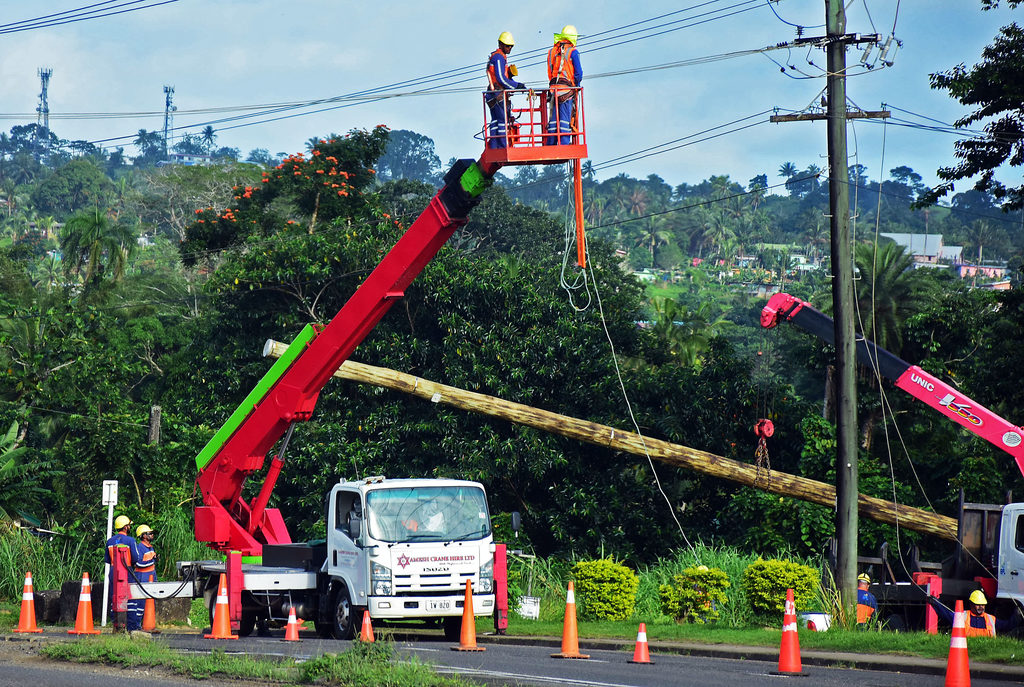
The investment will also fund major electricity grid upgrades, increased transmission redundancy and the replacement of ageing infrastructure across the national network.
Mr Immanuel said the projects would support Fiji’s target of increasing renewable energy generation to 60 per cent, with the long-term objective of reaching 90 per cent by 2035.
He said the transition would reduce Fiji’s reliance on imported fuel while strengthening long-term energy security.
Recognising the national importance of the programme, Mr Immanuel said Government would support EFL in securing affordable financing and climate investment funding to help minimise future electricity costs for consumers.
He said Government was working with the Asian Development Bank (ADB), World Bank, European Investment Bank (EIB) and other development partners to finance the programme, with Government providing the necessary loan guarantees and investment approvals.
Mr Immanuel said significant preparatory work had already been completed and thanked Fiji’s development partners for committing both financing and technical assistance.
He said construction is expected to commence in 2027, marking the next phase of Fiji’s renewable energy transition.