
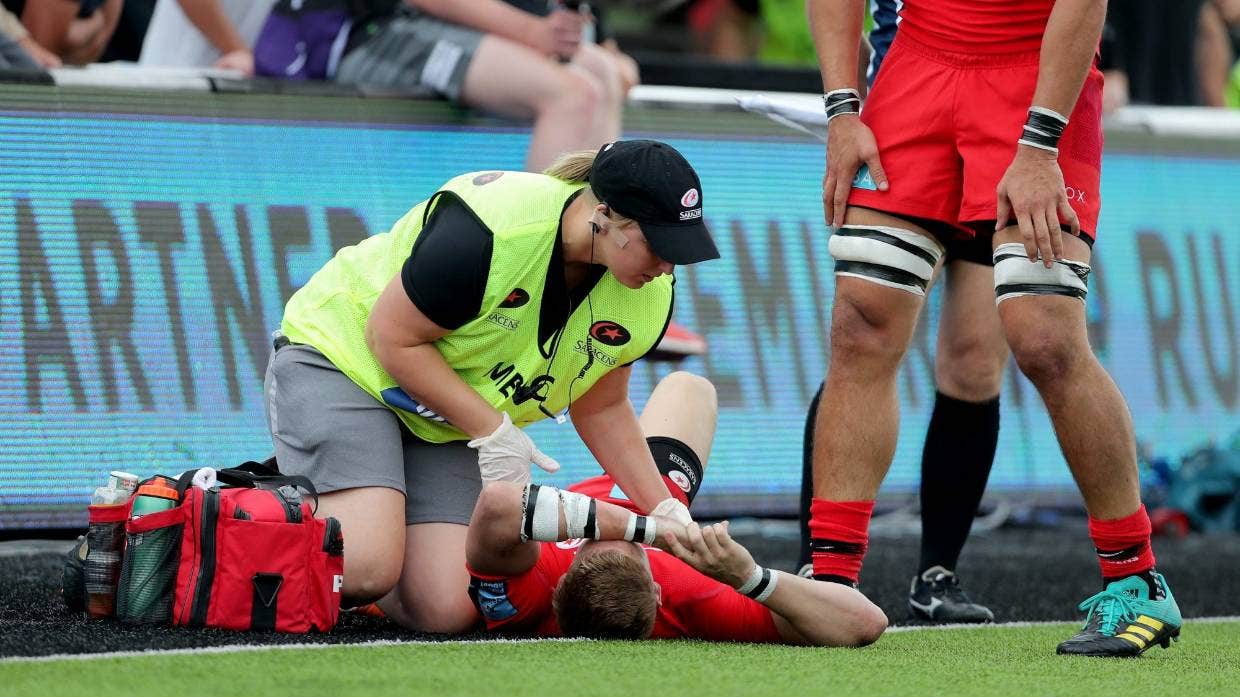
World Rugby have launched a Brain Health Initiative, and with it, a message to current and former players that it’s much more than just head knocks which are contributing to dementia.
At the World Rugby Medical Commission Conference in London the governing body on Thursday (NZ time) announced a new global education campaign aimed to support current and former elite players who might be concerned about their wellbeing and brain health.
It comes just two weeks after former All Blacks prop Carl Hayman revealed he had been diagnosed with early-onset dementia.
The 42-year-old has joined a lawsuit involving more than 150 former professional rugby players that claims the sport’s bodies, including World Rugby, failed to protect players from the risks caused by concussions.
But in their new global initiative, World Rugby, in conjunction with independent experts, has outlined that concussion is just one of 12 “modifiable risk factors” that can affect brain health and influence the risk of getting dementia.
At the heart of World Rugby’s campaign is an educational video describing the risk factors of dementia, while also providing information on where current or former players should go if they have concerns about their brain health. The governing body will also be supporting free brain health clinics where former players will be able to access expert consultation, advice and clinical assessment, with a long-term goal to create role models for younger players and support to communities beyond the game.
“Long-term cognitive health is extremely complex, and dementia isn’t necessarily a consequence of one factor,” said Professor Craig Ritchie, one of the independent experts involved.
“It is important for those involved in the game to understand that by prioritising good brain health, it is possible to reduce the risk of developing dementia and other degenerative brain conditions.
“Rugby players, past and present, can make moves such as maintaining good health and fitness, and tackling stress, anxiety and depression to help reduce certain risk factors, while the sport continues to prioritise reducing the risk of head impacts for players at all levels and stages of the game.”
World Rugby Chairman Sir Bill Beaumont said the organisation cared deeply about every member of their rugby family and had consistently acted on evolving science and evidence to advance player welfare, particularly on this “complex and daunting topic”.
“I’ve been saddened by the recent, brave accounts of former players about their experiences,” Beaumont said.
“We must, and are, putting those players at the heart of our welfare plans. Good brain health is much wider than what happens on the field, and we have more control over it than you would think. It is about creating community, starting conversations and building an understanding of how we all can make lifestyle changes that can positively impact our long-term wellbeing.
“At the same time, we will not sit still in evolving our game to ensure it best protects those playing it.”
In the wake of Hayman’s news, former All Blacks doctor John Mayhew said there needed to be more research done to determine a direct link between concussions and dementia, and felt the issue of head injuries in rugby could often get clouded by emotion, particularly with high-profile athletes involved.

