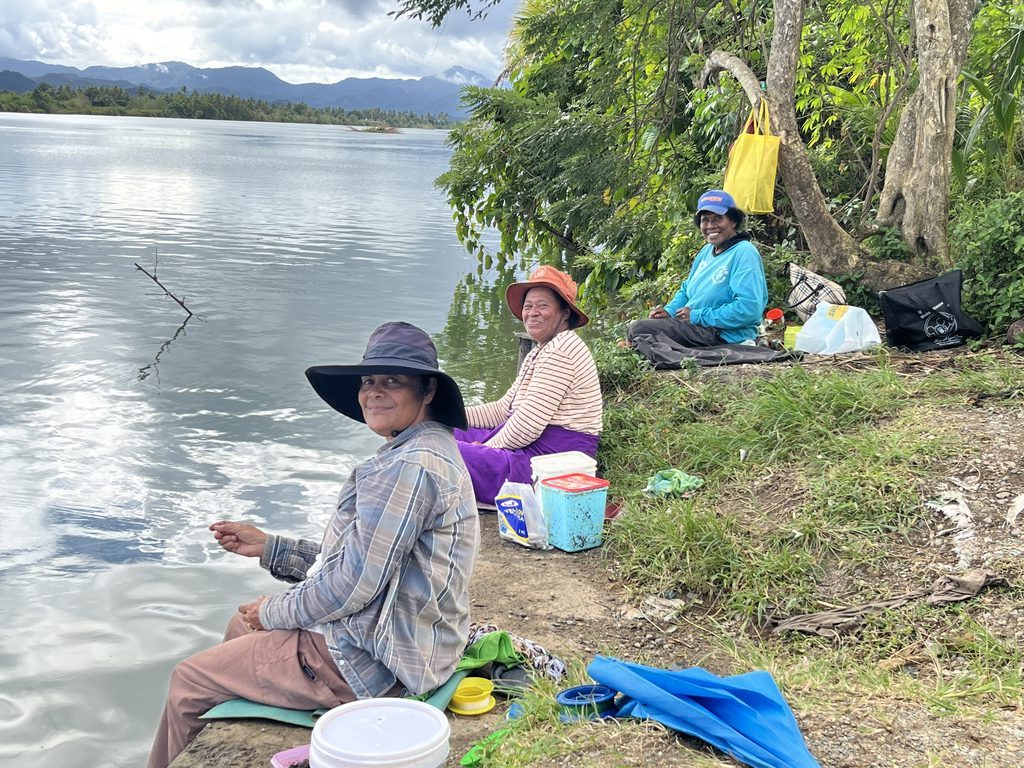
Down by the Navua River, the water moves like memory, steady and deeply tied to generations of lived experience.
Within indigenous Fijian communities, fishing has long reflected gendered roles.
Men are often associated with deeper sea fishing, while women remain closer to shore and riverbanks.
Yet within those boundaries, fisherwomen have built a strong and enduring tradition of their own—one that blends survival, caregiving, and knowledge passed through generations.
Fisherwomen also play an important role in nurturing their children and are often seen taking them fishing.
On these trips, they not only teach how to fish but also pass on skills and understanding of the tides, ensuring knowledge is carried forward.
For women along the Navua River, that message is not distant polic. It is lived reality, seen in changing catches and shifting tides.
A life shaped by water
Caroline Dunn, 63, grew up in Togoru, Navua, where her family lived by the sea and fished regularly.
She remembers her mother and grandmother catching saqa, kaikai, ki, and matu in shallow waters, adjacent to mangrove colonies.
Fishing became a natural part of her life, first as tradition, now as both livelihood and companionship.
Today, she fishes along the seawall at the Naitata Road roundabout, where women gather daily.
“The best time to fish is when the tide comes in or goes out,” Ms Dunn said.
“That’s when the fish bite.”
Professional anglers would know the same pattern: moving water stirs fish activity, while slack tide slows it down.
More than food on the table
Some women walk to the fishing spot, others take the bus, paying 95 cents each way.
“Fishing is a hobby, but I also do it to put food on the table,” Ms Dunn said.
“Today, I will cook fish in coconut milk with bele leaves.”
But the seawall is more than a fishing ground. It is a social space of sorts.
“We keep each other company. We crack jokes, tell stories, and catch up,” she said.
“We have become very close friends.”
Meals are shared, laughter is constant, and over time, strangers become family.
Healing by the water
For Ms Dunn, fishing also carries emotional weight. Her husband, originally from Nacomoto, Kadavu, passed away seven months ago. His demise has left a vaccum in her heart.
“I sometimes feel lonely at home because there is nobody to talk to,” she said.
“So fishing gives me patience and helps me clear my mind. It is therapeutic.”
She also spent 18 years in the United States working as a caregiver in the state of California, where she continued fishing in her free time.
Even so, she believes Fiji offers something deeper.
“The food is affordable in the US and there’s a lot of jobs, but if you want peace of mind and family, Fiji is the best place in the world.”
Sharing life and knowledge
Ms Dunn’s newfound friend and fishing partner, Finau Bale, says fish is a healthier and cheaper alternative to meat.
“I love boiling fish with bele from my garden,” she said.
She recalls growing up in Vanua Levu, fishing with village women using nets to catch salala and gathering seashells on the reef.
To lure fish, women use sandworms called sesea or small shrimp as bait.
Down by the Navua River, fishing remains more than survival. It is memory, companionship, and continuity—carried by women who sustain both their families and each other, one tide at a time.
According to an SPC report, in Fiji, women like Ms Dunn and her friends, constitute a significant portion of the agricultural, fisheries, and forestry sectors, contributing to both subsistence and commercial activities.
They represent 12 per cent of farming household heads, constitute 14 per cent of all farmers, conduct 51 per cent of shore fishing and represent 94 per cent of freshwater fishers.
Despite their significant expertise, and contributions, they encounter obstacles accessing essential resources like land, finance, and technology due to structural and institutional barriers as well as cultural norms and biases.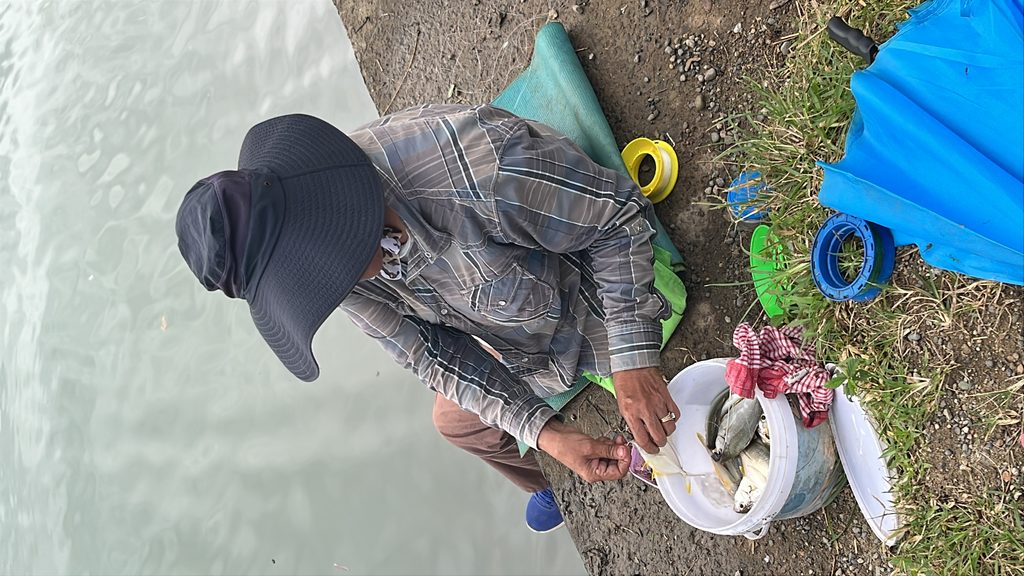
Caroline Dunn checks on her fish bucket.
Picture: ANA MADIGIBULI
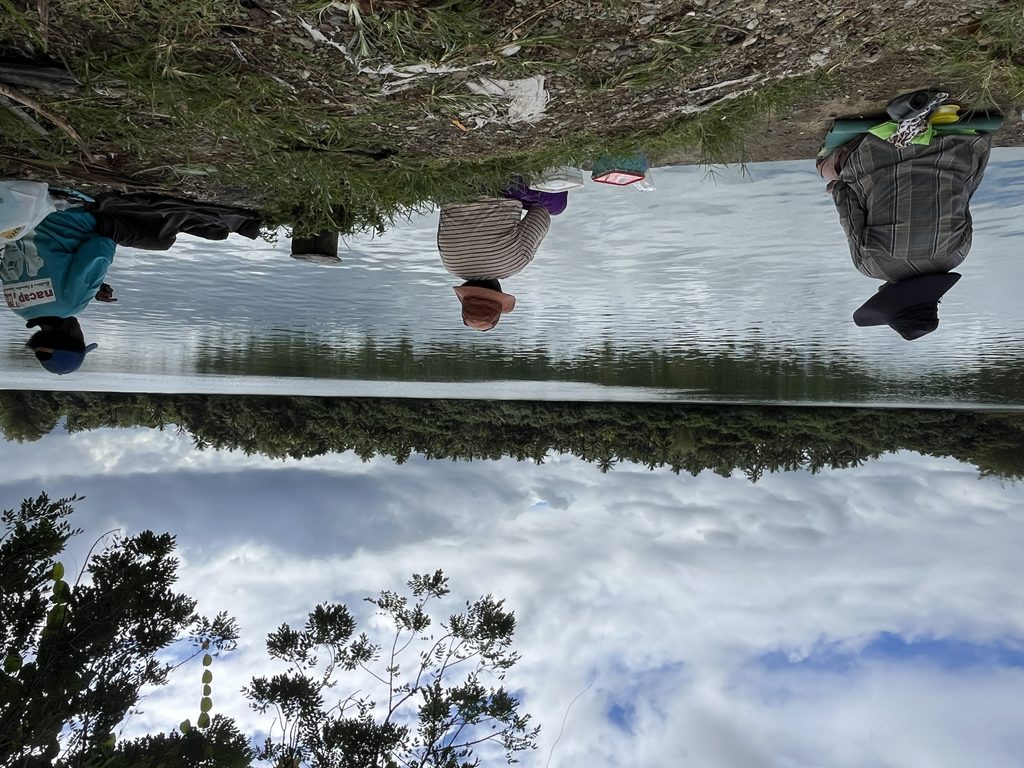
The seawall gets dark as the sun hides behind the cloud above Caroline Dunn and her friends. Picture: ANA MADIGIBULI
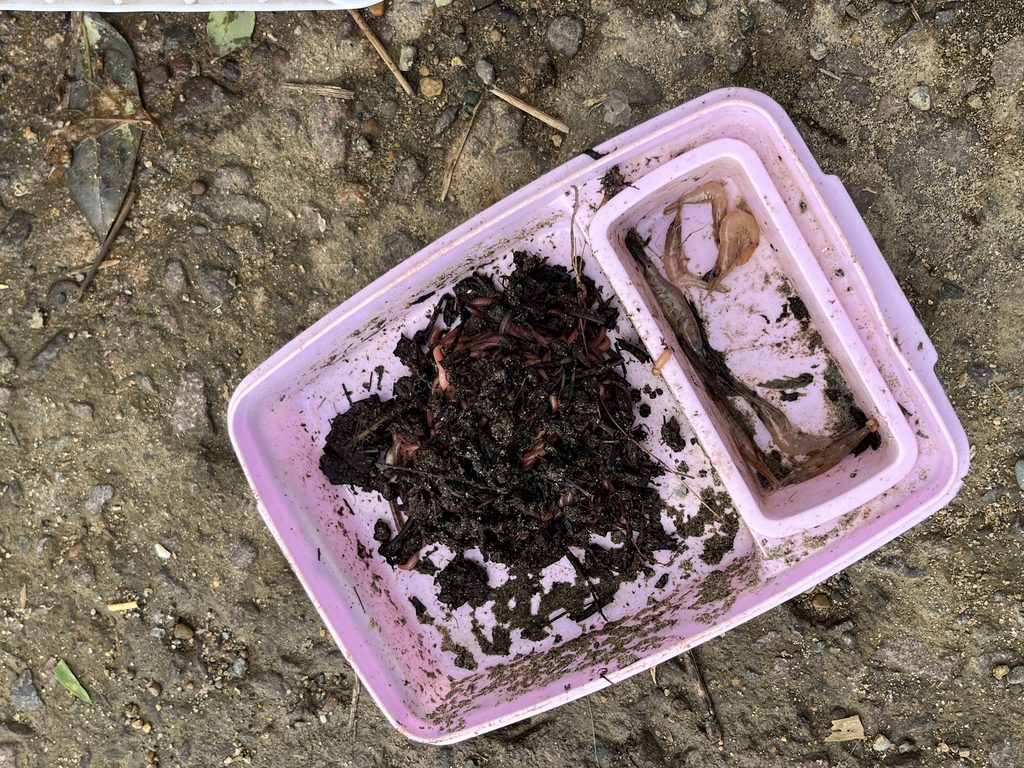
Sandworm of sesea is used as fishing bait. Picture: ANA MADIGIBULI