
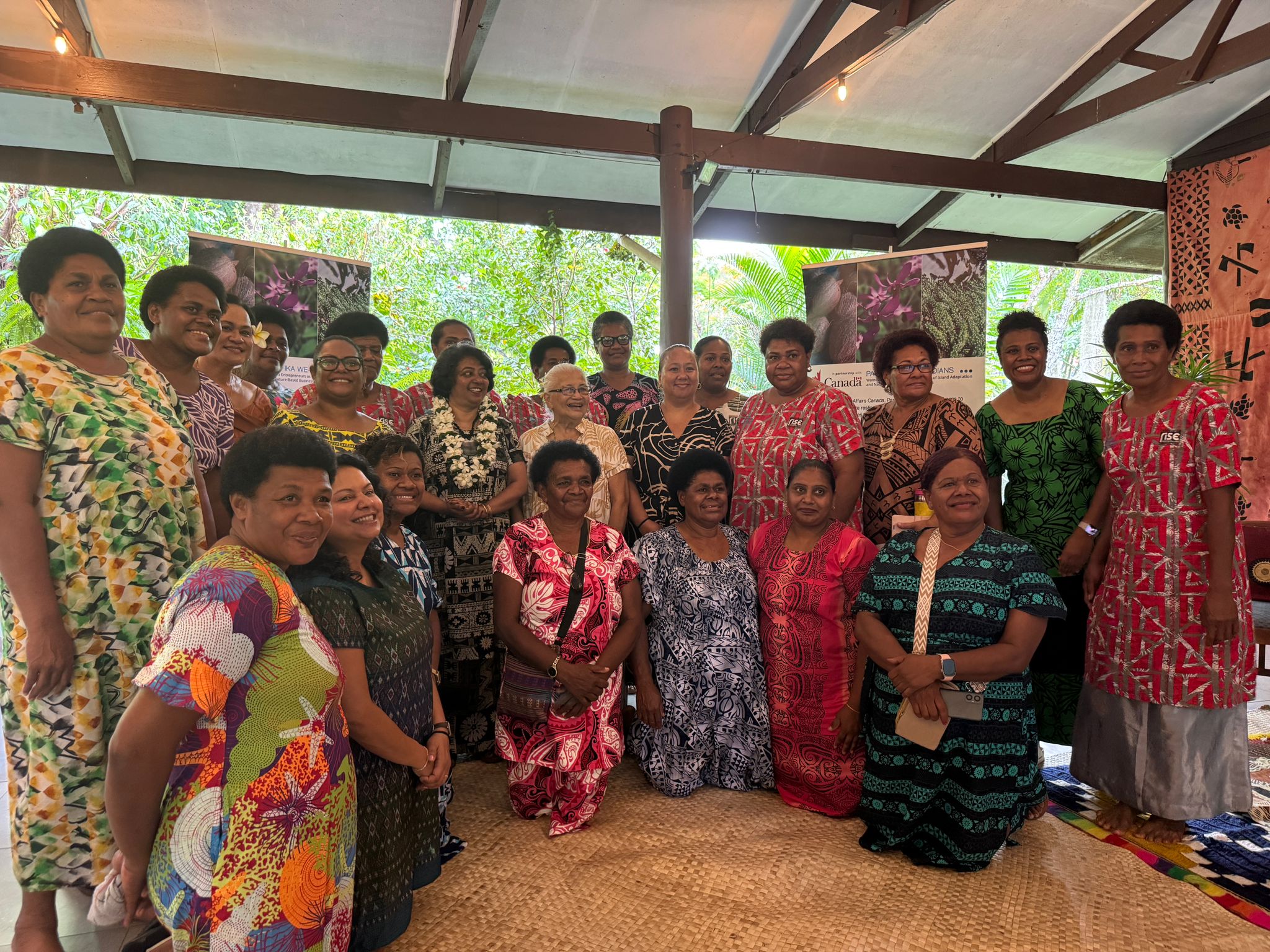
CLIMATE change adaptation must be locally led, grounded in community knowledge, and inclusive of women’s leadership, says Minister for Women Sashi Kiran.
She told those present at the Pasifika WE Guardians (PWEG) Project launch in Nadi yesterday that women-led, nature-based enterprises play a critical role in the Pacific.
Ms Kiran said this included strengthening household incomes, protecting ecosystems, reducing climate-related losses, and building resilient communities.
The project is a multi-year regional climate change adaptation initiative that began in March 2024 with a $7.8million investment from the government of Canada.
It focused on climate-vulnerable areas of Fiji, Samoa, and Tuvalu.
“Whether in sustainable agriculture, biodiversity conservation, coastal protection, fisheries, eco-tourism, or traditional natural products, these enterprises show that economic empowerment and environmental stewardship go hand in hand,” she said.
“In the Pacific, climate change is not a future threat — it is our daily reality.”
She said rising sea levels, stronger cyclones, prolonged droughts, coastal erosion, and flooding continue to threaten our homes, livelihoods, food security, and cultural heritage.
“We have women from Nakorotubu in Ra here today. Most of their homes were completely flattened by the category five Tropical Cyclone Winston; farms and coasts were damaged, and recovery is expected to take years.
“With the frequency of natural disasters, no community is spared; these impacts are felt most deeply in rural, maritime, and outer island communities — and within those communities, women often carry the heaviest burden.
“Yet Pacific women are also custodians of knowledge — of land, of oceans, of food systems, and of community resilience.”
Ms Kiran added that indigenous women, rural women, and women working across both the formal and informal economies sustain livelihoods, manage natural resources, and respond to climate shocks every day.
“Fiji’s strength lies in its diversity, and it is essential that we recognise the role and voice of all women in sustaining livelihoods and contributing to green and nature-based economies.
“This initiative rightly recognises that when women are empowered, communities are strengthened, ecosystems are protected, and recovery from disasters is faster and more sustainable.
“Our Climate Change Act embeds gender equality as a central principle for effective climate action.”

