

At 23, Adi Salamalawa Korosaya is not your typical law student.
Recently elected as president of the University of the South Pacific Law Students Association, she balances the demands of her fifth year pursuing a combined Bachelor of Laws and Bachelor of Commerce at USP with her passion for justice and community service.
Hailing from Vanuabalavu in Lau, with maternal links to Tavualevu in Tavua, Ms Korosaya’s path to law was far from direct.
“In high school, I studied science, and becoming a lawyer was not something I had considered,” she admitted.
“But over time I became passionate about helping people, and I realised many in Fiji lack access to justice. That motivated me to pursue law so I could contribute to making justice more accessible.”
The decision to switch disciplines came after completing foundation science studies at USP, when she faced the choice between medicine and law.
Encouragement from relatives in the legal field, combined with a heartfelt conversation with her mother, gave her the confidence to follow her true passion.
Challenges of law school
The transition from science to law was not without hurdles.
Unlike science, which focuses on numbers and formulas, law demands careful articulation, critical analysis and extensive reading.
Time management, to Ms Korosaya, quickly became a necessity.
“Law requires articulation, precision and extensive reading,” she explained.
“Time management was also a challenge because multiple assignments can be due within a single week.”
These early adjustments prepared her for the complex balancing act of leading the association while keeping up with a demanding academic workload.
Leadership philosophy
For Ms Korosaya, the presidency is more about the opportunity to shape the future of law students across the region, than the title.
Among her top priorities are developing advocacy, writing, and speaking skills as well as raise awareness about access to justice in Fiji.
“I want students to be confident in advising communities about their legal rights,” she said.
Workshops on legal writing, public speaking and the IREC (Issue, Rule, Explanation, Conclusion) method are planned, alongside collaborative events with other student bodies to foster greater engagement across the university.
Promoting wellbeing and balance
Recognising the pressures of law school, Ms Korosaya emphasised the importance of student wellbeing.
Organising recreational and social activities, she believes, is key to maintaining balance.
“Law school can be stressful, activities that help students relax and connect with each other are essential for maintaining mental wellbeing.”
Another focus is bridging the gap between theory and practice.
Her internship with Kapadia Lawyers has shown her the stark contrast between classroom learning and practical legal work.
“My internship strengthened my time management skills and gave me hands-on experience drafting legal documents,” she said.
Ms Korosaya hopes to advocate in pressing the university to make internships compulsory from the third year, giving students early exposure to practical legal work.
Championing justice
Ms Korosaya’s commitment extends beyond student concerns as she is deeply passionate about broader justice issues, including access to legal services in rural communities and climate justice.
“Climate change is not only an environmental issue but also a legal and justice issue,” she explained.
“Relocation, compensation and legal protections for affected communities will increasingly require informed legal responses.”
Looking ahead, she aspires to qualify as a legal practitioner and work in a government policy-making capacity, contributing to reforms that strengthen access to justice across Fiji.
She believes young lawyers play a critical role in maintaining accountability, encouraging transparency, and supporting reform where laws have become outdated.
Ms Korosaya also shared that the pinnacle of her career would be to one day become the first woman to serve in senior positions of state that historically till date have exclusively been held by men such as Attorney-General, Chief Justice, and maybe even Prime Minister.
Inspiration and guidance
Her leadership philosophy is influenced by figures such as Mother Teresa, whose humility and dedication to helping the poor continue to inspire her.
“Her life reminds us that leadership is ultimately about serving others,” Ms Korosaya said.
That ethos also shapes her message to fellow students, to whom she urged to speak up respectfully and constructively, especially on issues affecting youth, such as unemployment and social inequality.
Platform for change
For Ms Korosaya, the presidency of the law students’ association is not simply a student role, but rather a platform to shape the kind of legal profession she hopes to join.
She envisions the legal field to increasingly become one that is community-focused, ethically grounded, and committed to making justice accessible to all.
“As future lawyers, it is crucial that we stand for what is right and speak up when necessary,” she emphasised.
“Young people must voice their opinions respectfully and constructively, especially on issues affecting our generation.”
Adi Sala Korosaya is no doubt setting the standard for student leadership at our tertiary institutions.
Why? Because she is proving that law is not just about statutes, precedents, and cases, but more about serving communities and empowering the next generation of lawyers.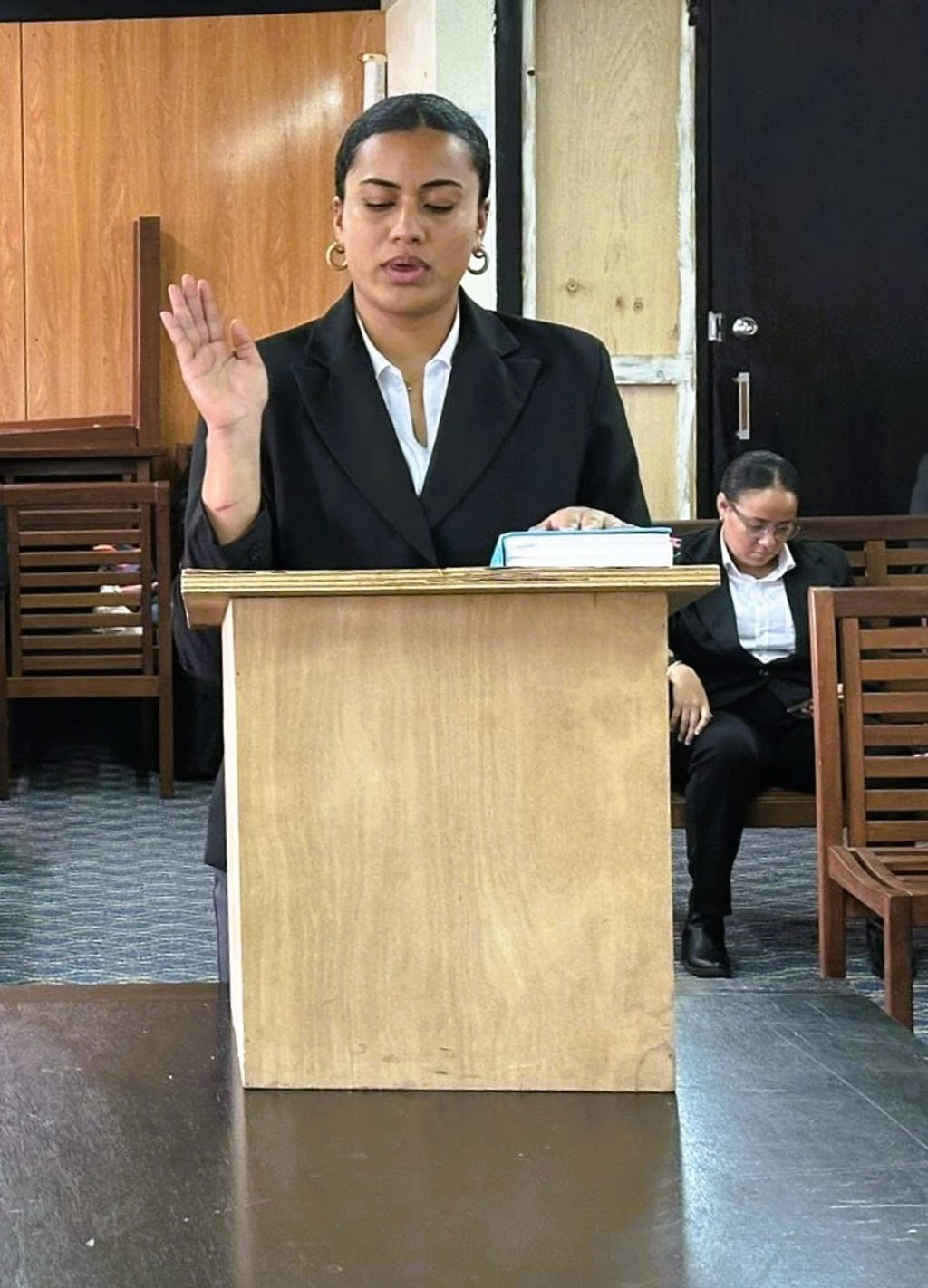
Adi Salamalawa Korosaya is sworn in as president of the USP Law Students Association (LSA) 2026. Picture: SUPPLIED
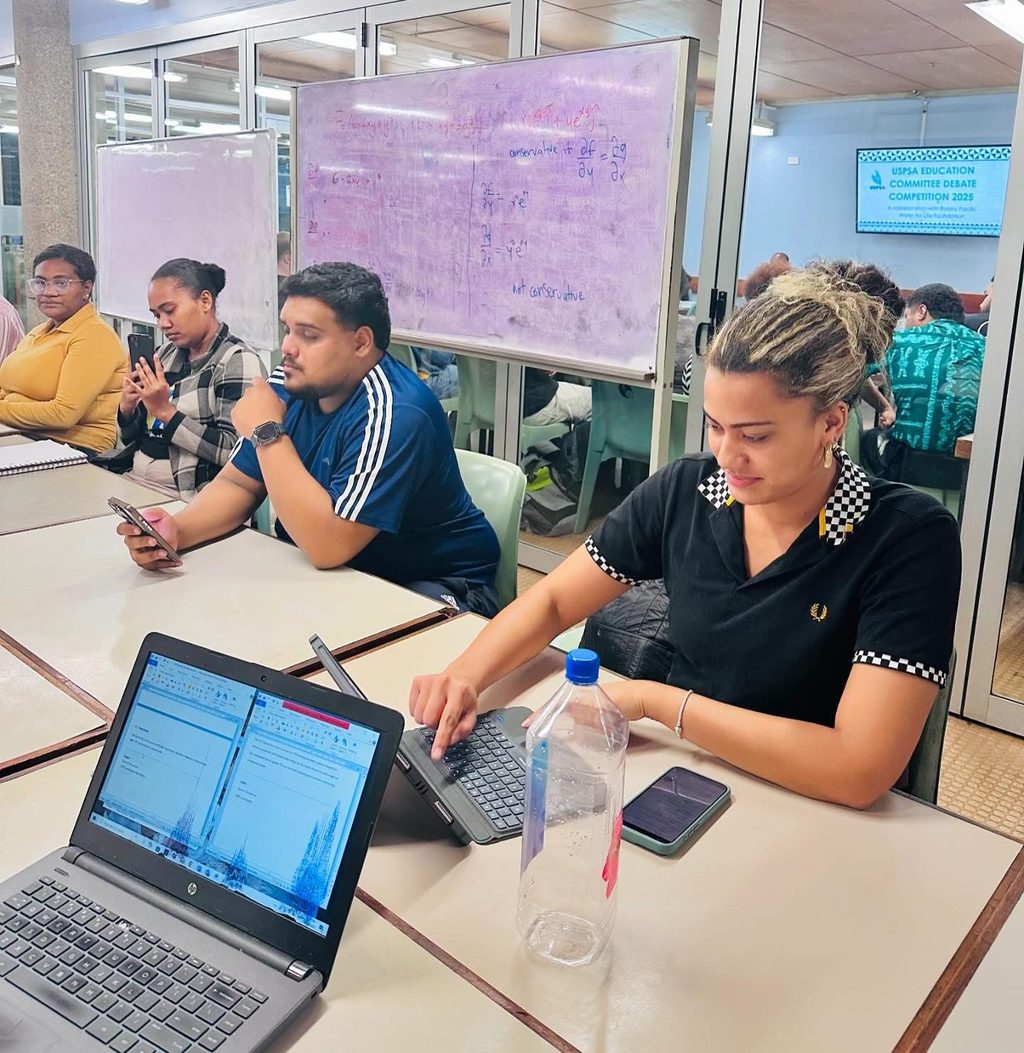
Adi Sala and fellow law students at USP. Picture: SUPPLIED

Making justice accessible to all is a top priority for Adi Sala. Picture: SUPPLIED

