
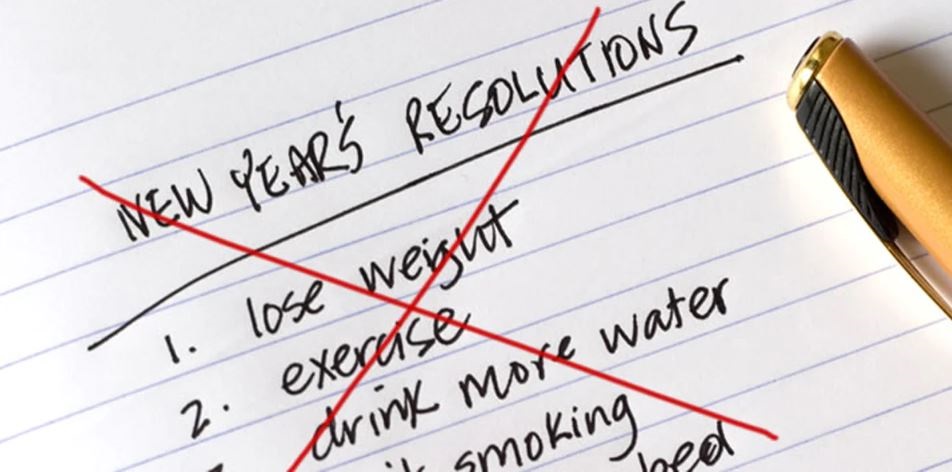
The new calendar year often makes people want to make certain resolutions. But to what extent are they able to follow through.
When the clock strikes 12, many have set a list of resolutions whether it is to lose/gain weight, pursue a new hobby, start a healthy diet, or something else.
Hope and optimism seems to always be in the air. The reality however is that many fail to keep their resolutions and this is the case all over the world.
Psychology discipline co-ordinator at The University of the South Pacific, Dr Annie Crookes explained that new year celebrations were socially constructed and had a standardised end and start point.
She said because of this it was natural for people to look back at the year and think about the changes they wanted to make as their ‘new starting point’.
“We are also socially taught that there is an expectation for us to do this – to use the new year as a way to look back and re-start,” Dr Crookes told The Sunday Times.
Most of us have been encouraged since childhood to make and share our New Year’s resolutions.
“During the year it is likely that we just get into the routine of surviving and getting through the day to day needs and activities – because of the social norms around New Years / year end – we may end up putting off any consideration of change and our personal goals until this time.”
Dr Crookes said during traditional festivities such as Christmas where there were various family gatherings and traditions, these could lead people to remember the things that they valued and what they wanted for themselves and their loved ones, which naturally leads into making resolutions.
“It feels kind of like anything is possible in the middle of these events – again especially perhaps with the media around Christmas being about magic, miracles, achieving the impossible.”
Over 80 per cent of the vast majority of resolutions are not kept beyond the first few months or even the first week and the main reason is that people tend to make “giant, all-encompassing and unachievable resolutions,” says Dr Crookes.
Many of these resolutions include activities that people don’t fundamentally enjoy so it is easier to give up and see no progress in the first few weeks.
“In some ways the big giant, almost abstract things are easier to imagine, we can always imagine winning a marathon or getting through the finish line, because we have plenty of media and other images showing that exact moment in others.
“What we don’t often have is an easy picture of the many small steps and long years of smaller goals in between, we often do not have easy access to picturing the processes only the outcomes.”

Dr Crookes shared that she preferred not to make resolutions at all because she knew all the reasons why they won’t stick.
“But for me one of the key things I think would be to have the continuation plan in place to know that something may happen along the way and to know what I need to do to stay on the overall path towards the goal.
“Also to be very clear in my mind that a lapse does not mean a failure, so one bad day or week or month – one or two steps backwards – was already planned for and does not mean failure. It is a normal, expected part of the journey.”
She said resolutions should be treated like business strategies and include SMART goals that are specific, measurable, attainable, relevant and time bound.
She added that people often state resolutions as rules rather than goals using phrases of ‘I will, or I won’t.’ rather then ‘my goal is to do/reach.’
“These rules are easily breakable because they feel imposed, arbitrary, and optional.
“An overall goal is broken down in smaller steps that are specified by how much and by when and these are relatively immediate amounts of time (weekly/ monthly and not just by the end of 2024) so you can clearly monitor and see your process which creates the reward/reinforcer of the hard work.”
Drawing from the five-stage change model, which helps people change their behaviour, Dr Crookes stated that real change and action only starts to happen in stage 3 to 4 (action and maintenance).
She said resolutions at New Years were drawn from stage 2 (contemplation) where one may realise that they want to make changes.
“So, make resolutions about things you were already working towards and have some sense of what is needed; use resolutions as a time to consolidate that change plan and goal, not come up with something new.”

