The question of mineral ownership in Fiji has moved beyond policy and into constitutional territory, as Government signals major reforms to the country’s mining laws.
Minister for Mineral Resources Filimone Vosarogo told Parliament on Friday that nationwide consultations had revealed deep and, at times, uncomfortable concerns — particularly around who owns what lies beneath the land.
“This is not a technical debate — this is a constitutional conversation. Who owns what lies beneath?” he said.
Mr Vosarogo said feedback from communities, landowners and stakeholders had been “very extensive, very insightful, and in places, very uncomfortable,” but necessary for meaningful reform.
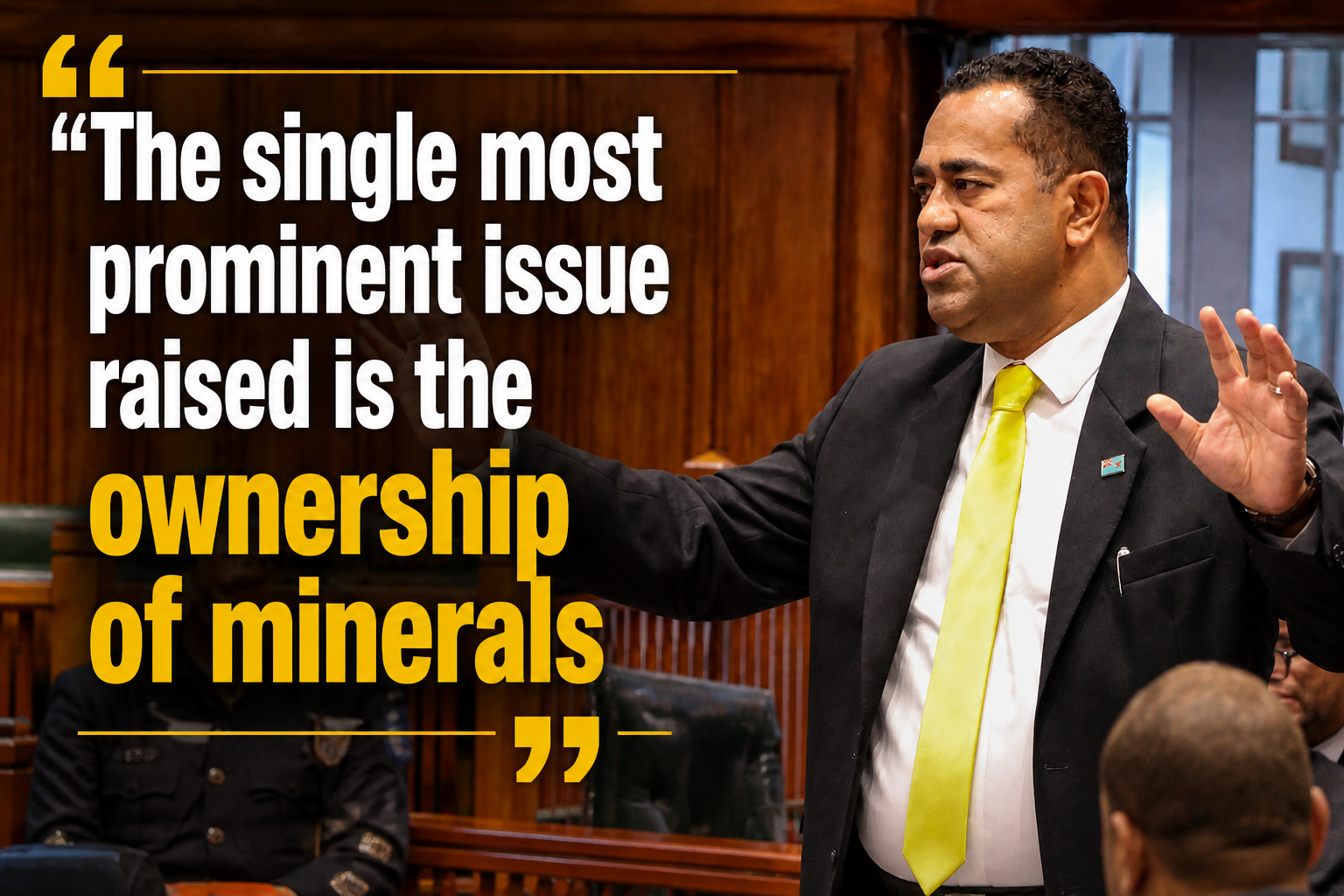
“The single most prominent issue raised… is the ownership of minerals,” he said.
He outlined three key proposals emerging from consultations: full or shared ownership by landowners, a custodial role for the State, and a model where the State administers resources but ownership rests with landowners.
“The 1965 Act assumes the Crown, now the State, owns all minerals. However, the vanua now is asking, is that still just today?” he said.
Beyond ownership, communities are calling for stronger rights and safeguards in the mining process.
“We have heard… explicit consent required before any exploration licence is issued — not just consultation,” Mr Vosarogo said, noting that some are also seeking veto powers over developments.
There are also calls for more equitable benefit-sharing arrangements and higher royalty rates, as well as stronger environmental protections.
“A stronger environmental safeguard… because days of dig and dump should be declared over at the start of the new law,” he said.
Concerns have also been raised about governance, including the concentration of decision-making powers.
“Too much power in one chair is a lot of risk,” Mr Vosarogo said.
He added that some submissions even proposed direct State investment in mining operations.
“These are not radical suggestions, they are, indeed, reasonable, and they will be in the new Bill,” he said.
Mr Vosarogo outlined a clear timeline for reform, with public consultations expected to conclude by mid-May, followed by drafting and submission of a revised Bill to Cabinet by July 31, 2026.
The Government is aiming to introduce the new legislation in Parliament by October 2026.