
What’s a catamaran?
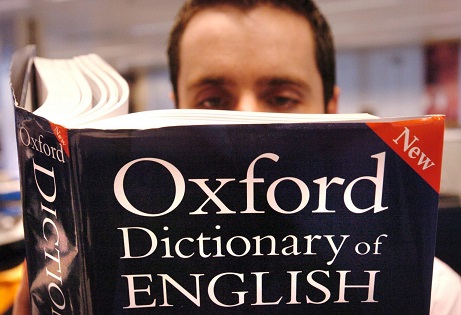
When I was in grade 12, my geography teacher, Mr. Ranganathan, (from Chennai) asked me if I knew the origin of the word “catamaran”. I knew what it was but I had no idea about its origin. He explained that it is like a bilibili. And it is derived from the Tamil word, kattumaram which means “logs bound together” and is a raft made of three to seven tree trunks latched together. Being a Tamilian, he was proud of the fact that the origin of the word was mentioned in the Oxford dictionary.
Hobson’s choice
That started my lifelong fascination for words and their origins and I became somewhat of a logophile (lover of words) and an etymologist (student of the origin of words). This love was further reinforced by my English teacher, Mrs. Doris C. Prasad, who taught us English – about Hobson’s choice, among other interesting words and their origins, what malapropism was etc. For words, origins or histories provide a context. For example, a hippopotamus is a “river horse,” from the Greek hippos, meaning “horse,” and potamos, meaning “river.” If you were offered a Hobson’s choice, would you know what was meant? Thomas Hobson owned a stable in England. He loved his horses, and to prevent any one horse from being overworked, he hired them out in turn. Customers had to take the horses they were given. Thus Hobson’s choice means no choice at all. We were given such a choice at home. I would ask my nom, “What’s for dinner?” She would say, “Alu and roti”. I would say, “Not again. Is there anything else? She would say, “Yes, roti and alu!
People’s Names
The English language is living and growing. Although many words have been part of it for many years, new words are added all the time Sometimes when a person invents or introduces something, that thing becomes associated with the person’s name. The person is forgotten while the name lives on. Examples include: mesmerize – F.A. Mesmer, an Austrian doctor and hypnotist, tantalize from the sad story of Tantalus, the mythical king. And pasteurized named after Dr. Louis Pasteur, the French chemist.
Malapropism
My major in college was zoology. The HOD, Dr. Sanjeev Raj, asked my classmate Suresh Prasad why he wanted to major in zoology. Suresh said he wanted to become an etymologist. Dr. Raj was amused, and said, “I think you want to be an entomologist”. Suresh had just uttered a malapropism which is the substitution of a word with a similar sound usually to achieve some sort of a comedic effect. Mrs. Malaprops is a humorous aunt in Richard Sheridan’s comedy-of-manners The Rivals. Here is an example of Mrs. Malaprop’s verbal lgaffe “The pineapple of politeness” (Instead of “pinnacle of politeness.”). Indian old-timers will remember the famous line Madhav ke ghar chori hoige. Or the immortal song by Mukesh – Saawan ka mahina, pawan kare shor.
Historical context
Some words also have interesting histories. The following examples will give you an idea of how history can affect language. Footman – It was once thought to bring bad luck if a person stepped on the door threshold when entering a house. Rich people hired a servant to stand whose job was to guard against a guest’s stepping on the threshold. The guard became known as a footman. Groggy – We’ve all felt “groggy” at one time or another – lethargic, sluggish. It originated in the 18th century with a British Admiral whose sailors gave him the nickname “Old Grog” on account of his cloak, which was made from a material called “grogram”. He said that his sailors should be served their rum diluted with water, rather than meat. This was called “grog”, and the feeling experienced by sailors when they’d drank too much of it was thus called “groggy”. Maybe it really was kava.
Quarantine
“Quarantine” has its origins in the devastating plague, the so called Black Death, which swept across Europe in the 14th century, wiping out around 30 per cent of Europe’s population. It comes from the Italian words “quarantagiorni”, or “forty days”. In an effort to halt the spread of the plague, ships were put into isolation on nearby islands for forty days before those on board were allowed ashore. Just like we did for COVID-19. Tantalize – This is one of my favorite words. King Tantalus had displeased the gods in some way. As a punishment, he was condemned to stay forever in water up to his chin while overhead hung boughs laden with fruits. Whenever he stooped to drink, the water disappeared and when he tried to reach the fruit, the wind blew it away. I believe the girls do the same thing to their boyfriends these days. But what do I know? I am too old to know if I am being tantalized.
Constantly expanding
English is still growing. About 800 neologisms (newly coined words or expressions) are added to the English language every year. The formation of blends such as motel from motor and hotel and acronyms (words made up from initial letters) like scuba (self-contained underwater breathing apparatus) is typical of late 20thy century English.
My Bad!!
Like Professor Henry Higgins, I have a great love for the English language and resent its contamination by social media and even in conversations. Recently I was talking to a neighbour who said, “My bad” after she said something rude. My bad?? What is that? Who even comes up with an obnoxious expression like that? So I called my daughter in the US about it. Much to my dismay, she said it was a pretty common expression. But then she lives in the USA and Higgins has rightly said, England and America are two countries separated by the same language.
Just desserts
Anyone who has the gall to adulterate the beauty of the English language should be given the cold shoulder. It refers to an old custom of giving an unwelcome guest a cold piece of meat from the shoulder of mutton, pork, or beef chop, as opposed to a welcome guest receiving a warm serving.
ARVIND MANI is a former teacher who is passionate about quality education. He lived in the US for 35 years and was actively involved in training youths to improve their speaking skills. The views expressed are the author’s and do not necessarily reflect the views of this newspaper. He can be reached at theinspiredteacher9@gmail.com

