
After departing Fiji and spending more than a year in Brisbane, Australia, Wesleyan missionary John Watsford received orders from the Missionary Committee in London to return to Fiji at once.
While Watsford questioned whether he should obey the order since he saw the delicate state of health his wife was in, she had urged him to go.
In his autobiography, ‘Glorious Gospel triumphs as seen in my life and work in Fiji and Australasia,’ he wrote that he never regretted this decision as he ‘trusted the Lord’ to make things work for them.
They set sail to Auckland then to Tonga before reaching Fiji. At the district meeting, he was appointed to the Viwa Circuit with Reverend Calvert to carry out the immense work of revising the Bible’s New Testament.
“Complying with the request of my brethren, I began at once the work of revision,” Watsford penned in his book.
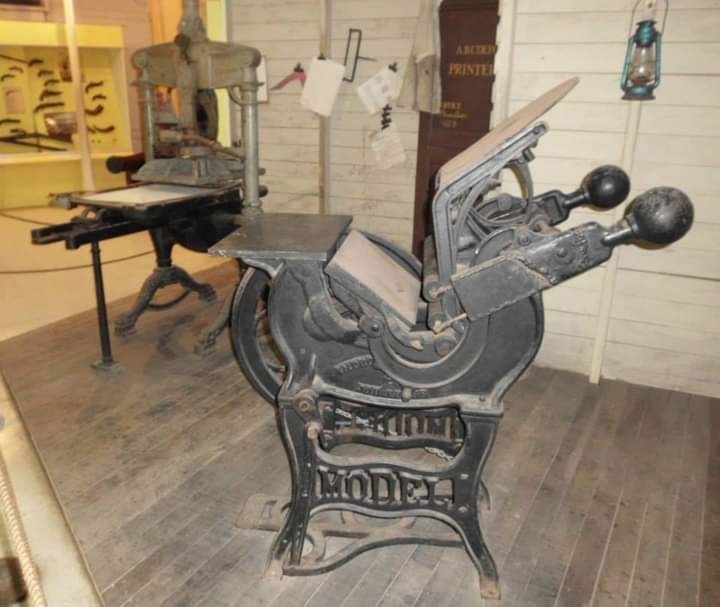
“Assisted by one or two native teachers, I was at it day after day, from early dawn until late at night. “As fast as I could supply Mr Calvert with copy, he went on with the printing at our press, where we had a good staff of workers.”
Just like any editing task, Watsford stated that many alterations and corrections were made after thorough investigation. The Viwa edition of the New Testament, completed in 12 months, was published which was a great joy to the missionaries and the people of Fiji.
Besides the revision of the New Testament, the work of evangelism grew. Many were converted, and a deep sorrow befell the island since the passing of Vatea the wife of Namosimalua, the high chief of Viwa.
“Vatea had been truly converted some years before, and her case was a very delightful and interesting one,” Watsford said.
” Often sorely tried and tempted, she remained faithful to God.” A terrible event that occurred that Watsford witnessed was the strangling of the old King Tanoa’s widows that took place after his death. Watsford wrote a diary entry dated December 8, 1852, the day Tanoa had died and described him as a ‘great and bad’ man. “He was at one time driven from his throne and fled to Somosomo and afterwards to Rewa,” Watsford wrote.
“His son, Seru, now Thakombau, succeeded in driving the rebel chiefs from Bau and bringing back his father. “Tanoa has had little to do at Bau for years, his Thakombau being really king.”
Tanoa lived to an old age and died a heathen. It was the custom in Fiji at the time that one or more of the wives of a chief was to be strangled when he died. “For some years the missionaries have been labouring to prevent this. In November last, when Tanoa was getting weaker, we often presented whale’s teeth to the king, according to Fiji custom and begged him to spare the women.”
While it was thought that there was good hope in succeeding, they continued to approach the young chief Cakobau whom they saw daily when Tanoa was low and begged him to spare the lives of the women.
“Mr Calvert who was greatly concerned about the matter and had done very much to try and prevent the strangling, was compelled to leave for Ovalau,” said Watsford.
“Soon after his departure I went in my canoe to Bau, when I reached the old King’s house, I was deeply affected to find most of the ladies of the town assembled and all weeping.”
The women that were chosen for the strangling were pointed out for Watsford. He spoke to these women and found some of them unwilling to die while one ‘spoke very lightly’ about it. “I told her of the other world and warned her, but she said, ‘I’m going to jump into hell.’
“I went to the large house and there found Thakombau’s wife superintending the making of the dresses for those who had to be strangled.”
When he found the chief, who was with the other men in a large open space making a sail, Watsford was questioned what he had come for. He told Cakobau they could not rest as they felt deeply about the strangling to which the chief laughed.
“I had a long talk with him and him a large ship it would not stop the
strangling.
“One of the chiefs spoke roughly to me, he said ‘we strangled women and cooked and ate our enemies before the door of the missionary’s house in Somosomo.”
Watsford told Cakobau that he was not taken aback by Ratu Mua’s insult as it was expected when he came to Fiji.
He was then told by the young chief to go to the women and get them to say whether they wanted to live and they would be allowed to.
“I went and spoke to them; but I might just as well have tried to hush the tempest into a calm, as to get those women to say that they wished to live. Having visited the old king, I returned to Viwa.”
Watsford had requested Verani to accompany him in the evening but since he was weak, he took Mr Martin the printer.
After a few hours on Viwa Island Watson went back to Bau at night. The island was dead still quiet and when he went to see old Tanoa, Cakobau questioned why he returned to which he replied: “I want to be present when your father dies, that I may try and prevent the strangling.”
Cakobau told him that it could not beprevented, and the women wished to die. Watsford remained for a while before he returned at midnight in full grief and when he returned the next morning it was told to him that the old Tanoa had died and that they were strangling the women.
“As I entered the house, they were strangling a Rewa lady. Sons and brothers or near relatives only can take part in the dreadful work.
“Four or five at each side were pulling the rope which was round the lady’s neck. Her face was covered, a person standing behind pressed upon her head, and her arms were round a lady in front of her.
“Nothing was heard but the cracking of the rope as it tightened around the neck. There was no struggle and after the rope had been held for about five minutes all was over.”
Cakobau held the rope when it was taken off and asked what he thought since Watsford witnessed it.
Watsford pleaded to stop the strangling, but the chief replied that because of the missionaries’ intervention, only five out of the 25 would be strangled.
He questioned Watsford on whether he was afraid to interfere with their customs to which he replied ‘no’ because it was for love that he was pleading to stop the barbarous
custom.
Cakobau stated: “Oh we all love them; we are strangling them because we love them.”
During their conversation, the rope for the third woman was prepared and two others were waiting at the door to be called in.
“They entered one of them as if going to a dance; their friends kissed them, and they were hurried into the presence of their Maker.
“I was greatly surprised that there was no noise, no crying. All was as silent as death except when, now and then, someone expressed her admiration of the ladies’ dresses, or the king spoke to me or I to him.”
When the last of the five had been strangled, Watsford felt it was wise to leave as he could not stand witnessing any more killing.
“When going out, I turned and tried to count the little fingers placed on reeds over the door, which according to the custom of the Fijians, had been just cut off the hands of babes and little children to show their love to the dead chief.
“But my heart sickened at the sight, and I hurried away to my boat with my soul crushed within me.”

