
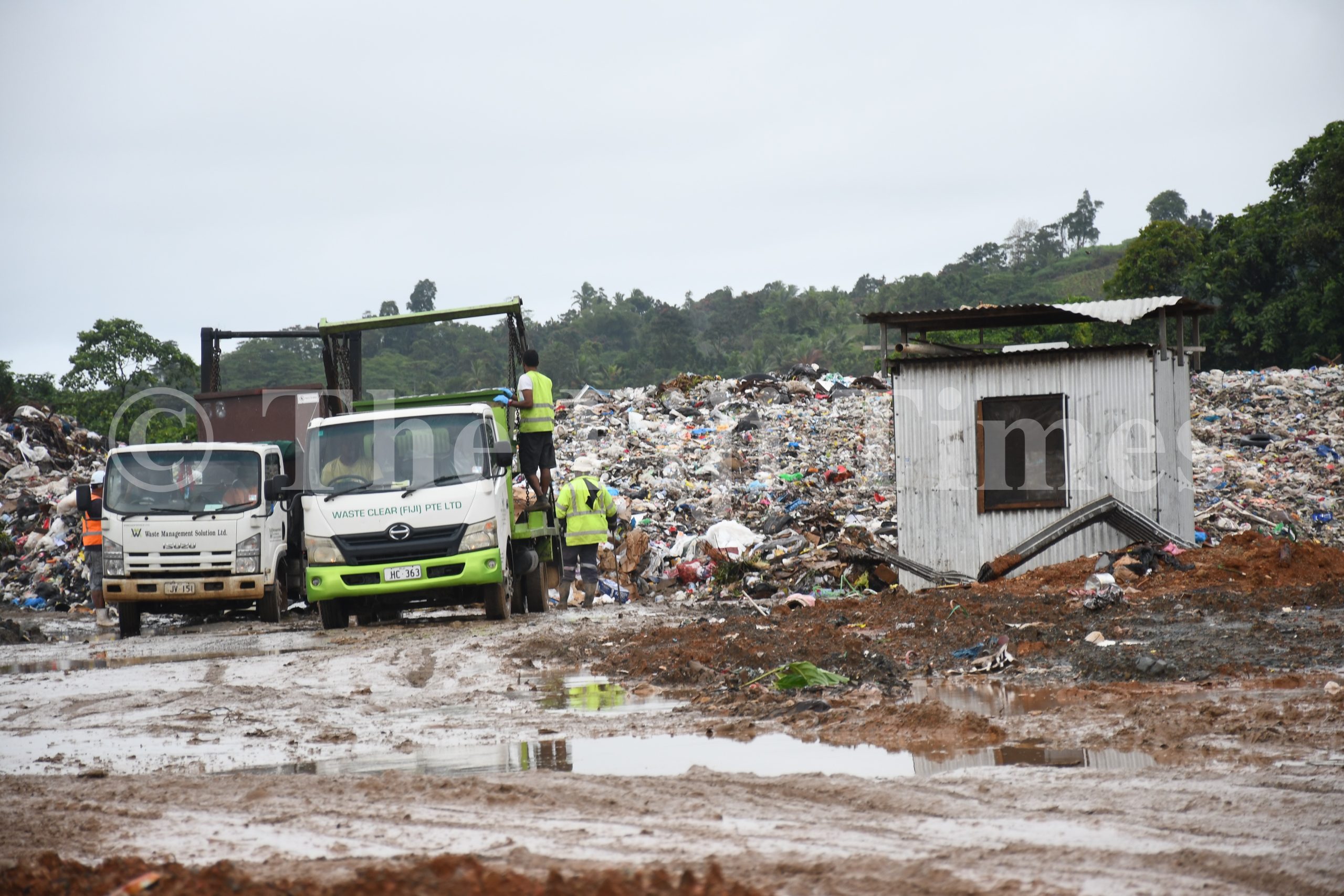
MEDICAL waste disposal in Fiji remains a concern.
This is outlined in Fiji’s National Development Plan (NDP) 2025-2029 and Vision 2050, in which the Government has labelled waste disposal a concern and tries to wade through solutions to curb this burgeoning crisis.
Under Section 7.4, titled Solid Waste Management, the document outlines several concerns about the disposal of medical waste, as improper methods of discarding of medical waste expose the environment and surrounding people to serious health threats.
“At present, medical waste is also disposed off at the Naboro landfill,” the document states.
“Medical waste includes amputated body parts, syringes, medical gloves and personal protective equipment.”
To better manage its medical waste, the Health Ministry opened a new medical waste incinerator – which could process about 200kg to 250kg of waste per each burn – at the Naboro landfill in June this year.
A 2020 World Bank report also stated that Fiji’s approach to healthcare waste management and infection control was more mature than most in the region.
It stated that while some hospitals had dedicated staff for infection control, others did not.
The report also stated that medical waste from the main hospitals and quarantine waste from airports and ports were incinerated.
However, there were concerns about waste incinerators for infectious waste showing “wear and tear” because of insufficient operational budgets.
And while this reflects one side of waste management in the country, Fiji still grapples with improper waste management.
Dismal recycling rates
The NDP outlines that Fiji faces significant challenges related to waste management attributed to increased economic activity, changing consumption activity and urbanisation.
“Only 0.2 per cent of waste was recycled in 2021,” the NDP states.
The document has identified that the issue in urban areas particularly has been exacerbated by rapid urbanisation, a growing number of informal settlements with inadequate sanitation services and poor waste management practices. The NDP further states that Fiji’s waste management system requires reforms to address the potential negative impacts on environment, health, food sources and crucial sectors such as tourism and agriculture.
“The lack of proper waste management mechanisms could lead to improper disposal methods.”
In addition, the NDP says there is a need to strengthen legislation, especially focusing on sustainability. There are also suggestions to introduce penalties for breaches.
The NDP also says there is a need to adopt appropriate technology, implement incentives for proper waste management systems, create awareness and improve collaboration among stakeholders.
Global commitments
Fiji’s guiding document has outlined that UN Sustainable Development Goals (SDGs) 1, 6, 12, 13, and 14 all list the need to ensure a clean and safe environment for communities, and this is not limited to land but the marine environment as well.
“The change in consumption and production patterns in Fiji has resulted in increasing volumes of both solid and liquid waste associated with pollution.
“The 2050 Strategy for the Blue Pacific Continent emphasises the vision for a resilient Pacific region, leading to free, healthy and productive lives. It also reflects on the damaging impacts of climate change and disasters together with the effect on the ocean and natural environment.”
Apart from this, the document states the Framework for Nature Conservation and Protected Areas also guides planning, prioritisation and implementation alongside the Cleaner Pacific 2025.
This, the NDP states, is the region’s framework to address waste and pollution.
Present state of things
According to the NDP, waste management falls within the ambit of the Department of Environment, under the Ministry of Environment and Climate Change, and the Ministry of Local Government.
The document summarises that Fiji’s 13 cities and towns rely on municipal councils for waste collection as mandated by the Local Government Act 1972.
“The Department of Environment is responsible for, among others, licensing of landfill operators, recycling and sorting of waste at source,” the document says.
“The Department of Environment has been engaged in public awareness and advocacy efforts through various media platforms and community outreach programs. In addition, the Local Government Review/Reforms Committee’s recommendation for shared services between municipalities, is crucial for extending waste management services to rural communities.”
The NDP states the Department of Environment has established a Waste Pollution Control Unit that monitors related activities. This unit is guided by the National Waste Management Strategy.
“A 7R policy of waste management was also launched by the Department of Environment in 2022. The permits and compliance enforcement systems have been outlined in the Environment Management (Waste Disposal and Recycling) Regulations 2007.
“The Public Health Act 2018 further stipulates the expansion of garbage collection to rural communities and delegated areas.”
What next?
The plan states that the inadequacy of infrastructure, rapid urbanisation, financing constraints and regulatory framework all exacerbate issues related to solid waste management.
“Aside from the Naboro landfill, constructed in 2005, waste management infrastructure is grossly inadequate. The Naboro landfill has managed over 1.29 million tonnes of waste, but other municipalities use unsanitary and open dumpsites.
“These sites are dangerously situated near sensitive ecosystems and pose significant health and environmental risks. Increasing waste production is a concern, as the current landfills and dumpsites will not be able to cater for the increase in waste produced.”
The NDP outlines that the lack of a garbage collection fleet, inadequate landfills, transfer stations, sorting stations and increased informal settlements are factors that affect solid waste management.
To address the issue in a robust manner, the plan outlines goals to create a sustainable waste management system and protect the environment from degradation, among other strategies.
The plan lists ambitious goals such as enhancing community advocacy and stakeholder engagement on environmental risks and challenges, introducing recycling programs in schools, tertiary institutes, private sector and informal settlements, and promoting research and development on waste management, and waste separation at source among others. There are also plans to formulate policies and procedures on waste management, which include biomedical waste.
The NDP states there is a need to review and streamline waste management and pollution control legislative framework, as well as review and strengthen the enforcement of environmental policies, legislations and regulations relating to waste management and pollution control.

