
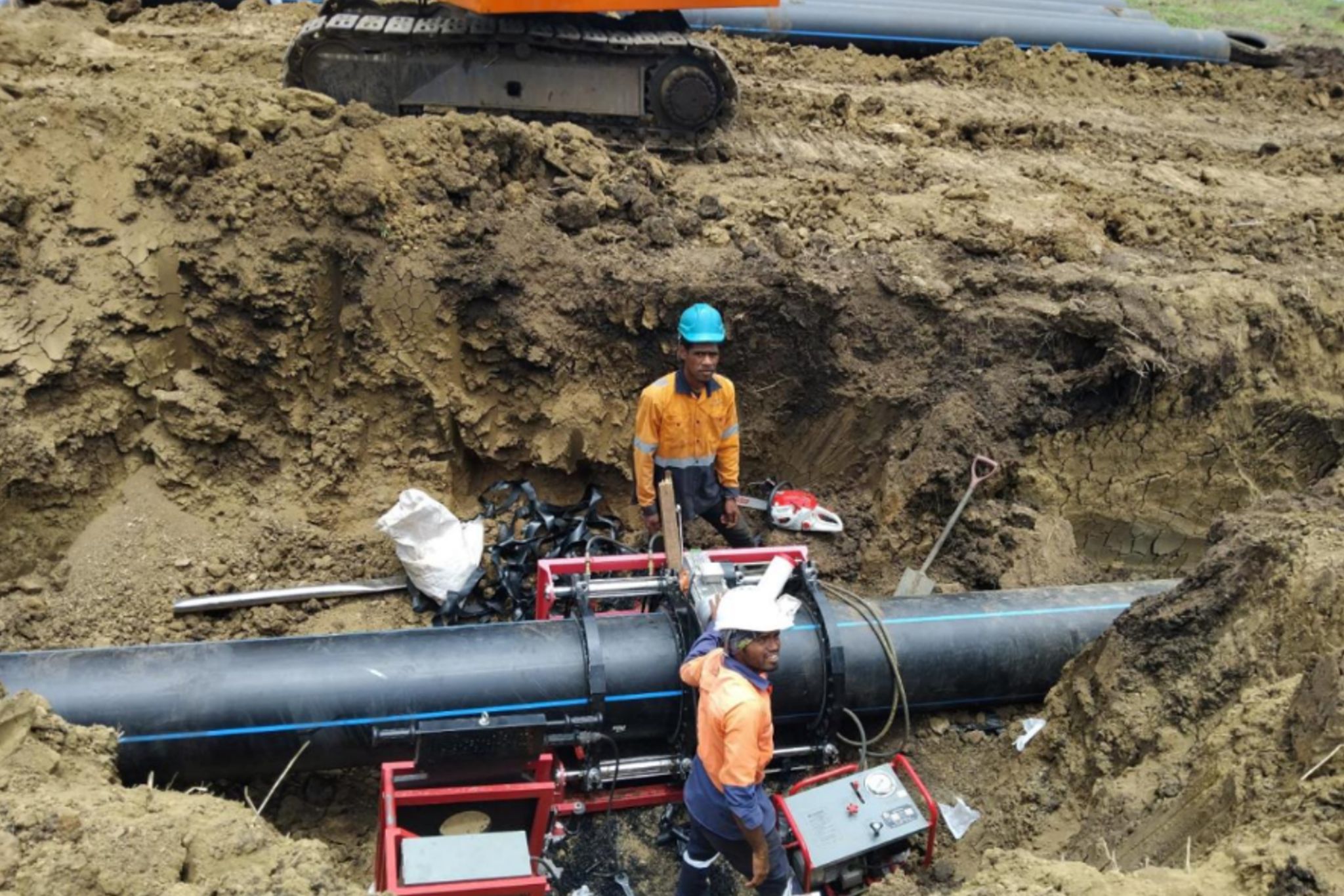
The Water Authority of Fiji (WAF) has reassured customers that materials used in its drinking water network, including modern plastic pipelines, are safe, internationally approved and pose no risk to public health or water quality.
The clarification follows claims circulating on social media alleging that plastic water mains contribute to harmful microplastics.
WAF said the assertions are inaccurate and not supported by engineering standards, public health guidance or established industry practice.
WAF Chief Executive Officer Seru Soderberg said infrastructure decisions are governed by strict safety requirements and internationally recognised standards.
“Modern pipeline materials used within our drinking water systems are specifically designed for potable water transport,” Mr Soderberg said.
“They are independently tested, quality assured and installed in accordance with Australian and New Zealand standards to ensure they do not release harmful substances or compromise water quality.”
He said materials such as mPVC, HDPE and uPVC are widely used by water utilities globally due to their durability, corrosion resistance and ability to maintain water quality over long service lives.
All products used by WAF are lead-free, chemically stable and certified for long-term drinking water use.
WAF acknowledged public concern around microplastics, stating that potable-grade materials are tested to ensure any interaction with water remains well within international health and safety thresholds.
The Authority also conducts routine monitoring across its supply network to ensure compliance with Fiji National Drinking Water Quality standards.
“WAF is committed to transparency and public safety,” Mr Soderberg said, urging the public to rely on verified information from official channels to avoid unnecessary concern caused by misinformation.

