
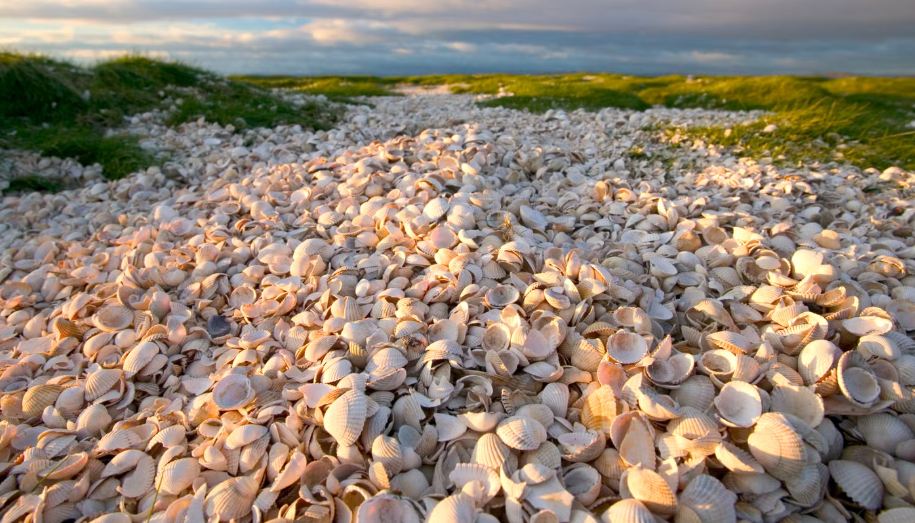
A newly published study has identified what could be the first recorded “midden island” in Fiji, offering fresh insights into early human settlement and coastal life.
The research, published in the journal Geoarchaeology by a team led by Patrick D. Nunn, examined a shell-dense island off Culasawani on the north coast of Vanua Levu.
Covering about 3000 square metres and rising up to 60 centimetres above high tide, the island is composed of 70 to 90 per cent shell material, primarily from edible species.
Investigations, including test pits and radiocarbon dating, found the deposits date back around 1190 years, placing human activity at the site between 420 and 1040 AD.
“The clustering of these ages and the nature of the shellfish remains lead to the preferred interpretation of this shell-dense island as a true ‘midden island’,” the researchers stated.
They said the island was likely formed by early settlers processing large quantities of shellfish over time, possibly while living on stilt structures above shallow coastal waters.
“If the Culasawani island is a midden island, then this is the first to be recorded in the South Pacific west of Papua New Guinea,” the study noted.
The team found pottery fragments alongside shell remains, further supporting evidence of human activity, although no stone tools or animal bones were identified.
Researchers also explored an alternative theory — that the formation was caused by a powerful wave or tsunami — but found limited evidence to support this.
“The fact that all shellfish remains are from edible species also suggests that it was not a result of wave deposition,” the study said.
The findings highlight the importance of shellfish in early Pacific diets and how coastal communities adapted to changing sea levels.
Researchers say further work will focus on identifying nearby settlement sites and understanding how the island fits into broader patterns of human activity in Fiji.
The discovery could reshape understanding of how early Fijians interacted with their coastal environment and developed sustainable food systems.

