
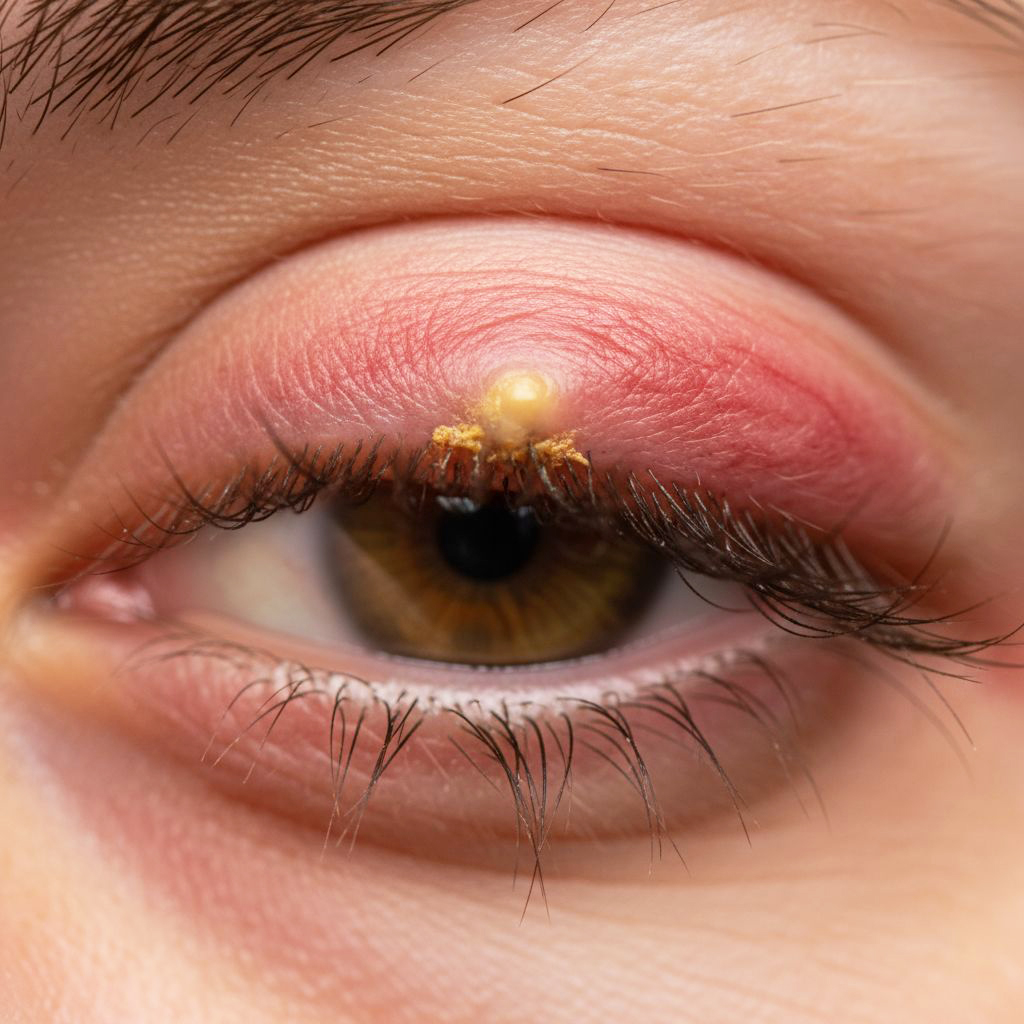
A stye, also called a hordeolum, is a common eye problem. It shows up as a red, painful bump on the edge of the eyelid. Even though it is usually small, a stye can make your eyelid swollen and uncomfortable, and it might be hard to blink or see properly. And it can happen to anyone at any age.
What is a stye?
A stye is an infection in the small oil glands of the eyelid. Our eyelids have tiny oil glands called Meibomian glands and Zeis glands that help keep the eyes moist. If one of these glands gets blocked or infected, it can form a small, painful bump called a stye.
The main cause of a stye is a bacterial infection, usually from a germ called Staphylococcus aureus. It gets into a tiny oil gland or hair root on the eyelid, it can cause an infection and form a stye.
Why stye are common in Fiji?
- Hot and humid climate, encourages bacterial growth.
- Outdoor work and activities, increase exposure to dust, sweat, and irritants.
- Limited access to eye care facilities in rural areas, leads to delayed treatment of minor eye infections.
- Rubbing the eyes with unwashed hands, common in schools and workplaces.
Common signs and symptoms of a stye include:
- The eyelid becomes red, sore, and painful to touch.
- A small, swollen lump appears on the eyelid, which may look like a pimple or boil.
- The eyes may become watery or sensitive to light.
- It can feel like there is something stuck in your eye.
- Sometimes, the stye may leak a little fluid or form a crust along the edge of the eyelid.
Prevent stye with simple eye care:
- Clean your eyelids regularly with a little baby shampoo mixed with water.
- Don’t touch or rub your eyes, especially if your hands are not clean.
- Remove eye makeup before going to bed.
- Don’t share makeup, towels with other people.
- Keep contact lenses clean and properly disinfected.
- Maintain good facial hygiene, especially around the eyes.
- Keep pillowcases clean and change them regularly.
If you often get stye or have eyelid problems (like blepharitis), using warm compresses and gently massaging your eyelids can help keep the tiny oil glands from getting blocked.
Management and treatment
1. Warm compress: Place a clean, warm, wet cloth on your closed eyelid for about 10–15 minutes, four to six times a day. The warmth helps the stye come to a head and drain naturally.
2. Keep it clean: Gently wash your eyelid with a baby shampoo and water. Do not squeeze or pop the stye, as this can make the infection worse.
3. Antibiotic treatment: If the stye doesn’t get better or the swelling spreads, a eye doctor may give you an antibiotic ointment or eye drops.
4. Surgery (rare): If the stye is very big or keeps coming back, an eye doctor may need to drain it safely.
Take-home message
A stye is a small, uncomfortable eyelid bump that usually heals on its own with good care. Keeping your eyes clean, avoiding rubbing, and using clean makeup can help prevent it. Most stye heal easily, but see a eye doctor if they keep coming back or don’t go away.

