CONTROVERSIAL US president Donald Trump has been under the limelight since taking up the oval office in his second term in the White House, with a series of executive actions that have come under heavy scrutiny from world leaders and trading partners.
From its withdrawal from the Paris Agreement, immigration and border issues, withdrawal from major organisations, to imposing tariffs, among other executive decisions taken since his inauguration on January 20 this year, Trump now has leaders engaging in intense discussions about global trade, technology and geopolitical dynamics.
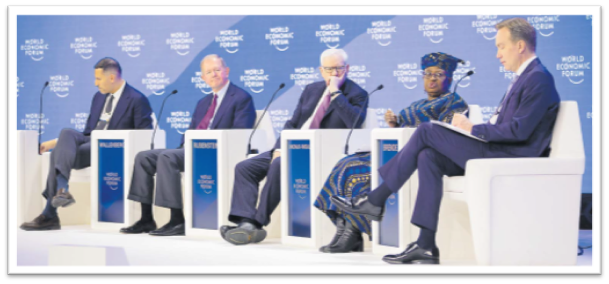
At least according to the World Economic Forum, world leaders are discussing ‘cautious optimism’ on tariffs, European unity on climate goals and how technological innovation could help offset potential disruptions.
In its Pacific Insight publication released this week, ANZ international economist Dr Kishti Sen and senior international economist Tom Kenny said Trump had campaigned on imposing tariffs of at least 60 percent on Chinese imports and of 10-20 percent across the board on every other US trading partner.
Over the weekend, Trump announced 25 percent tariffs on goods from Canada and Mexico on the basis that those countries had not done enough to stem the flow of illegal immigrants and the drug fentanyl.
He had also announced a 10 percent tariff on imports from China.
At this stage, the economists said ANZ Research believed Fiji would be spared from new tariffs, but a broad-based application of higher tariffs could disrupt trade and the global economy, and have negative implications for Fiji.
Tariffs will disrupt the global economy and trade
Trump campaigned as a protectionist politician to shore up US industry, but Dr Sen and Mr Kenny said International Monetary Fund (IMF) research suggested a 10 percent ‘tit-for-tat’ import tariff from mid-2025 was likely to see US GDP fall by 0.4 percent this year and another 0.6 percent in 2026.
The economists said the IMF also predicted global imports and exports would fall by 4 percent, sending the global economy into a recession, with global GDP falling 0.3 percent by late 2026.
“A global recession and uncertainty around trade tensions will harm consumer confidence and job security and result in households cutting back on discretionary spending,” the economists said.
They said overseas holidays fell into that category.
“As Fiji’s economy is dominated by the external economic environment, in particular international tourism, a global recession would hurt its prospects.”
Dr Sen and Mr Kenny said only time would tell whether Trump’s focus on tariffs was a negotiation instrument to achieve better outcomes (a lower trade deficit) for the US.
They said if that was the case, a trade war and global recession may be averted.
US likely to withdraw from multilateral trade deals
Dr Sen and Mr Kenny said in his first term, Trump withdrew the US from the Trans-Pacific Partnership (TPP) – a trade agreement between 12 Pacific rim countries, including many Asian powerhouse economies and the US.
The Indo-Pacific Economic Framework (IPEF) agreement was launched by the Biden administration as the successor to the TPP, and includes Australia, Brunei, India, Indonesia, Japan, Republic of Korea, Malaysia, New Zealand, the Philippines, Singapore, Thailand and Vietnam who all represent 40 percent of world GDP.
Fiji is a recent inclusion and is the only Pacific island country in the IPEF.
“Trump is likely to withdraw the US from the IPEF, which would almost certainly signal the end of that agreement.
“We don’t, however, think Fiji will be negatively impacted by the collapse of the IPEF. It enjoys a trade surplus with the US, thanks to bottled water exports. Recent expansions at the water bottling facility mean Fiji’s bottled water exports to the US will continue to grow,” the economists said.
US unlikely to target Fiji’s trading relationship
Dr Sen and Mr Kenny said Fiji’s trade surplus with the US had been constant at around $100million ($US55m) for several years.
Fiji’s main imports from the US are aircraft and aircraft parts, thus the volatility in imports.
The ANZ Pacific Insight reported that bottled water accounted for 85 percent of exports to the US, with processed fish, perfumery plants and kava being the other main exports.
“Overall, the value and volumes are almost negligible compared to the US’s major trading partners often accused by Trump as “not paying their fair share” or of taking advantage.
“Trump’s tariff focus is likely to be on China and Canada, Mexico, and to lesser extent the EU and other allies such as Japan and South Korea.
“It will be interesting to see if he also takes aim at economies like Vietnam or others in the Association of South-East Asian Nations as the manufacturing supply chains shift.
“At this stage, we think Fiji will be spared from higher tariffs, given its relatively small size.”
Dr Sen and Mr Kenny said Trump’s presidency would shape global outcomes and would be closely monitored.
“The extent of his tariffs and trade sanctions will be important to watch.
“If implemented in full, they could derail global growth, which would hurt Fiji’s economy,” the economists said.

in Suva. Picture: TIMOCI VULA/FILE