Starting this week, as a tribute to Ratu Sukuna Day 2026, The Sunday Times will run a weekly series based on A Man vs Myth: The Life and Times of Ratu Sukuna written by Professor Steven Ratuva.
For generations, mythology about Ratu Sir Lala Vanuayaliyali Sukuna’s superhuman imagery dominated Taukei political discourse.
He was classed as a demigod of celestial proportions, a larger-than-life intellectual virtuosi whose wisdom and mana far outshone the most extraordinary of Fijian mortals.
In a community where cosmological appeal helped frame world views, Ratu Sukuna was the human embodiment of deific perspicacity and a precious gift of the ancestral world to the Taukei community.
Superlative-laden poems, songs and dances were composed to deify the man, and generations of school kids (like myself) were reminded daily of the need to emulate Ratu Sukuna’s grandiose behavioural dispositions and righteous moral virtues.
Ratu Sukuna was seen by Fijians as the moral, political and intellectual icon of his era and revered almost the same way as Nelson Mandela or Martin Luther King, although their ideological orientations were far from similar.
In an era where there was no media scrutiny of leaders, where chiefly leadership was considered divine and where oral tradition was the most accessible form of communication, Sukuna’s phenomenal reputation established him as the undisputed Turaga vuku ka rai yawa (profoundly wise and prophetically visionary) whose quintessence bordered on the supernatural.
How much of the man was myth and how much was real?
This essay revolves around Ratu Sukuna’s biography Ratu Sukuna: Soldier, Statesman, Man of Two Worlds (1980) written by Deryck Scarr, a distinguished Australian scholar.
The essay extends the analysis to deconstruct some of the myths about the great man by looking at his professional achievements, chiefly background, political power and the future implications and impacts of these on the Taukei community as well as Fijian society as a whole. In an unpretentious way, it is an attempt to provide an alternative framing of Ratu Sukuna, often concealed by the fascia of political myth-making.
Background
Born into a high-ranking chiefly status, Ratu Sukuna was no doubt the leading Fijian intellectual, statesman and leader of his era.
His father, Ratu Joni Madraiwiwi, was a Roko Tui, a government administrative position (often given to high chiefs) that oversaw the governance of the yasana (provinces).
Madraiwiwi’s father, Ratu Kamisese Mara, was a flamboyant chief, whose womanising and political adventures in Fiji and Tonga became the stuff of legends.
His differences with a close relative, Ratu Seru Cakobau, one of Fiji’s paramount warrior chiefs, led to his execution by hanging on 6 August 1859.
Although it would be too simplistic to call it vengeance, this incident, to some extent, whether consciously or subconsciously, shaped Ratu Sukuna’s future political views and tactical manoeuvres by ensuring that Cakobau’s direct descendants did not pose any more threat to his political ambitions and dominance.
An example of this was his choice of Lauan chief Ratu Mara, his nephew and namesake of his slain grandfather, as his successor, rather than someone from his Cakobau paternal line.
Another was when he appointed Joeli Ravai, a commoner, as Roko Tui Tailevu, ahead of a Bauan chief, which protocol at that time would have demanded.
Ironically, high chiefs like Ratu Edward Cakobau had to carry the humiliation of working under someone of much lower sociocultural status as Ravai. The politics of Bau, often referred to as verevaka-Bau (Bauan conspiracy), was both manifest and latent and Sukuna played it strategically in subtle but effective ways.
Ratu Sukuna was born in 1888 and died in 1959. He studied at Wadham College, Oxford, and later at Middle Temple in London, and in 1921 graduated with a BA and an LLB degree.
He was the first Taukei to be awarded a university degree. He became a barrister-at-law at the Middle Temple in London and returned to Fiji for an illustrious career in the civil service and politics.
His Oxford studies were disrupted by the First World War.
He joined the French Foreign Legion after being rejected by the British army on racial grounds. He was wounded and was later awarded the Médaille militaire (military medal) for bravery.
Ratu Sukuna had a meteoric rise through the ranks of the colonial service as District Commissioner, Provincial Commissioner, Chairman of the Native Lands Commission, Secretary for Fijian Affairs and first Speaker of the legislative council.
He helped set up the Native Land Trust Board to administer Taukei land and also made changes to legislations and regulations on Taukei governance.
At a time when infrastructure and communication was at an embryonic stage of development, Ratu Sukuna walked for days across Viti Levu and Vanua Levu, the two largest islands in the Fiji group, and sailed hundreds of kilometres, criss-crossing the archipelago, for consultation on land ownership and registration as well as to extend the state’s influence and control to remote parts of the country.
Visitation to remote villages was seen as a gesture of veivakaturagataki (chiefliness) and veinanumi (deep concern) by someone so highly respected and esteemed and this fed into the community-wide exaltation as man of the people.
- STEVEN RATUVA is a distinguished Professor, author, an award-winning political sociologist and global interdisciplinary scholar. This article was sourced from: Ratuva, S. 2017. Man vs Myth: The Life and Times of Ratu Sukuna. Fijian Studies: A Journal of Contemporary Fiji 13:3–15. Republished with the kind permission of the Fiji Institute of Applied Studies.Note from the author: I took leave from the University of the South Pacific (USP) in 2002–03 to take up a fellowship position in the State, Society and Governance in Melanesia program (now the Department of Pacific Affairs) at The Australian National University (ANU). I returned to USP to join the Pacific Institute of Advanced Studies in Development and Governance. Since then, and even after leaving USP for New Zealand, I have maintained a close relationship with ANU.
Part 2 Next Week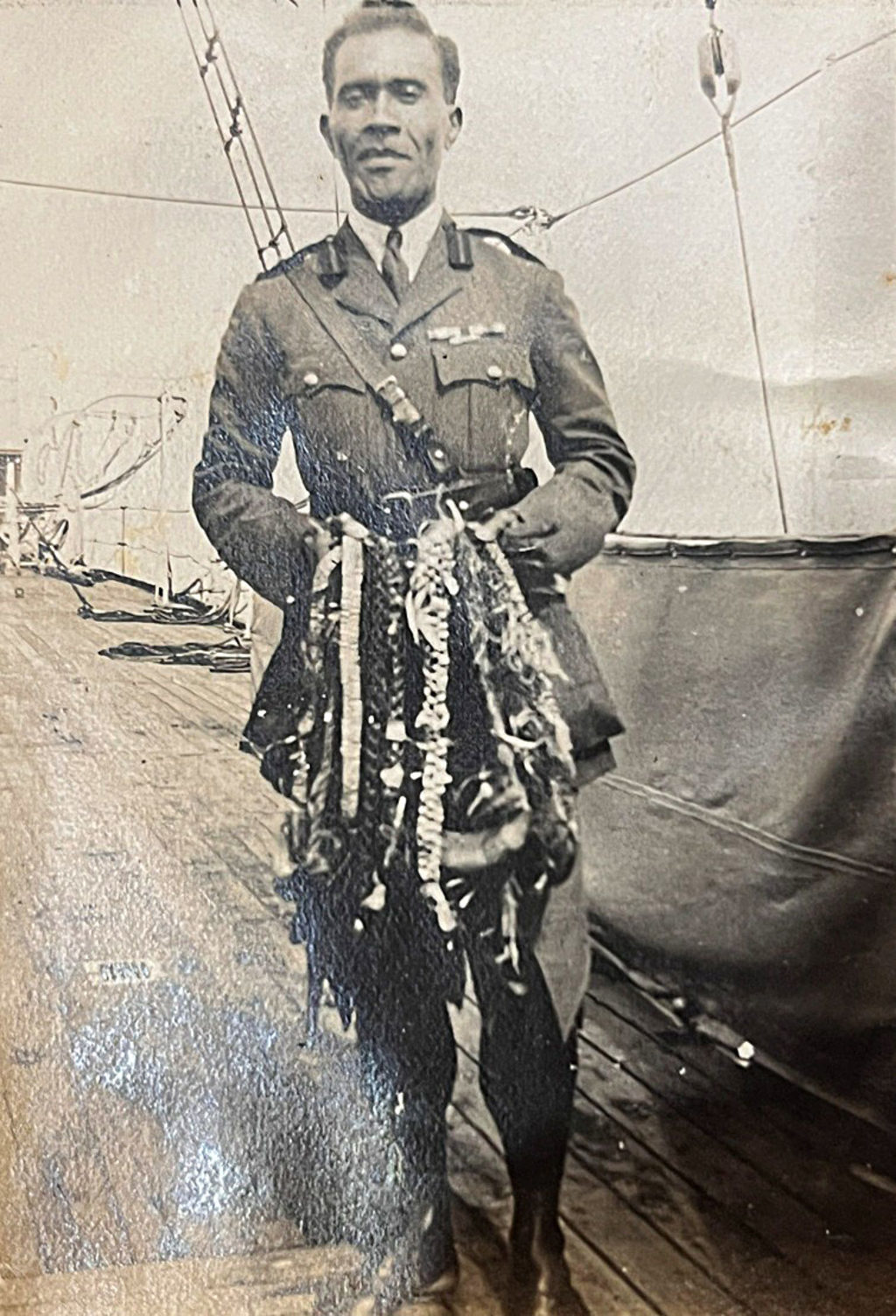
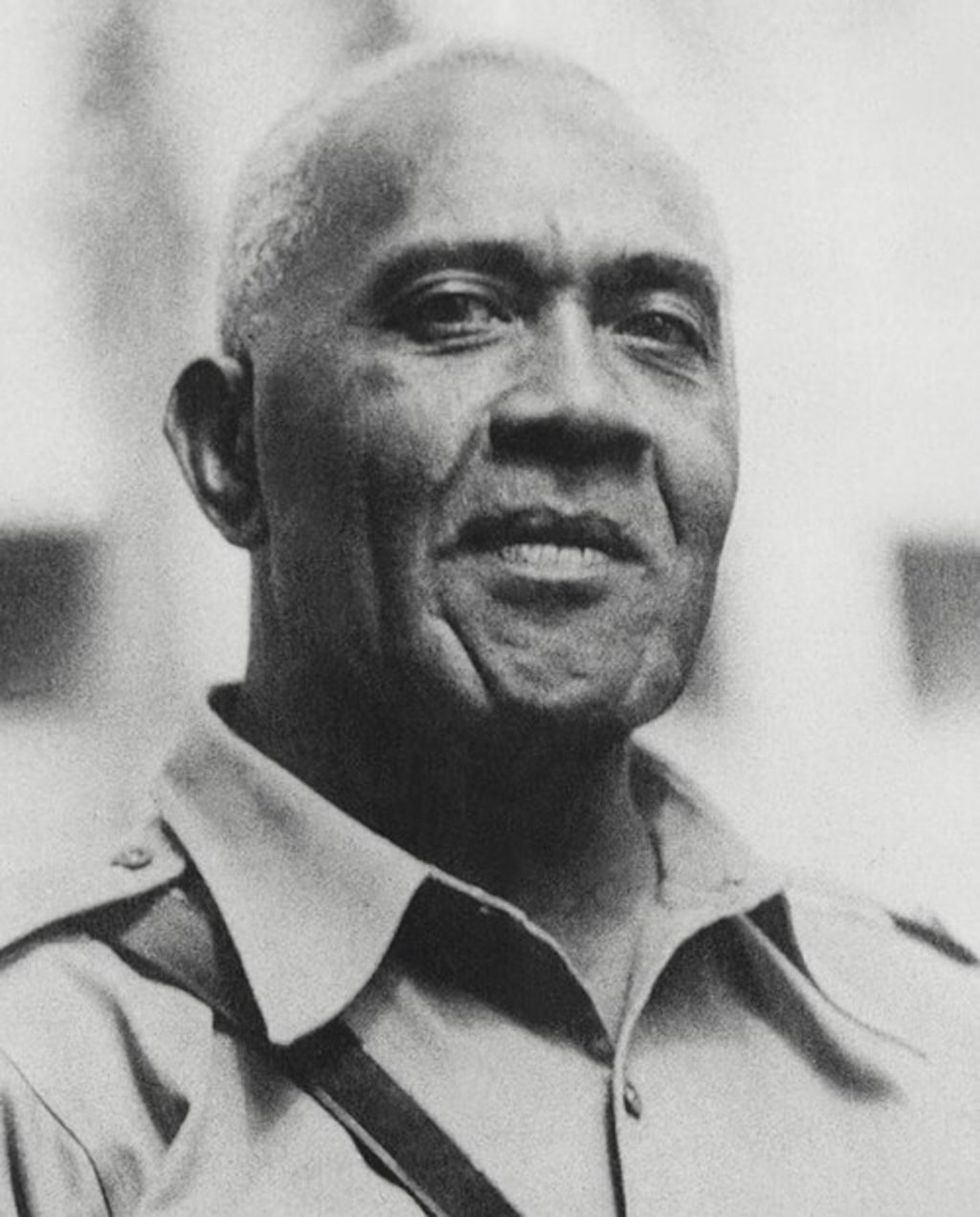
Ratu Sir Josefa Lalabalavu Vanayaliyali Sukuna. Picture: FT FILE/Courtesy of Caroline Datsopoulos