PRESERVING Fiji’s reputation as a safe destination demands measured action, not emergency declarations.
There are moments when a country must speak firmly about the challenges it faces.
Fiji is in one of those moments now.
The current drug crisis is serious.
No responsible industry body, community leader, parent, employer or citizen should pretend otherwise.
It affects families, workplaces, schools, communities, health services and national security.
It demands urgency, coordination and visible action.
But urgency must not be confused with panic.
The Fiji Hotel and Tourism Association has already expressed its deep concern to Government over the recent consideration of a state of emergency as a possible response to the drug crisis.
We did so because while we fully recognise the seriousness of the issue, we also understand the wider consequences of the language and signals we send to the world.
Tourism knows better than most industries how quickly confidence can fall, and how painfully slowly it returns.
We have lived through political crises.
We have lived through global downturns.
We have lived through a pandemic that took visitor arrivals almost to zero.
Rebuilding from those moments was never easy, never cheap, and never automatic.
It took years of work by operators, workers, communities, government agencies, marketing partners, airlines and investors to restore demand and rebuild confidence in Fiji.
That reputation is not something we can afford to treat casually.
The mere discussion of a state of emergency has already started attracting attention beyond our borders.
In today’s travel environment, perception moves faster than fact.
A phrase like “state of emergency” does not sit quietly in a Cabinet paper or a local headline.
It travels.
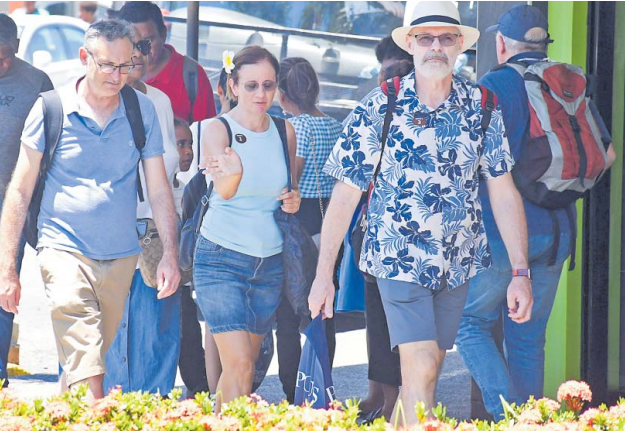
It is picked up by regional media, travel forums, online commentators, social media pages and eventually, by the families deciding where to spend their next holiday.
For visitors in Australia, New Zealand and other key markets, the question becomes very simple: Is Fiji still safe?
That question is dangerous for a destination like ours, not because the answer has changed, but because the doubt has been planted.
Fiji’s tourism brand is built on warmth, safety, welcome, family, nature and ease.
These are not soft ideas.
They are serious economic assets.
They influence airline routes, booking decisions, investor confidence, conference interest and repeat visitation.
Once people begin to associate a destination with instability, even unfairly, the cost of correcting that perception becomes enormous.
Tourism contributes around 40 per cent of Fiji’s GDP when direct and indirect impacts are considered.
It supports more than 150,000 Fijians across hotels, transport, farming, fisheries, construction, handicrafts, retail, entertainment and professional services.
It brings in billions in foreign exchange and helps sustain Government revenue, employment and national connectivity.
So when visitor confidence is placed at risk, it is not only resorts that feel the impact.
The taxidriver, market vendor, dive instructor, laundry worker, farmer, chef, boat captain, small supplier and national airline all feel it too.
A state of emergency may sound strong domestically.
It may suggest that the country is prepared to take extreme measures against those involved in the drug trade.
But internationally, it can easily be read as a sign that normal systems are overwhelmed.
That is the part we cannot ignore.
We should not give the impression that Fiji’s police, border agencies, defence services or justice system cannot manage this challenge through existing laws and targeted support.
We should be strengthening those institutions, not undermining confidence in them.
Families and leisure travellers are especially sensitive to these signals.
They do not always read past the headline.
They do not know the difference between a proposed declaration, a political statement, a public warning or an actual breakdown in safety.
They see “state of emergency”, and many will simply choose somewhere else. That is the brutal simplicity of the travel market.
We are also dealing with a local information environment where speculation often outruns evidence.
We have all seen the dramatic headlines, the social media panic, the half-told stories and the exaggerated claims.
Some of it reflects genuine fear.
Some of it reflects frustration.
Some of it is simply clickbait dressed up as public concern.
None of this means Fiji should minimise the drug problem.
It means we need better data, clearer communication and more disciplined public messaging.
We need to separate fact from fear, and enforcement from political theatre. There are practical ways to respond without reaching first for emergency powers.
Law enforcement and border control must be properly resourced, trained and supported.
If specialised drug enforcement capability is needed, then it should be strengthened within the existing legal framework.
Police visibility can be increased in key areas, including tourism corridors, airports, ports and town centres, but it must be done in a way that reassures rather than alarms.
Community prevention must also sit at the centre of the response.
Schools, churches, youth groups, NGOs, village structures and community leaders all have a role to play.
The problem cannot be arrested away if the social conditions feeding it remain untouched.
Health responses matter too.
Addiction is not only a criminal issue.
It is also a public health issue.
Fiji needs stronger rehabilitation pathways, more treatment capacity, better counselling support and a more honest conversation about the gaps in our health system.
If we are serious about national wellbeing, drug response must be connected to wider health, family and community resilience strategies.
Regional co-operation is another practical path. Fiji is not facing this issue in isolation.
Drug trafficking networks do not respect borders, and neither should intelligence sharing.
Stronger co-operation with Australia, New Zealand and Pacific partners can help intercept supply chains, improve detection, and show that Fiji is acting as a confident regional partner.
That kind of response strengthens credibility.
A state of emergency risks doing the opposite.
There is also a strong case for a tourism safety liaison mechanism, where industry, police, border agencies and relevant ministries can co-ordinate communication and response.
This would help ensure that visitor safety measures are clear, visible and confidence-building, without creating the impression that tourists are entering a crisis zone.
Communication will be critical. Government must be able to explain what it is doing, why it is doing it, and how public safety is being protected. Industry stakeholders and international partners should be briefed regularly, not left to interpret headlines.
The language used publicly should be measured, factual and steady. We also need confidence in the justice system.
Drug-related cases must be processed efficiently. Trafficking must attract firm penalties.
At the same time, responses must remain proportionate, especially where minor possession and addiction issues are concerned.
A fair, firm and functioning system sends a much stronger message than emergency language. Fiji cannot take the easy route simply because it sounds decisive.
The drug crisis is real. It deserves serious action. But serious action does not always mean the loudest action.
Sometimes the strongest response is the one that is targeted, co-ordinated, legally sound and economically responsible. Tourism is not asking Government to look away from the problem. Far from it. We are asking that the response protects the country while also protecting the livelihoods that depend on Fiji’s reputation.
We have spent years rebuilding confidence in Fiji as a safe, welcoming and family friendly destination.
That confidence supports jobs, investment, airline connectivity, community income and national revenue.
It should not be put at risk by language that may cause more damage internationally than it solves domestically.
Fiji must confront the drug crisis with strength, but also with discipline.
Our response should show confidence in our institutions, not doubt in them. It should reassure our people and our visitors.
It should target criminals, protect communities, support families, and preserve the reputation that so many Fijians have worked so hard to rebuild.
A state of emergency should not be the first signal we send to the world. Measured action should be.