Booth registrations for HOTEC 2026 opened in February.
Two weeks later, the floor was sold out.
That is a good problem for any organiser to have, and it set the tone for a year of planning that ended with two days at the Crowne Plaza Fiji Nadi Bay Resort and Spa on October 22- 23.
It was not in any way as simple as that just sounded, though.
As the fuel crisis tied to the Iran and United States conflict situation began to spread across the world, some exhibitors had to refocus and reprioritise their spending.
A few withdrew, and their stands allowed late entrants an opportunity.
In the last days before the show, we were still fielding requests for space, some of them from companies asking the day before we opened.
Behind the stands was a broader mix than we have had before.
Three delegations came to Nadi from New Zealand, from Australia and Queensland, and from New Caledonia, and the agencies behind them were also the backbone of our sponsorship.
Austrade was our Platinum Sponsor, with Trade and Investment Queensland as co-Platinum Sponsor, and New Zealand Trade and Enterprise joined as Gold Sponsor.
New Caledonia Trade & Invest and the Pacific Ocean Litter Project, a collaboration of SPTO, SPREP and Australian Aid, came in as Silver Sponsors, while Palmex International was Bronze Sponsor.
In a few cases, two smaller companies pooled resources to share a booth, which is exactly the kind of practical thinking this market rewards.
The split between new and returning exhibitors was close to even, and that balance is healthy.
Returning exhibitors bring confidence to the format, while newcomers bring fresh, innovative perspectives.
We also changed the way we managed visitor attendance.
This year, we were more deliberate with pre-registration to ensure exhibitors met the people who matter most: chefs, engineers, procurement officers, and general managers ready to make purchasing decisions.
A crowded exhibition floor means little if the right buyers are not walking it.
The floor itself had plenty to watch.
The Fiji Chefs Association, Vision Commercial and South Pacific Coffee Company, our trade show coffee partner, ran the competitions with the passion and dedication that drew and enthralled the crowds.
They also showed visitors the talent already working in Fiji’s kitchens and cafés – our best argument for hiring and training locally.
Pleass Global kept everyone hydrated (we promise there will be no plastic bottles next time).
The Glassware Company supplied our glassware, Communications Fiji Limited (CFL) and Magic Factory handled digital media, while ENcore managed our audio-visual demands.
Audiences might rarely notice these important partners, but they allowed our exhibitors to shine, information sessions to be well attended and things to simply work smoothly. Our media partner was the Fiji Times.
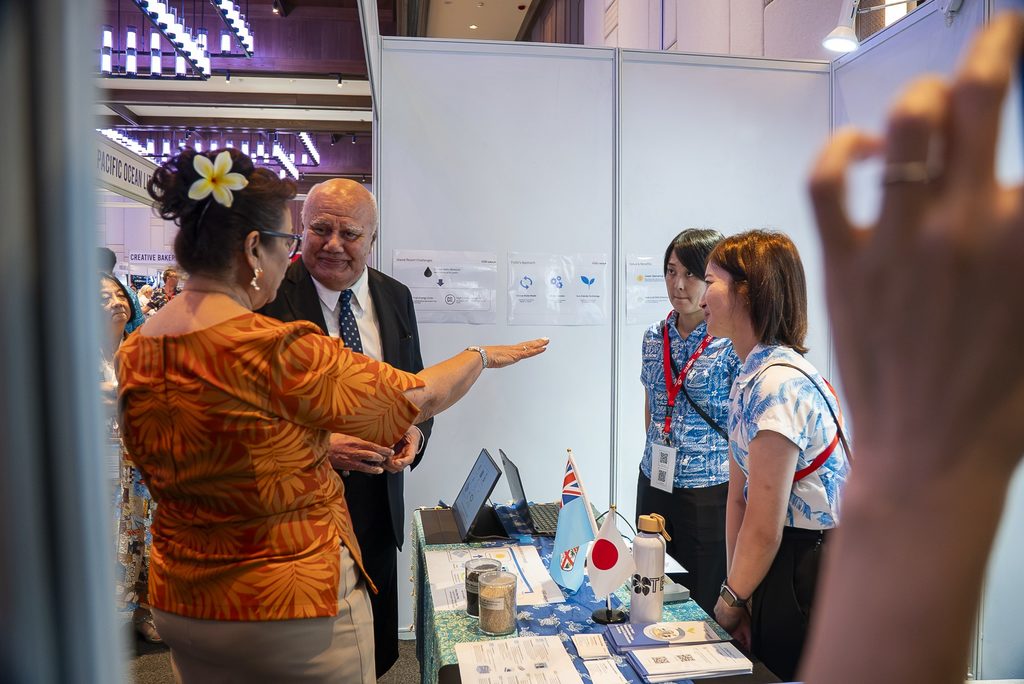
The Deputy Prime Minister and Minister for Tourism and Civil Aviation, the Honourable Viliame Gavoka, opened the exhibition as our chief guest, and dignitaries were in attendance across the two days, including the New Zealand High Commissioner Greg Andrews, Australian Deputy High Commissioner Libby Petrovic and Fiji Director of Tourism Jacinta Lal.
We are pleased to report that everything at the Crowne Plaza was first class, and the team, including David Suli, Lagi, Miri and Amlesh, met every request with unwavering patience.
The one thing underfoot that did not behave was the outsourced carpet that spent both days trying to trip everyone up and leave the floor.
A learning curve for us.
An engaging conference program was provided that received great support from industry stakeholders – perhaps because it asked questions businesses are dealing with now.
The first session looked at the “Regulatory Reset”, covering the Tourism Act 2026, the Commercial Use of Marine Areas Act (CUMA), the upcoming Employment Relations Act reforms, the Tourism Services Tax and the complicated implementation of VMS/EFD with all the expectations of these in terms of industry preparation.
The second session asked what sustainable tourism looked like inside a business and what demonstrating this might look like while drawing on Fiji’s tourism framework and the Pacific Sustainable Tourism Industry Standard.
On the second day, a session on “People, Place and Local Values” explored how employment, procurement and community partnerships can link commercial success to inclusive benefits.
The last session, “Resilience Pays”, took a hands-on look at energy, water, wastewater and actual operational resilience, with industry professionals sharing what they measure, what has worked and what they would do differently.
The common thread across all four was implementation.
The industry is past asking whether change is coming. Operators want to know how to meet it, what it will cost and what tools they need.
All things considered, Fijian tourism is in a strong position. Visitors are returning, airlines and source markets remain engaged, and the agencies, development partners and diplomats who joined us did so because they recognise a destination worth backing.
But success is also when vigilance matters most. Strong demand can create a sense of comfort, yet tourism is one of the world’s most competitive industries, and destinations that stand still quickly find the market has moved on.
Across the Pacific and beyond, competitors are investing heavily in new products, higher standards and stronger marketing.
Fiji’s advantage has never been its beaches alone.
It is the warmth of its people, the authenticity of its experiences, and the care with which its natural and cultural assets are protected.
Maintaining that advantage requires continuous investment in people, products and places, because today’s success is no guarantee of tomorrow’s leadership.
The road ahead is long, but it is being paved every day through the work businesses invest in behind the scenes: compliance, workforce training, sustainability initiatives, local sourcing, innovation and resilience planning.
HOTEC is one of the few moments when that effort becomes visible in one place, bringing together the people, products and partnerships that help move the industry forward.
The conversations that started on the exhibition floor now need to continue in boardrooms, in online forums, kitchens, workshops, communities and across the wider visitor economy.
The next HOTEC will take place in 2028. For suppliers considering exhibiting, now is the time to start the conversation and join our mailing list. Planning for the next event is already underway, and if this year’s energy, engagement and business opportunities were any indication, HOTEC 2028 promises to be even bigger, more connected and more impactful for Fiji’s tourism industry.
n FANTASHA LOCKINGTON is the CEO of Fiji Hotel and Tourism Association. The views expressed are not necessarily those of The Fiji Times. To share a comment or thoughts on the article, please send email to info@fhta.com.fj