
I HAVE always supported sensible reform—especially when it strengthens transparency and trust. Tax compliance matters. Fairness matters. Modernisation matters.
But as the voice for Fiji’s hotels, resorts and tourism operators, I must also call out policies that risk overlooking realities on the ground.
That is precisely the challenge we face with Phase Three of the VAT Monitoring System.
Our industry is not opposed to reform—we welcome modernisation that strengthens compliance and builds trust.
But Phase Three of the VAT Monitoring System, as currently designed, risks placing disproportionate burdens on operators without reflecting the realities of tourism businesses on the ground.
What we need is a system that achieves transparency while remaining practical, affordable and aligned with how our sector actually operates. With thoughtful adjustments and genuine consultation, this reform can succeed in both strengthening compliance and supporting the resilience of Fiji’s tourism economy.
The VMS has been in place for several years now, rolled out in stages across retail, professional services and other sectors.
Phase 3, scheduled for implementation in 2026, brings accommodation providers formally into the system.
They join Architecture & Engineering, Construction, Real Estate, Service Stations, Commercial Health Care, Food Services, Freight Services, Wholesalers, Manufacturers & Retailers operations with compliance requirements between December 2025 and December 2026.
Larger properties are expected to register by March 2026 and comply by June, with smaller operators following by September. Any business with an annual turnover above $50,000 will fall within the scope. From a policy perspective, the government’s intent is understandable.
The aim is to improve VAT compliance, reduce underreporting, expand the tax base and modernise business practices through digital reporting.
These are legitimate goals, particularly in an environment where public revenue supports essential services. We get that.
The challenge is that hotels and resorts do not transact in the same way as a supermarket or a hardware store.
Hospitality operates on an entirely different billing logic, built around the guest folio, where the guest has already been engaged with through a booking commitment that required a deposit.
Every guest has a running account that captures accommodation, meals, beverages, spa services, activities, transfers and more often than not – a host of third-party services. Charges accumulate over the course of a stay, often across multiple outlets and outsourced services, and are settled in full at checkout.
Some services are prepaid (like all-inclusive packages), some are discounted and even free (contra, prize winners, industry rates, etc). For smaller operators looking to be included under VMS, the more complicated issue of dealing with suppliers for raw materials that ultimately make up their completed product or service that is on-sold to the resort has also not been addressed. An example might be the SME Spa that has been outsourced to the resort.
They purchase their locally sourced coconut oil, masi and freshly picked coconuts from their community- based suppliers – no invoices, cash for products and supplies arrive daily.
The artwork, soaps, oils, craftwork and fresh coconuts offered for sale as part of the spa services have no corresponding VAT receipts – having been sourced from micro businesses below the VAT threshold and not even registered as formal businesses. This is fundamental to how hospitality works globally. Guests do not expect to receive a fiscal receipt every time they order a coffee, their children enjoy an ice cream, or they book a snorkelling trip.
They expect a seamless stay with a consolidated invoice at the end.
That single invoice is not a convenience. It is the legal and financial record of the transaction for both the service provider and the buyer. Under the current VMS framework, however, every transaction is treated as a standalone taxable event requiring near real-time reporting and receipt issuance.
That model simply does not align with hotel operations and speaks directly to the mismatch of VAT applications for those businesses that get caught up in the VAT time-of-supply rule.
An industry- specific issue that has been raised with the review of the Vat Act some years ago and is still pending an outcome.
In tourism, deposits secure future stays. They are not the supply of the service itself. Yet under current interpretations of the VAT Act, VAT can be triggered at the time a deposit is received, even though the service may be delivered months later, amended, or cancelled altogether.
This creates unnecessary complexity, increases reconciliation requirements that have been absorbed as simply business operation demands and diverges from international best practice. But then this is Fiji, where we thrive on complexities. The technical implications are just as serious. Most hotels use specialised property management systems that integrate room inventory, guest profiles, billing and accounting. These systems are designed specifically for hospitality.
They are not retail POS systems where a fiscal device can be plugged in, and most have stringent security features, often part of international brand security policies.
Integrating these platforms with VMS-compliant devices will require significant customised development, new hardware, retraining staff and reengineering the workflows that have been refined over decades.
And if the ongoing experiences of supermarkets and other VMS practising businesses are anything to go by, even the most compliant systems fall over. Regularly.
For large resorts, this is costly but potentially manageable – especially if the VAT time of supply rule was amended to allow the fiscalisation process to take place where payment for services was being finalised. For smaller locally owned operators, particularly those outside urban centres, it will be overwhelming – unless FRCS can provide a guidance document along with a list of certified software or hardware options that could be selected from, where the suppliers’ costs are affordable based on higher demand.
Tourism in Fiji is dominated by small and medium enterprises.
These are family-owned lodges, boutique resorts, island operators, multiple activity product suppliers and community-based businesses.
They are already navigating rising costs, labour pressures, energy prices and global uncertainty.
Adding a complex compliance system that does not reflect their operational reality risks pushing some of them backwards rather than forwards.
Connectivity cannot be ignored either.
Many of Fiji’s most iconic tourism properties are located on islands or in remote areas where internet access is intermittent at best.
Real-time data transmission sounds reasonable in an office in Suva or Nadi.
On a small island resort running on generators and limited bandwidth, it is another story entirely. Systems fail. Power cuts happen.
When they do, guest service is the key focus and connections to the world at large are the first casualty.
Beyond operations, there are legitimate concerns around cost, risk and security.
Compliance requires hardware, software, integration, ongoing maintenance and vendor support.
It requires training staff who already operate in high-pressure service environments. It introduces penalties for non-compliance, even when failures are technical rather than intentional.
For small operators, one system outage can mean the difference between staying afloat and falling behind. Data security and privacy also matter.
Hotels handle sensitive guest information, including international travellers, subject to strict international privacy expectations.
Expanding real-time transmission of detailed transactional data increases exposure and responsibility.
These risks must be acknowledged and managed carefully. What makes this particularly frustrating is that none of these challenges are unique to Fiji.
Other tourism-dependent economies have faced similar questions and adapted accordingly. In the Maldives, electronic invoicing systems were designed in consultation with resorts, recognising island connectivity and folio-based billing.
In Portugal and Mauritius, hospitality was given sector-specific adaptations and longer transition periods, while neighbours Samoa gave it a go but eventually settled for “nothing to see here”.
The lesson is consistent.
Systems succeed when they adapt to industries, not when industries are forced to contort themselves around systems.
The positive news is that the tax people have been willing to work with us to find solutions. The FHTA has consistently engaged with government, regulators and technical teams to put forward practical alternatives. These include recognising folio-level invoicing at checkout, allowing batching of transactional data rather than real-time reporting, aligning VAT timing with final service delivery, and enabling offline operations with deferred uploads for remote properties.
We have also called for expanded vendor accreditation that includes genuine hospitality system expertise, extended transition periods for smaller operators, and have established a formal working group that brings industry and regulators together to co-design solutions rather than retrofitting them.
The cost of getting it wrong is simply too high.
FANTASHA LOCKINGTON is the chief executive officer of the Fiji Hotel and Tourism Association. The views expressed are not necessarily those of The Fiji Times. To share a comment or thoughts on the article, please send an email to info@fhta.com.fj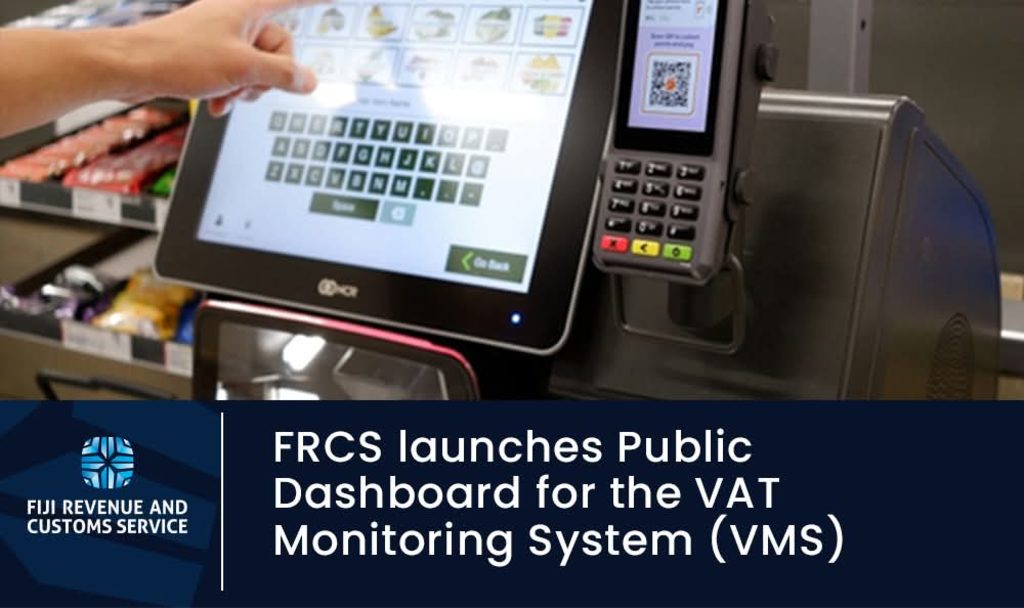
Phase 3 the VMS, scheduled for implementation in 2026, brings accommodation providers formally into the system. Picture: FILE

