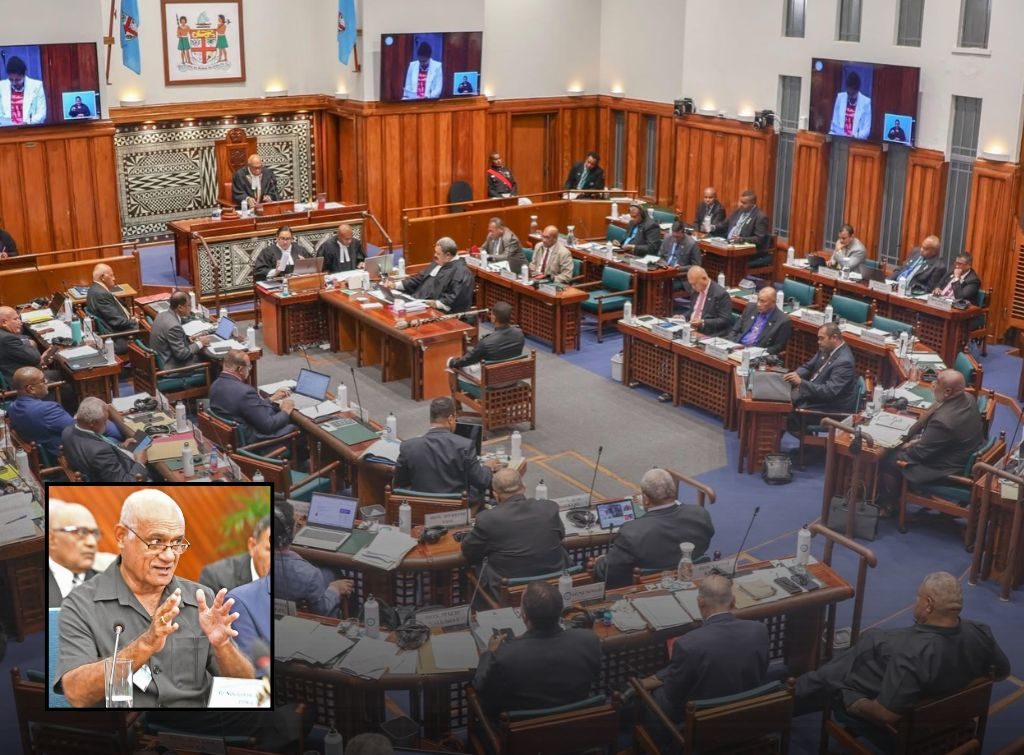
Australian Prime Minister Anthony Albanese departed Fiji on Tuesday evening after reaffirming the Vuvale Partnership and discussing economic cooperation between our two countries. Australia has spent years modernising government services, streamlining business approvals and investing heavily in digital public administration. They might not be perfect, but perhaps, while he was here, someone discussed sharing how they managed public-sector reform. Australia has been driving major reforms in public sector service delivery through the Australian Public Service (APS) Reform program (2022–2025), anchored by the Public Service Amendment Act 2024. These efforts focus on integrity, efficiency, digital transformation, and stronger community engagement. There may well be a few lessons worth borrowing, especially in the areas of saving, reducing waste and improving productivity, because Vuvale is also about sharing.
This year’s National Budget should have simply said that we’re between a rock and a hard place and everyone needs to work harder with less. Government knows it has little room to spend its way out of its challenges. Revenue is expected to reach around $3.8 billion while expenditure sits at almost $4.9 billion, leaving a deficit of just over $1 billion. More than 80 per cent of spending continues to go towards operating costs rather than capital investment, leaving very little room to introduce major new initiatives.
That changes the conversation. Less about any new spending and more about getting more out of what already exists. Read through the Budget Estimates and the language is remarkably consistent. Efficiency, accountability, improved service delivery, performance budgeting and value for money appear repeatedly. These should have been the strategy a few years ago – not simply supporting principles.
For tourism, that shift is significant because many of the industry’s biggest frustrations have little to do with funding. They stem from delays, duplicated processes and agencies operating in isolation from one another. Businesses can absorb regulation when it is predictable and efficient. What they struggle with is uncertainty, repeated requests for the same information and approval processes that seem to disappear into the system for months.
If Government is asking businesses to become more productive (because everybody knows – when the private sector thrives, the economy grows at full speed), then Government must deliver its services more productively as well. This Budget will ultimately be judged less on what was announced and far more significantly on how it is eventually delivered. The real question is whether businesses will notice the difference in their day-to-day dealings with Government and its many agencies that together are costing $9m a day to run. And probably far more importantly, as we shift into pre-election gear, how the Fijian population will ultimately judge things.
Will approvals for licenses, permits and consents come faster? Will immigration processing improve to enable critical foreign workers to come in to start work on important developments, and who will also be able to get paid when they obtain their Tax Identification Numbers (TIN) and then open their bank accounts? Will businesses spend less time navigating the digital portals that still require hard copies, cash payments and evidence of receipts and consistent phone calls and emails for responses on the system? These are the productivity gains that matter far more than another policy announcement or another online portal.
The Budget points to several areas where Government believes those improvements can be made. Everyone agrees. Border management continues efforts towards more sophisticated use of Advance Passenger Information and Passenger Name Record systems, allowing travellers to be assessed before they even board a flight. In theory, this should create smoother arrivals, reduce congestion at immigration and improve the experience for genuine visitors entering Fiji and will be welcomed.
For a tourism industry welcoming close to one million international visitors annually, those improvements matter. Faster arrivals mean shorter queues, more predictable airport operations and smoother transfers to hotels and resorts. But technology on its own will not achieve that outcome. The information may arrive earlier, but unless staffing, procedures and decision-making also change, the bottleneck simply moves further down the process. Somebody still needs to turn the machines on, ensure the data is being captured, check scanners are working, open the doors and reset the Wi-Fi to ensure it’s working.
Digitising a slow process does not automatically make it a faster one. If applications still pass through the same number of desks, require the same approvals and wait for the same signatories, businesses simply end up waiting electronically instead of waiting on paper. The queue becomes easier to see, but it does not become any shorter. And if we are adopting better technology across all aspects of government – doesn’t this therefore mean that we will require fewer processes, fewer people in some instances and faster responses?
Online applications may improve visibility, but without clear service standards, delegated authority for straightforward applications and realistic turnaround times where agencies are held accountable – we’re simply spinning doing the same thing while expecting a different result. But we are trying to be positive, especially as we’re being asked to provide recommendations to the Liquor Act, and this is a welcome sign, among others, that some areas in government are trying harder than others.
Transparency is another major theme running through the Budget. Recent public discussion around the national eTransport card system is an interesting example because the debate was never really about bus fares. It was about whether digital systems actually improve accountability by making transactions visible, traceable and measurable. Most do not believe it does any of these things, and the ones who disagree probably do not catch a bus anyway, so their opinion shouldn’t matter.
The same thinking should now apply across Government. Businesses should be able to see where an application is sitting, which agency is responsible for the next step and how long each stage is expected to take. Transparency should not simply expose delays. It should become the mechanism that drives improvement, with accountability providing the right emphasis for either kicking the right butts or rolling the right heads.
The challenge for tourism is that all of these reforms are arriving at the same time. Operators are already preparing for changes associated with Tourism Services Tax (TST), the Commercial Use of Marine Areas (CUMA) legislation, the rollout of the VAT Monitoring System (VMS) and the Tourism Bill. Each initiative may have a legitimate policy objective. Collectively, however, they create a growing compliance burden that businesses are expected to absorb, work through and become compliant with.
Too often, the tourism industry is invited into the conversation after the policy has largely been designed. Consultation becomes a discussion about managing consequences instead of shaping practical solutions from the beginning. That approach creates unnecessary friction and often results in legislation that requires further refinement once implementation begins, thus creating more work and headaches.
Perhaps the biggest challenge emerging from this Budget is that individually, almost every initiative makes some sense. Collectively, they risk creating a system that becomes increasingly difficult to navigate. Tourism businesses already work with immigration, FRCS, municipal councils, biosecurity, Investment Fiji, planning authorities, environmental regulators and several Government ministries. Every agency has an important role. The issue is whether those agencies are working as One Government from the perspective of the businesses they regulate.
The Budget speaks repeatedly about productivity, performance and accountability. Repeatedly. These objectives are supported because we depend on efficient government services just as much as efficient private businesses. But productivity is not achieved by asking operators to complete more forms through more digital portals. It comes from removing duplication, simplifying approvals and allowing agencies to share information rather than requiring businesses to submit the same information over and over again.
So ultimately this looks more like a management budget. Government has effectively acknowledged that it cannot spend its way towards better public services. It must manage its way there, and that requires coordination, discipline and execution across the public sector.
We support that direction. However, ambition alone will not shorten immigration queues, reduce liquor licensing delays, simplify VMS implementation or ensure that CUMA, the Tourism Bill and other reforms fit together in a way that supports investment rather than complicates it. Those outcomes depend on something much less glamorous than national budget announcements. They depend on departments talking to each other before businesses are forced to.
That is where Fiji’s next productivity gains will be found, and where this budget will ultimately succeed or fail.