
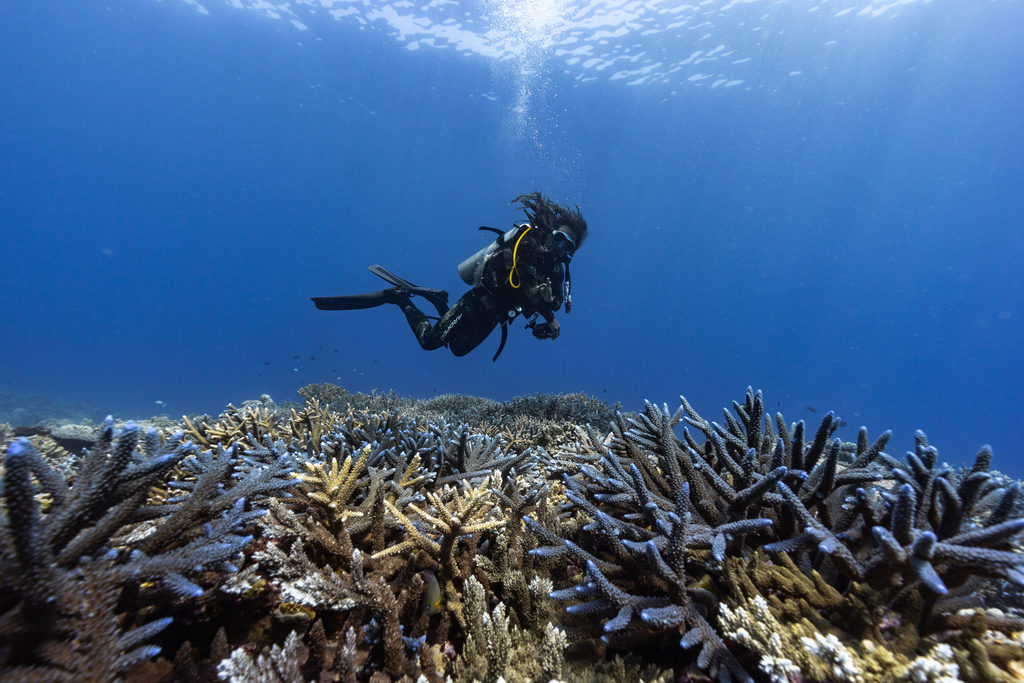
WHEN the Fiji Meteorological Service raises a Coral Bleaching Alert Level 2, it is not just a scientific update buried in a weather bulletin. It is a signal that the seas around us are under stress, and that one of the greatest natural assets underpinning what it means to be an island nation and its largest revenue earner is threatened.
Alert Level 2 means widespread coral bleaching is likely, with significant coral mortality expected.
Sea surface temperatures across much of Fiji’s waters are sitting between 0.4 and two degrees Celsius above normal.
That may not sound dramatic on land, but underwater, it is the difference between a thriving reef and one fighting for survival.
Corals, when stressed by prolonged heat, expel the tiny algae that give them colour and life and turn white if temperatures remain high for too long.
Many of us will probably never read the National Ocean Policy 2030 that aims to secure and sustainably manage Fiji’s ocean and marine resources and ensure a healthy ocean supports the livelihoods and aspirations of current and future generations.
It is this policy that also aims for 100 per cent sustainable management of our oceans and designating 30 per cent of this as Marine Protected Areas by 2030.
Admirably, aspirational are far easier said than done.
Reef systems have been described as “the rainforests of the sea, supporting an estimated 25 per cent of all marine species despite covering less than 1 per cent of the ocean floor, providing habitat for thousands of fish, invertebrates and algae species. The complex three-dimensional structure of reefs offers shelter, breeding grounds and feeding areas, sustaining intricate food webs and maintaining overall ocean health”.
It is extremely unfortunate, therefore, that this information is not inculcated into our educational systems from early childhood into adult learning programs as part of the Pacific’s consistent, but hollow promises to better manage our oceans.
We might see far more respect shown to these fragile ecosystems than the disdain we show when tossing mega volumes of waste into the oceans instead.
Healthy reefs provide a fascinating glimpse into the delicate balance of marine ecosystems, where biodiversity, food security and cultural heritage converge to sustain communities and inspire travellers alike.
Protecting them is framed not just as environmental stewardship, but as safeguarding economic stability, cultural heritage and national resilience.
Reefs are central to who we are as an island state, even before we talk about it as a tourism destination.
From the Coral Coast to the Mamanucas and Yasawas, from Beqa Lagoon to Kadavu and the Great Sea Reef, and as far east to the breathtaking Lau group, reef systems support a diverse and multi-faceted economy, culture and way of life – feeding our communities, sustaining livelihoods and inspiring travellers from around the world.
Diving, snorkelling fishing, and even the simple pleasure of swimming in clear lagoon waters all depend on healthy coral ecosystems.
Tourism contributes upwards of 40 per cent to Fiji’s GDP both directly and indirectly, employing tens of thousands of Fijians.
In 2023, visitor earnings exceeded $3 billion as the industry rebounded strongly from the pandemic years. Much of that recovery was built on the enduring appeal of our natural environment.
When reefs suffer because we have taken more from them than they can regenerate, it is not just an environmental story. It becomes an economic one.
We have been here before.
During the 2015–2016 El Niño event, widespread bleaching affected many of our reef systems.
Cyclone Winston compounded the damage.
Some areas recovered impressively.
Others remain altered, with shifts in coral composition and fish populations.
What those years taught us is that reefs can be resilient, but only if global and local pressures are managed together.
The uncomfortable truth is that coral bleaching at this scale is driven primarily by global climate forces.
As an industry, we cannot lower sea surface temperatures or switch off a marine heatwave.
This is a natural phenomenon intensified by climate change, and its roots lie far beyond our shores.
What we can do is reduce the local stressors that weaken reefs and hamper recovery.
That means being vigilant about pollution, wastewater management, sediment runoff and anchoring practices.
It means supporting responsible fishing practices and the expansion of locally managed marine areas LMMAs.
It means ensuring that tourism development does not add unnecessary pressure to already stressed ecosystems.
Fiji is not starting from zero.
More than 400 communities are part of the LMMAs (Locally Managed Marine Areas), using traditional tabu systems to protect and rotate fishing grounds.
These are defined as a nearshore area where local communities, landowning groups and partner organisations collaboratively manage marine resources.
LMMAs also emphasise local ownership and control, allowing local communities to implement practices that reflect their cultural and ecological contexts.
Government has committed to expanding marine protected areas (MPAs) and embedding sustainability within the National Sustainable Tourism Framework.
International partners, through initiatives focused on coral reefs and the blue economy, are mobilising finance for restoration and reef-positive enterprises.
Other initiatives like the 50 Reefs project have identified 50 coral reefs around the world that are most likely to be key to saving these ecosystems (expected to disappear by mid to late this century) – Fiji has two such areas that have shown remarkable resilience.
Many tourism operators are already engaged in reef monitoring and conservation.
Dive operators conduct regular surveys.
Resorts participate in citizen science programmes.
Some have invested in coral gardening and restoration projects, working with scientists and communities to propagate more heat-tolerant coral strains.
These efforts may not prevent bleaching during a heatwave, but they strengthen the capacity of reefs to recover.
From a business perspective, the impacts of Alert Level 2 will vary.
Some sites may show visible bleaching within weeks.
Others may be less affected, depending on depth, currents and local conditions.
There may be guest concerns, particularly among repeat divers who know their favourite sites well.
There may be international media images of white reefs that spark questions.
And there may well be key evidence that shows the resilience of our reefs where bleaching has taken place, but where incredible regrowth has also taken place.
Our response must be calm, transparent and grounded in facts, without minimising the seriousness of bleaching.
Corals can and do recover if temperatures stabilise and local conditions are supportive.
There is also a broader lesson for our tourism model, where diversification has been part of our recovery strategy since the pandemic.
Cultural tourism, wellness retreats, inland adventures, culinary experiences and community-based tours all reduce pressure on reefs while broadening Fiji’s appeal.
A heatwave in the ocean does not diminish the warmth of our hospitality or the richness of our culture.
Reef degradation can reduce fish populations, affecting both food security and the supply of fresh seafood to resorts and restaurants.
It can increase coastal vulnerability to storms, as healthy reefs act as natural breakwaters.
Over-fishing and even taking far too much of the smaller sizes of sea cucumbers (beche-de-mer or sucuwalu) mean that we are removing the key part of that marine ecosystem that is cleaning the sandy floors and waters around the reefs and making the area habitable for other marine life.
Over time, reduced fish populations and coral reefs with murky waters full of unfiltered silt will only be habitable by blooming algae.
No fish, no food, no visitors – not even a pretty beach to swim at, with the high likelihood that we blame everyone but ourselves for the sorry state we will find ourselves in.
We note the “Alert Level 2” as a moment for collective responsibility rather than panic.
It is a reminder that our industry is inseparable from the health of our environment.
It reinforces the urgency of climate action globally and sustainable practices locally.
We can ensure that when temperatures ease, our reefs are given the best possible chance to rebound.
We can support research and monitoring.
We can align our operations with recognised sustainability standards and strengthen our partnerships with government, NGOs and communities in a coordinated way.
Above all, we can maintain perspective.
Fiji remains one of the most biodiverse marine environments in the Pacific.
A bleaching event, even a severe one, does not erase that.
It challenges us to manage better, plan smarter and invest in long-term resilience.
The coming months will be important.
Monitoring will tell us how extensive the bleaching becomes and where recovery is most needed.
As an industry, we will stay engaged, informed and proactive.
Our commitment to sustainable tourism is a practical necessity, reinforcing the connections – between people, culture and nature.
So, protecting that connection, especially when nature is under stress, is a shared responsibility.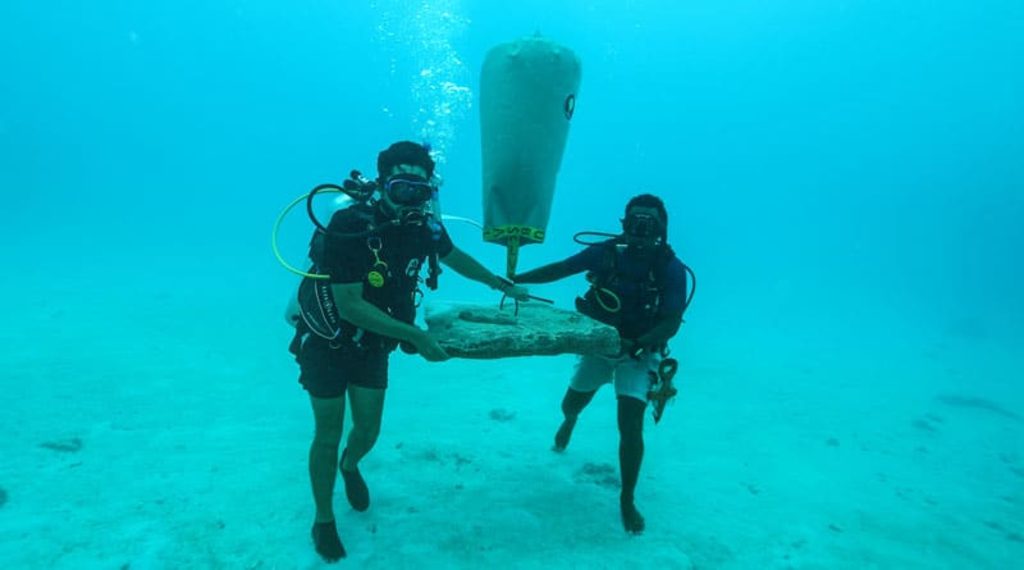
Partnering with Tourism Fiji, Counting Coral, a non-profit organisation, installed their first sculptural coral gene bank at the Blue Lagoon Beach Resort on Nacula Island in 2022. The gene banks are dynamic, living entities that provide a nurturing environment for coral fragments. Picture: FILE

