
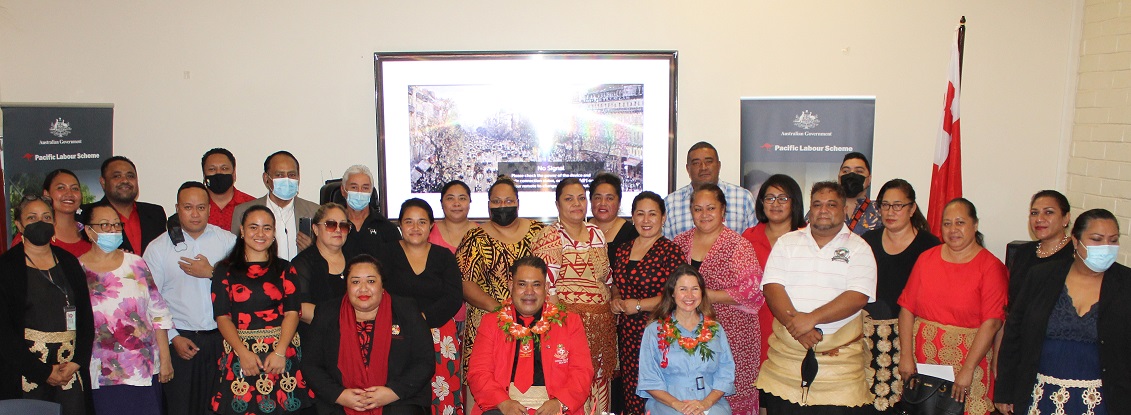
A Tonga Business Accelerator Pilot-Recovery project has been effectively implemented by the island nation’s Ministry of Trade and Economic Development (MTED), with support from the Pacific Labour Facility(PLF) and Market Development Facility Pacific Regional (MDF).
The project is a private sector development initiative funded by the Australian and New Zealand government and is one of the first for MDF Pacific Regional expansion since it extended its footprint to Tonga, Samoa and Vanuatu this year.
The project assisted 18 micro, small and medium businesses in sectors such as baking, food processing, fabric printing and furniture production to reset, recover and rebuild from the multiple impacts of the COVID-19 pandemic and the Hunga-Tonga-Hunga-Ha’apai volcanic eruption in January early this year.
In a statemenyt from the ministr, Tonga’s Minister of Trade and Economic Development Viliami Uasike Latu said according to a World Bank Disaster Assessment report, the volcanic eruption contracted Tonga’s GDP by 18 per cent, “costing us about $208million”.
“Any assistance we can mobilise to help our private sector recover is of top priority because it contributes to Tonga’s economic recovery,” Mr Latu said.
“Significant portions of our private sector are in the small and medium business categories, and were heavily affected by the impacts of the volcanic eruption and COVID-19 pandemic.”
With the assistance of an internationally experienced business coach, Steve Cordeiro, the Ministry of Trade and Economic Development supported by the Market Development Facility Pacific Regional and the Pacific Labour Facility, mobilised a team of local business coaches to develop and implement a business mentoring program for the participants.
Representatives of the 18 businesses received training in business modelling, financial management, marketing and human resources.
All participants now have a Business Recovery Plan, and the basic information and skills to help them recover and grow their operations.
MDF regional director Pacific Nicholas Wolf said they were keen to bring their expertise and knowledge to help Tongan businesses recover and grow following the economic shocks to the country.
“We are also committed to bringing market-based solutions to increase economic participation in Tonga and the Pacific to improve livelihoods and reduce poverty.”
Pacific Labour Facility Quality Learning and performance coordinator Pauline Fatongia said despite the economic shocks, opportunities for labour mobility continued to grow and presented a unique development opportunity for Tonga.
“It is important that we leverage this development potential to enhance its positive impacts on social and economic development of our country and for our people,” Ms Fatongia said in the statement.
“Therefore, reintegration is an important area in Labour Mobility in Tonga.
“With the right management of reintegration in Tonga, the country is able to take the development gains from labour mobility opportunities to facilitate skills transfer and investments into the local and private sector by workers when they return.
“Workers who choose an entrepreneurship option and are committed to business investments can be supported by enrolling in the Business Accelerator program.”
According to the statement, both MDF Pacific Regional and PLF will continue to collaborate with the Ministry of Trade and Economic Development in implementing future iterations of the business accelerator program.

