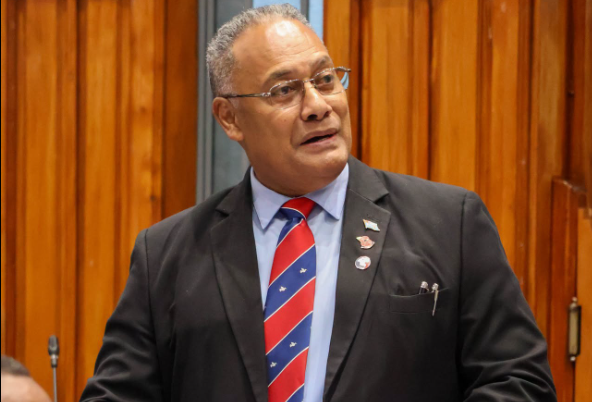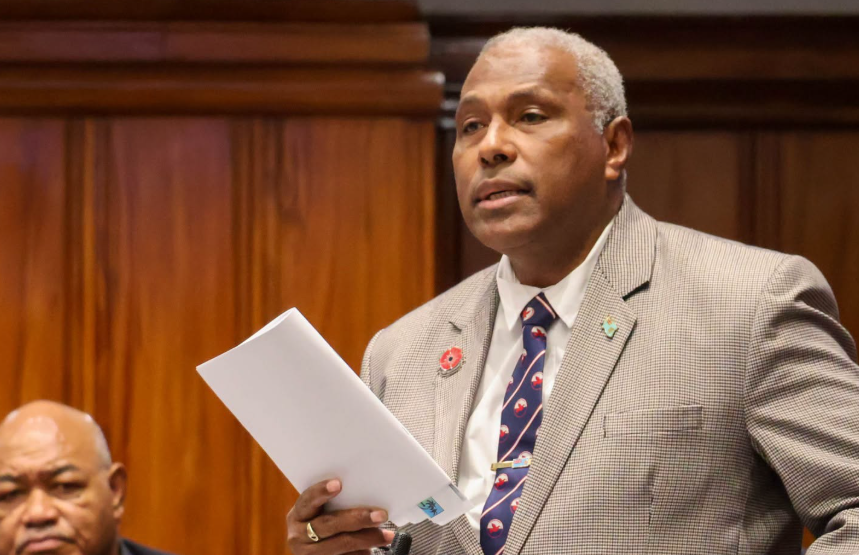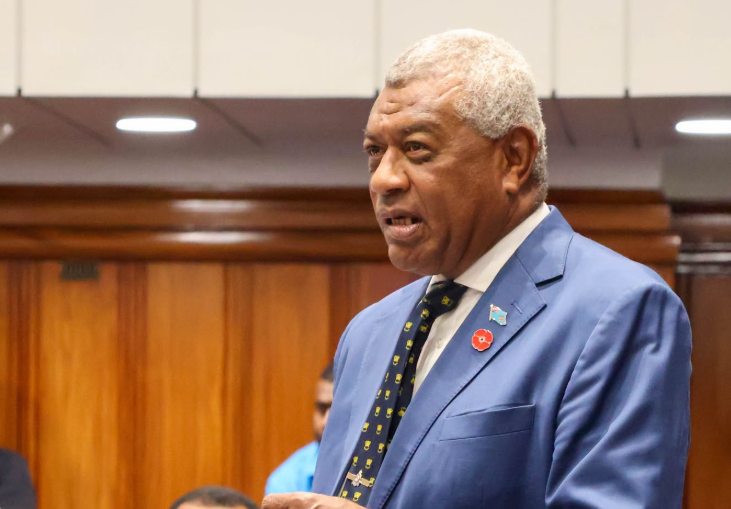
Minister for Defence Pio Tikoduadua has revealed how his ancestors were evicted from their traditional land in Korovou to make way for the construction of a butter factory following World War I.
Speaking in Parliament on Wednesday, Mr Tikoduadua shared his personal experience of researching his tribe’s history and its unsuccessful attempt to reclaim land now occupied by the Korovou Police Station and Government Station.
He said the research began after members of his tribe questioned why the land had not been returned to them following the Native Lands Commission proceedings.
“A couple of years back, I was doing some research for our tribe. The research was on this particular piece of land in Korovou Town where the Police Station is at the moment and the Government Station,” he said.
Mr Tikoduadua said he eventually obtained historical records from 1921 and 1922, which revealed how returned servicemen from New Zealand and the United Kingdom had settled in Fiji after World War I and were looking for land to establish a butter factory.
“I discovered all this as part of my research, and they had to evict our tribe that lived in Korovou Town,” he said.
“Korovou is derived out from our village name which is Nakorovou. They shortened it to Korovou and evicted us to village called Navunisole to build the first-ever butter factory on that site.”
He said the archival records contained photographs and names of his ancestors, including a namesake born in 1884.
“I saw all of the pictures, names of my ancestors at the time and I just found out the history of my own name. It was all in the archives, and I did not realise that.”
Mr Tikoduadua also recalled discovering correspondence between two prominent individuals who had complained about his tribe’s resistance to relocation.
He said the historical documents contained derogatory descriptions of his ancestors, including claims that they were unwilling to move.
“They were complaining that my tribe did not want to move because, they were a bunch of useless people,” he told Parliament.
He said the records subsequently became part of the evidence used in efforts to recover the land.
However, the legal challenge was unsuccessful because it had been brought too late.
“Cut the long story short, the Justice Court said it was 70 years, too late in the judicial review,” he said.
Mr Tikoduadua used his family’s experience to emphasise the importance of preserving historical documents and ensuring that archival institutions were adequately resourced.
He said access to properly maintained records was essential for communities seeking to understand their history, ancestral land ownership and the decisions that shaped their lives.
“I am simply reiterating how important this is for us now: the importance of resourcing proper records,” he said.