Fiji’s beauty is in the lewenivanua (land, its people, culture and citizens) and the vanua”. Those are the empowering words of José Legarra, a Spanish architect working for the European Union (EU) here in Fiji.
He was born and raised in Pamplona, a city in Spain that was founded by Pompey, a Roman general and statesman who was also a rival of Julius Caesar.
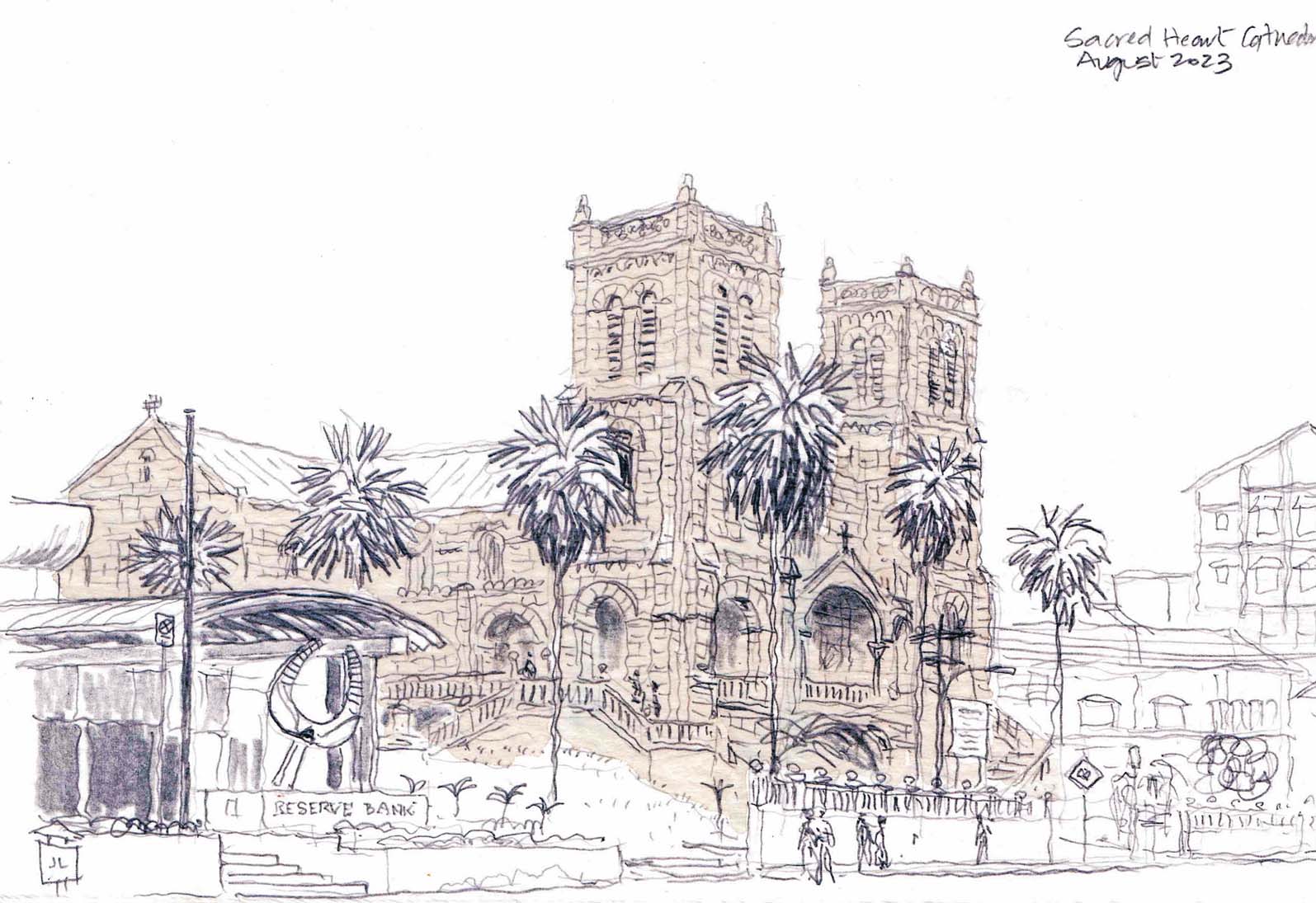
The Spaniard sat down with The Sunday Times earlier this week to talk about his passion and love for sketching and drawing, art forms he describes as ‘universal language’ that anyone can understand.
José arrived in Fiji back in August 2022 and has been doing extensive work in the field of architecture overseeing EU projects involving water, sanitation, construction, roads, and bridges not only here in Fiji but across the region.
“Working for the European Union is sort of like being a public servant, it’s hard work and full of responsibilities,” he said.
Because there are established procedures and templates set out to be followed in his line of work, José admits that sometimes there isn’t much space for creativity.
“So, in my free time, I release my creativity, I love taking long walks and at the same time I sketch whatever catches my eye,” he said.
“I have a foldable chair and notepad with me always. When I pass by a place and if it stands out, I set up there and draw whatever is in front of me.”
According to José, his sketches are not just drawings of places, buildings, and people, they are in a way a foreigner’s raw and unfiltered perspective of Fiji.
“I don’t draw things to make them look beautiful, I draw them as they are. Images carry more emotion and meaning this way,” he said.
José also mentioned how some of his workmates have cautioned him about visiting certain neighbourhoods in Suva, given their notoriety.

“But I don’t mind this. I never felt any problems visiting these places because when people see me, a guy from overseas sketching their neighbourhood, they want to connect and find out more. This is beautiful.”
“I also take some small pieces of paper with me, and I’d do quick portraits and offer it to people,” he said.
As an architect, José has a keen eye for buildings and structures as he walks around Suva. His home city of Pamplona houses monuments and cathedrals that date back to Roman times, therefore the Spaniard has a deep respect for old buildings and structures.
“It’s a pity that some of the older and more interesting buildings in Suva are crumbling.”
“However, I’ve seen some buildings like the Toorak Central building and the Regal Theatre building in downtown Suva, even though they received a facelift, the original design and style have been respected and kept. This is a good intervention,” he said.
Black skyscrapers according to José are not very climate-friendly because they attract a lot of heat from the Sun, which results in high usage of air conditioning to keep it cool inside.
“What does this mean? Yes, more usage of diesel at Kinoya to produce more energy to power those air conditioners, which means more emissions put out into our atmosphere.”
“We talk a great deal about climate change here in the Pacific and yes, the bigger countries need to do more. But we need to start here at home first and hopefully through my drawings of Suva’s buildings, people will come to realise this,” José said.
Including the lush greenery of the ‘Suva-side of Fiji’ in his sketches is also something that José loves doing and wishes Fijians would come to appreciate a lot more of the natural environment around them.
“Everywhere I go in Fiji, I say wow, it’s so beautiful and pristine.”
Mount Korobaba, located just on the outskirts of Lami, is a regular hiking spot for José. He did, however, express his disappointment over the increasing amount of litter left by hikers along the trek.
“Pay attention to the amount of rubbish that you are going to find all along the way,” he said.
“It’s a beautiful place and I cannot understand how someone who is a citizen and calls this place home can just throw bottles and plastics around like that. How can you do that?”
“I’m not trying to be an influencer. Far from that. All I’m trying to do through my drawings is to try and send a small message about basically good behaviour,” he said.
There is however a lot more to Fiji than meets the eye according to José.
“The equilibrium of the two major races in Fiji is something I admire a lot. There have been some rough times in the past. But on the everyday level, you guys get along very well. It shows very much when it comes to rugby. You guys are crazy about rugby,” he said with a laugh.
“People complain about why it rains so much here in Suva for example, but when you think of it, that’s why it’s so green and beautiful.”
“I love how I go around in the street doing my sketching and people just pass by and say hey yadra vinaka, I find beauty on both sides, the country and people are beautiful,” José said.
The Spaniard has another four years to serve under his contract and looks forward and excited to continue sketching more of Fiji’s scenery and visiting more places.
“I was born optimistic, when I wake up in the morning my mind goes – Yes, still alive, let’s go there,”
“I have a weakness for waterfalls, I’ve recently been to the one called Savu-i-one at the Koroyanitu National Park and I’m looking forward to visiting Taveuni soon,” he said.
José also hopes that his drawings will spur local aspiring artists to showcase their talents and use them to express themselves about issues they feel passionately about.
“If you find it difficult to explain something to someone who doesn’t speak the same language as you, all you need to do is put a drawing in front of them and immediately they will understand you,” he said
“There’s so many modern drawing applications and software you find now, but there’s something truly magical about free hand drawing and this is the same magic I felt when I first picked up a marker as a little boy.”
“My day-to-day life is driven by a simple principle; Life is already complicated, so the less you complicate it, the better it’s going to be for you and everyone around you.”