
Aisake Casimira’s reflections on the “unburying” of Pasifika identities provide a thought-provoking lens in the ongoing conversations surrounding Pasifika philosophies and development. The ‘Unburying’ Casimira writes about in his introduction to the book The ‘Whole of Life’ Way – Unburying Vakatabu Philosophies and Theologies for Development is not about unearthing human remains. It is rather about resurrecting the deeply rooted philosophies and ways of life that were suppressed and buried beneath the weight of colonial occupation. An original identity is continually being buried by a dominant Western ideology. Casimira and others argue that these identities — once dismissed as savage or demonic by Western ideologies — are crucial to reclaiming a holistic and sustainable approach to development for Pasifika peoples. In 2008, Julian Aguon published What We Bury at Night: Disposal Humanity. Aguon is a Chamoru from Guam, a human rights lawyer, an academic activist, and an artist. In his book, Aguon explores how the night burial of faith, spirituality, and indigenous identity erases the core elements that define his people. Casimira and Aguan, two Pasifika writers, have amplified the growing call from other writers, educators, academics, and development experts to emphasise the importance of unburying Vanua and Pasifika identities and their value for national and regional development.
Philosophies in contemporary development Frameworks
But not all that is buried should be unburied — thus, the mutual contradiction of life is that as we un-bury, we must bury those practices that are not good for us. We buried cannibalism, for one.
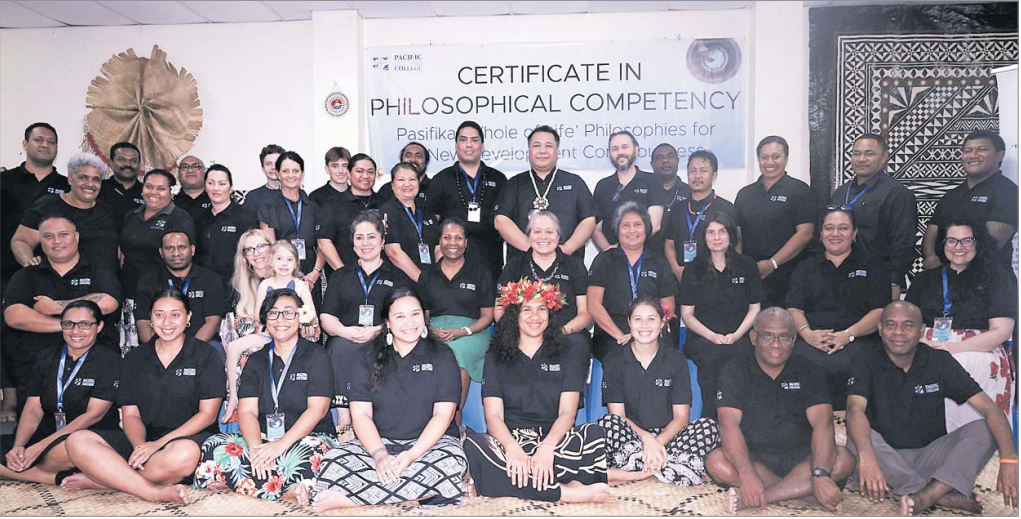
What must be unburied is the aloha, the loloma (love), the veikauwaitaki and veiwekani, and veisemati (connectedness and the relationality of life) amongst all living things. That is our inheritance as Pasifika, a gift we can share with the world in development. The essence of Pasifika life is intricately tied to the vanua (land), the wasawasa (sea), the mountains, forests, and skies – elements that were once integral to a philosophy of living deeply connected to the environment. However, as Western ideologies overshadowed these traditions, the core values of aloha, loloma (love), and veikauwaitaki or bula veisemati and veimositi (connectedness and relationality) were obscured, leading to a disconnection from these fundamental aspects of Pasifika identity. The recent Pacific Theological College (PTC) Certificate in Philosophical Competency, which drew about 30 toloa (scholars) and mentors from across the globe to Fiji, exemplifies this philosophical ‘unburying’ or rediscovery process. The Pasifika Philosophies toloa are mostly PhD candidates in various universities in New Zealand, Australia, Fiji, United Kingdom and actors in various development policy spaces. They graduated yesterday in a ceremony officiated by the Archbishop of the Anglican Church, The Most Reverend Sione Ulu’ilakepa at the Islander Missionaries Memorial Church at PTC.
This two-week course aimed to reawaken Pasifika philosophies buried under layers of colonial influence. The toloa, a metaphorical reference to the Samoan bird known for returning to its waters to rejuvenate, symbolises the need for Pasifika peoples to revisit their indigenous knowledge and philosophies to guide their future development. Amy Gildea, the managing director for Tetra Tech International Development Indo Pacific Australia, is one of the few kaivalagi (non-Pasifika Indigenous people) who joined the training. “It has been an incredibly and radically transforming two weeks. From a starting point, the course, the professors, and the course content have been world-class. Particularly, Rev. Professor Upolu Vaai and Professor Manulani Meyer have been incredibly insightful,” said Gildea. “As a palagi, I am learning all of these philosophies and how they can raise our consciousness. I can take that back to my communities and colleagues and really drive the changing narrative in how we do development so that it’s driven in an authentic way through vanua and traditional values. “If I have to pick one philosophy, it is ‘centred on aloha,’” Gildea said. “Everything comes from the love that infuses the vanua’s love for land, that connection with people, animals, and the spirit world. It connects with what we bury and unbury when we love ourselves and love others. I think that is what really drives our purpose,” she said. Development should be driven in a way that is not solely measured by material success but should also focus on the emotional, spiritual, and communal wellbeing of its people and their relationships with all living things. This approach aligns with the biblical notion of living life to the fullest, a perspective often overshadowed by a singular focus on economic (monetary) gain or profit. A development that prioritises the wellbeing of all living things – a wellbeing that emphasises that human beings are just a part of it and not at the centre of it. The experience of countries like Finland, which ranks highly in terms of happiness but also faces significant mental health challenges, underscores the limitations of equating development solely with the capitalist economic development model of success. Rusiate Misikivosa hails from Yadrana Village in Lau. He is part of the team coordinating the Lau Seascape project.
As a toloa, he spent a weekend at Nadakuni Village in Naitasiri to learn about indigenous knowledge and philosophies from the custodians’ stories and demonstrations. Other toloa spent time in Nalase Village in Rewa Province and Qoma Island in Tailevu, learning from the community’s philosophies and valuable knowledge for development. “We always had the knowledge here with us, but the imposition of foreign ideologies suppressed and undermined it, and we believed them and diminished what we had,” said Misikivosa. “It’s also been useful in helping me understand the linkages of the work between the various regional crop agencies and the government,” he added, referring to the visits to various crop agencies in the area of regional development that are part of the course content. Sera Vatuloka, from Suvavou Village and a PhD candidate at Victoria University in Wellington, New Zealand, has found that reconnecting with Pasifika philosophies has helped her understand the iTaukei Fijian way of thinking and being. Vatuloka left Fiji for New Zealand when she was six years old. “We have our totems, fish and I didn’t know how that connected to my ‘whole of life’ or who I am as a Fijian. How does that connect,” Vatuloka said. She added: “And the options of offering what the answers would be were provided in this course. “I have been schooled my whole life in New Zealand. I have been schooled in Western thought and ways of being, and so this course offered two weeks of immersion at PTC. “I was able to immerse myself in the land, in the vanua, where I was born and rethink my journey of education in Aotearoa, New Zealand, and the mismatch. I also learned why there is a mismatch between my Western education and my teachings at home.” To conclude, Casimira’s call to unbury Pasifika identities and philosophies is not merely a philosophical exercise, but a vital process of reclaiming and revitalising the values that can guide us towards a more “whole-of-life” form of development. By integrating these ancestral insights into contemporary practices, Pasifika peoples can forge a path that honours their heritage while addressing the challenges of modernity with renewed vigour and purpose. The Pasifika Philosophies Course is run annually by PTC, which recently published The ‘Whole of Life’ Way of Development—Unburying Pasifika Philosophies and Theologies for Development.
- THERESA FOX is the communications co-ordinator for the Pacific Theological College.

