
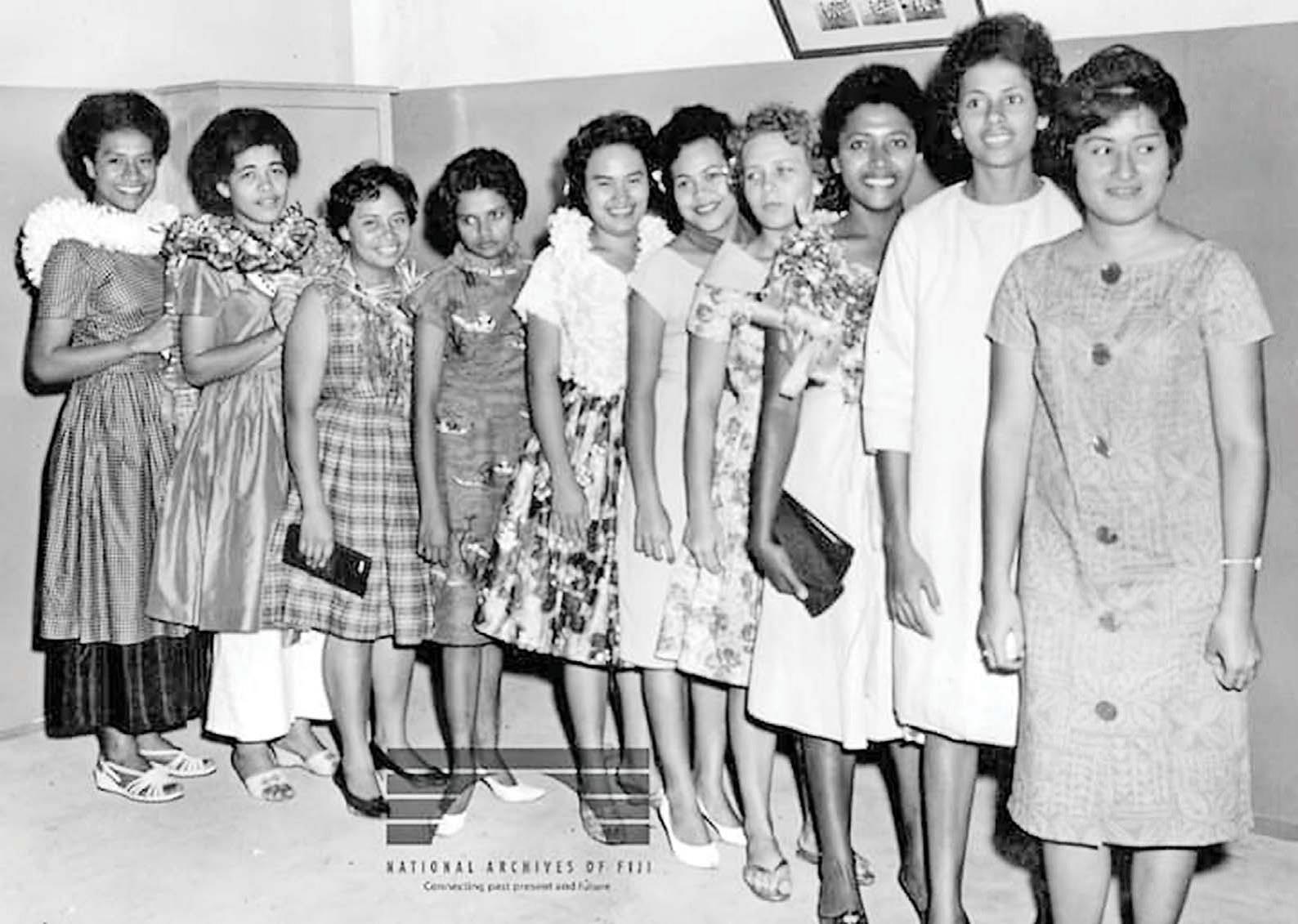
THEY were given the name ‘The Sunshine Squad’ by London’s Daily Mirror back in 1961 after they touched down in England.
The 12 women were the first Fijian women to be recruited by the British Army.
It was an exciting prospect and a daunting task as the young women tried to adapt to the cold winter and the media fascination. Australian Author David Tough in his book ‘212 Soldiers for the Queen – Fijians in the British Army 1961-1997’ said the women did not get their three-year contract in the army renewed.
Some served between one to two years in the army and returned to Fiji.
While some married and settled in England, Australia, and New Zealand.
At the time of their recruitment, Mr Tough wrote that the consideration to recruiting the women volunteers in Fiji was met with vehemence from the then Director WRAC, Brigadier Dame Jean Rivett-Drake, who wrote a confidential memorandum to the Director of Recruiting, MajGen J.E.L Morris on August 28, 1961.
“I am under the impression that they will be jet black and woolly-haired and I feel most strongly these women will present considerably more problems to us than the coffee coloured Seychellois. If the worst happens and we are told at the highest level we must consider women from Fiji I feel we must insist that the numbers be very restricted. I consider it would be essential to have a senior WRAC officer present who would have the last word on their acceptance, regardless of their suitability on paper. In my opinion, it is of utmost importance that before we are asked to consider any further such enlistments we should be told the position and status of women in the country concerned and in particular their customs with regard to marriage,” the memorandum read.
Some of the women enjoyed their brief stint while some did not like the constant attention. According to Edwina Jameson one of the 12 women – the British Army saw them as ‘exotic’ and needed special food (assuming that they were not familiar with Western food) and they were made to dance the hula.
“The women travelled separately to the men via Sydney and Singapore, with their arrival diverted to Stansted because Heathrow was closed due to some of the worst winter weather in a century. Shortly after their arrival, the Fijian girls were bussed to Southhampton for a TV appearance,” described Mr Tough.
The 12 women were Munivai Brooks, Laurel Roberta Bentley later Harper, Tausia Cakauyawa, later Savu, Edwina Caroline Eyre, later Jameson, Betty Roaline Foster, later Hansen, Victoria Grant, later Partridge, Emma Olive Heffernan, later Grant, Louisa Pekham, later Baldwin, Doreen Petersen, later Wilkes, Lillian Pirie, later Millar, Fane Sivoki, Vaciseva Tabua.
Below is a brief account of three of the 12 women taken from the book – ‘212 Soldiers for the Queen – Fijians in the British Army 1961-1997’ which is sold locally at the USP bookstore for $47.
Munivai Taukave Aisake, later Brooks Munivai hailed from Fapufa, one of the smallest and most isolated villages on Rotuma.
She worked as a stenographer in Suva in 1961 before she tried out for the British Army.
After completing her army service, she remained in England and married a Fiji expatriate Charles McGoon who came to England in 1961 to study electrical engineering.
The marriage did not last long; Munivai remarried Alan Brooks and settled in London.
They had two daughters, Tessa and Laura.
Munivai would later die tragically of a brain haemorrhage in 1993. In 2012, Laura was a torchbearer for the opening of the London Olympics and participated in the opening ceremony. Fane Sivoki, later Morell and Ubitau Fane was born in Lakeba and attended Adi Cakobau School (ACS).
She worked as Stenographer for Peter Westwood, a former District Commissioner, at the Government Buildings Secretariat Department.
At the time she was recruited she was seeing Tom Morell, who was also among the recruited soldiers.
Some of their friends joked that Fane enlisted primarily to keep track of Tom. She would later complete her basic training and married Tom.
They had four sons, three of whom followed their parents into the army via the Green Jackets (2RGJ) with one emulating Tom’s lengthy service.
Fane later returned to Fiji in 1985 and remarried Nemani Donu Ubitau.
She passed away in 2000 after major surgery.
Emma Olive Heffernan, later Grant Emma was another stenographer attracted by the opportunities offered by the recruiting team and served three years including a posting to Aldershot.
Emma found requests for the ‘Sunshine Squad’ performances of Fijian dancing tedious and refused to participate.
She returned to Fiji after her service but soon moved to Australia, where she became a model, appearing in glossy magazines, including Vogue Australia.
She returned to Fiji married to a senior manager of the Carpenters group of companies before settling in Greenwich, Sydney.

