
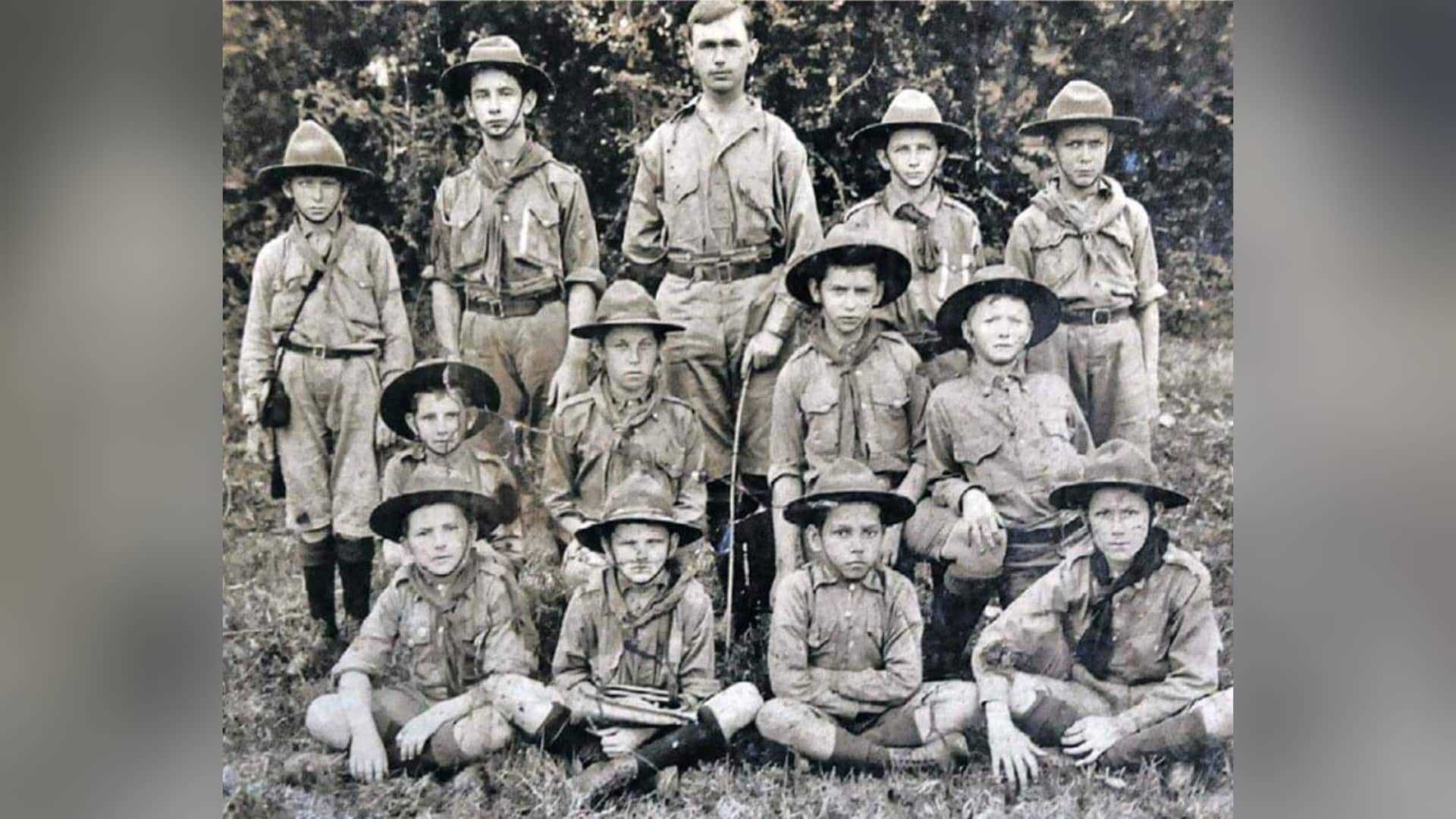
The name Sydney Frank Marlow may not ring a bell but he he exists in Fiji’s history books. Marlow was responsible for establishing the Scout movement in Fiji in 1914, some eight years after it was founded by Robert Baden-Powell.
Two years earlier, in 1912, Marlow first got acquainted with the boys’ club in Britain, when he was a scout leader with the Mansfield Scout troop. He was born on September 9, 1891 to parents George Henry and Williamena Marlow of 62 Rosemary Street, Mansfield, Nottinghamshire.
His parents were shopkeepers. He was educated at Queen Elizabeth Grammar School for boys. According to the website www.ourmansfieldandarea.org.uk Marlow left London on the Orient steamship vessel Orsova on June 4, 1914 for Sydney, Australia.
He arrived in Fiji to team up with his older half-brother, Alf Marlow who then owned a construction company in Suva called Marlow’s Company Ltd. Marlow had met up with Baden-Powell when the Scouts founder was on a visit to Scout troops in Nottinghamshire area in 1912.
I is believed that Marlow told Baden- Powell that he was planning to go to Fiji. Baden-Powell then asked Marlow to help spread the scouting movement by setting one in the colony of Fiji.
He started scouting in Fiji late 1914 and was recorded as the Secretary of the Fiji Scout Association in September 1915 in records of the Scouts Association Archives at Gilwell House in London. Marlow may have worked briefly in the civil service before forming scouting in Fiji.
He also served for half a year in the medical unit of the Fiji Rifle Association and was a member of the ‘1st Fiji Reinforcement of the Fiji Defence Force. He did not stay in Fiji for long.
In fact, he was only here for two years before he departed the colony as a volunteer to the United Kingdom in 1916 and was killed in action during World War I. In 1929, the Fiji Scouts Association presented a flag of Fiji to the Mansfield Scouts in the UK in memory of their founder, S.L.Marlow.
Six scouts from Fiji attended the jamboree that year. The flag was presented by Fiji King’s Scout, Leslie Keys. When Marlow reached Britain, he enrolled in the military in London on the July 18, 1916 as a Rifleman, service number R/30888, 1st Battalion, Kings Royal Rifle Corps.
According to military records, Marlow was killed in action on February 17, 1917 at the Somme, the site of the global historical event known as the Battle of the Somme, (July 1–Nov. 13, 1916).
At the Somme (France), British and French forces launched a frontal attack against an entrenched German army north of the Somme River in France. A weeklong artillery bombardment was followed by a British infantry assault on the impregnable German positions.
Marlow’s remains were not recovered as was often the case in major battles. Fiji did not become a member of the World Organisation of the Scout Movement until 1971, 57 years after it started in the colony and 60 years after the death of founder Marlow.
After Fiji became independent and the local movement joined the world body, the Scout movement in Fiji was alive and active in the 1970s with a lot of developments taking place.
On December 16, 1977, The Fiji Times published a report about the establishment of its national camping site at Coloi-Suva. The Chief Scout at that time was the Governor-General, Ratu Sir George Cakobau. He officially opened the campsite — named Jean Murray National Campsite.
“I have the pleasant task today of opening the national scout camping ground — the Jean Murray Campsite,” The Fiji Times quoted Ratu George said as saying. “What you see here now is the culmination of many years of hard work.”
On the history of the campsite, the report stated that an annual rally was held on another proposed site at Nasinu, 9 miles on the Kings Rd, but this was not suitable because the land was not available for scouting.
The campsite was set up after a licence was first acquired from the Forestry Department in Colo-i-Suva. It was named the Jean Murray Campsite because of the untiring efforts of Mrs Murray in raising funds by selling clothes and books at the Nausori market on Saturday mornings.
Mrs Jean Murray, the wife of the deputy chief Scout, Mr Herbert Murray. The campsite started with the transformation of an old corrugated iron and wooden hut. With help from the Vatukoula Scout district, a swimming pool was blasted out of the creek and a carpenter’s hut and kitchen was built as well.
It was reported that because of inclement weather in Colo-i-Suva, more permanent buildings were required for the proper use of the site. The article stated in 1975 there were some planning and brainstorming and the Fiji Scout Association obtained a formal lease from the Native Land Trust Board (now known as iTaukei Land Trust Board) of eight and half acres for 50 years.
Much thought was put into what sort of buildings was required and eventually permits were obtained. It was not easy to get a contractor but the association managed to select one and after all that hard work, a total of about $55,000 was used on the campsite project.
The President Ratu Wiliame Maivalili Katonivere, was formally invested in the rank of Chief Scout by the Fiji Scouts Association at the State House in March 2022. The position of Chief Scout is only reserved for Heads of State.
Before Ratu Wiliame, the position was last held by the former President, BrigadierGeneral (Retired) Jioji Konrote, and was left vacant when his term expired. During the investiture, Ratu Wiliame said that he joined the ranks of his predecessors, who had been similarly honoured during their respective tenure, and served as Chief Scout with great courage, discipline, integrity, and perseverance.
Scouting is the biggest youth movement in the world with a membership of over 50 million. The principal objective and the aim of the movement is to develop good citizenship among young people by training them to become self-reliant, patriotic, and assist in the promotion and improvement of their physical, mental, and spiritual development.
President Wiliame said approximately 10,000 boys and girls continued upholding the scouting spirit of discipline, love, peace, and respect in our communities and schools.
The scout mission in Fiji has, for over a century, contributed to the education of young people through a value system, based on the Scout Promise and Law, and aims to help build a better world where people are self-fulfilled as individuals and play a constructive role in society.
“As Chief Scout, I encourage more of our young people to join the Scouts Movement in our schools. In this regard, I would like to appeal and seek the assistance of the Ministry of Education and Ministry of Youth and Sports in promoting and supporting the Scout Movement in the schools and within the communities,” Ratu Wiliame said.
He said all scouts should continue the great commitment of service to humanity and other activities in promoting the Scout Movement. Meanwhile, according to the Commonwealth War Graves Commission, today a plaque commemorating the life of Marlow, Fiji’s Scouts founder, and 70,000 other soldiers who were killed at the Somme but whose bodies were never found can be found at Thiepval Memorial in France.
Pier and Face 13A and 13B is dedicated to S.F.Marlow.
(Source: www.ourmansfi eldandarea.org.uk)

