
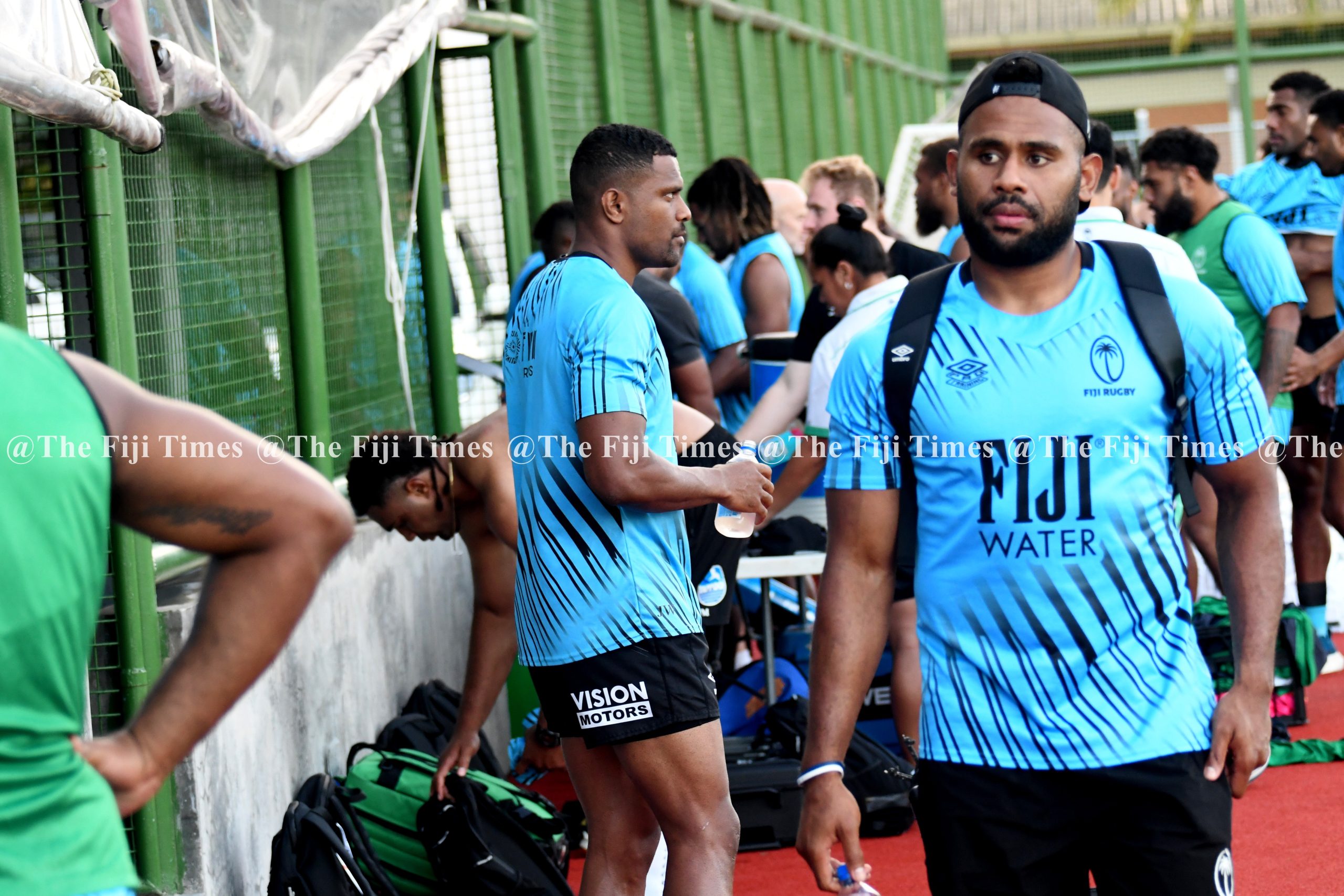
AS the FIJI Water Flying Fijians prepare for the Nations Championship and their long-term goal of the 2027 Rugby World Cup, one key tactical challenge stands out: while the team enjoys a rich pool of talent at outside centre, options at inside centre remain limited and require strategic focus.
In rugby union, the outside centre (13) primarily serves as a line-breaker and a key attacking weapon, often exploiting gaps in the opposition’s defence with speed and creativity.
The inside centre (12), meanwhile, has a dual role: acting as a crash-ball runner to gain ground and break the defensive line, and as a secondary playmaker who distributes the ball and helps organise attacking moves.
Fiji’s outside centre stocks are impressive. Vinaya Habosi, Sireli Maqala, Iosefo Masi, and Vilimoni Botitu have all been excelling in the French Top 14, bringing pace, agility, and strong defensive skills to their clubs and the national side.
Their performances give coach Mick Byrne a wealth of options to create attacking threats from the outside channels.
Conversely, the inside centre position has fewer proven international options.
Joshua Tuisova has been the incumbent inside centre, stands out as a barnstorming player, his strength and direct running style make him a powerful line-breaker who thrives on physical confrontation.
On the other hand, Vilimoni Botitu offers a contrast with his role as a second playmaker and skilled ball distributor, providing structure and creativity in midfield.
Despite his world class rugby abilities, he has yet to solidify a spot in the starting line-up, perhaps his utility has limited him to the bench, with coach Bryne preferring the 2020 Olympic gold medalist as a useful utility bench cover.
But his masterclass performance over the weekend against Stade Francias makes him Tuisova’s greatest competition for the number 12 jumper.
Despite his team’s subpar performance in Castres’ 33-15 loss to Stade Francias on the weekend, Botitu was a consistent threat, making several line breaks and showcasing elite running lines and distribution skills.
His superior rugby IQ seems to be his greatest weapon – his anticipation, timing, and overall game management distinguished him from his rivals, earning him recognition as one of the best centres in the Top 14.
Seta Tamanivalu, who impressed during the 2025 Pacific Nations Cup before injury ruled him out of the European tour, is third in line to for the inside centre role.
He combines the physicality and line-breaking ability of Tuisova and also posses a good distribution skill after consistent game time at inside centre, making him a versatile asset at 12.
Tamanuivalu’s injuries has really limited his opportunities should he stay injury free in the lead up to the 2027 Rugby World Cup; his abilities suggest pushing Tuisova and Botitu for the incumbent spot.
Another promising inside centre option is Levi Aumua who recently signed with Japan’s Yokohama Canon Eagles.
His game resembles Tuisova’s, thriving in physical encounters while also able to distribute effectively when required.
Earlier in his career he was on the All-Blacks radar, highlighting the potential he has. Although he is also eligible to play for Samoa, Fiji’s current rugby status could elevate his rugby career further should he choose to don the famous white and black jersey.
To bolster the inside centre depth, the Flying Fijians will need to test emerging talent from the Fijian Drua, such as Inia Tabuavou, Tuidraki Samusamuvodre, Iosefo Namoce and Isikeli Rabitu to step up during the Super Rugby Pacific season.
Strong and consistent Super Rugby performances could see them considered for the Nations Championship squad, helping build a more balanced and versatile midfield.
In summary, while Fiji benefits from a surplus of world-class outside centres, strengthening the inside centre position is vital.
With the return of Tamanivalu, the physical prowess of Tuisova and Aumua, Botitu’s playmaking, and emerging Drua talent on the rise, the Flying Fijians are actively working to create a dynamic and adaptable midfield.
The Pacific Nations Cup and Nations Championship will be the ideal opportunity to blood new talents while establishing a comprehensive midfield partnership that can create opportunities for our exciting outside backs.
Should Fiji solve this midfield crisis, expect the Flying Fijians not only to create havoc come the 2027 Rugby World Cup but also rewrite history in the tournament’s proud legacy.

