
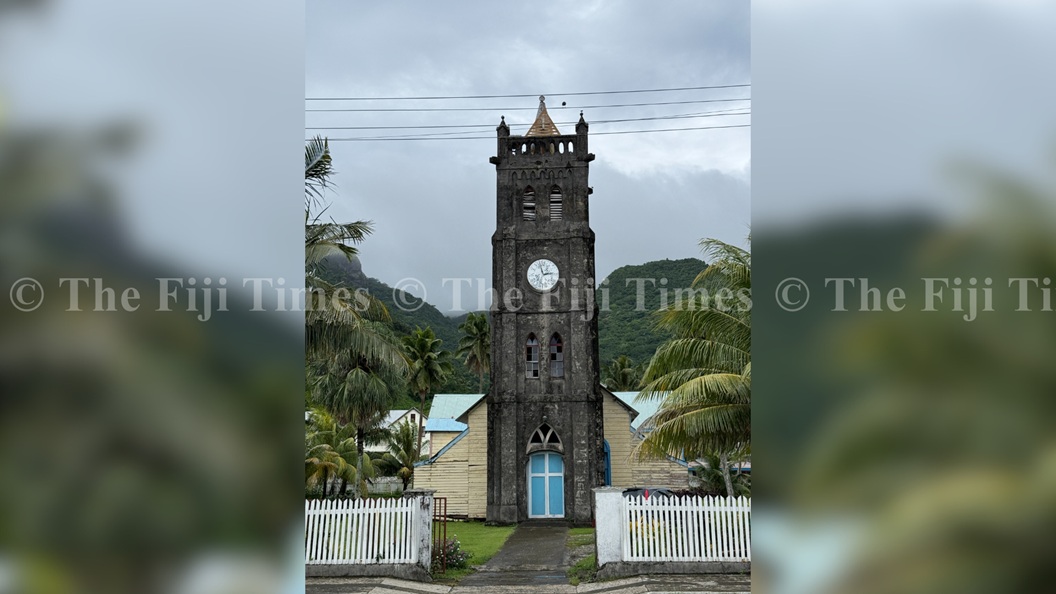
During British colonial rule, in particular, the early missionary days, indigenous Fijians converted to Christianity in droves.
This was part of early settlers’ mission to evangelise countries of the Pacific.
Before the arrival of this new religion, local tribes had a polytheistic faith and were largely involved in ancestral worship.
Over time, after chiefs were first converted, the Methodist Church became the fastest-growing Christian denomination in the islands.
Today, many churches can trace their origins back to the island of Ovalau, where Levuka was made the first capital of Fiji in the 1800s and where missionaries from Europe made humble beginnings and great sacrifices.
Unlike other heritage sites, churches prove to be a worthwhile place to visit when on Ovalau because they allow you to marvel at how they were influenced by the architectural styles, work of art and Gothic structures of Europe.
Ovalau is home to four very old churches that are all more than a century old. They have all become popular places to visit by locals and tourists.
Note that these old churches are also closely related to some of the oldest schools on Ovalau and in Fiji.
Sacred Heart Church
The church was built in 1858 by Marist priests as a part of the presbytery of the Sacred Heart Mission, in Levuka.
Father Breheret, the first priest of the church, was actively involved in its construction.
The church, part of the heritage status accorded to Levuka by its inscription as a UNESCO World Heritage Site in 2013, is said to be the “oldest and best developed catholic mission in Fiji”.
The church, presbytery, and its detached tower were built by Father Louyot in traditional Gothic revival architecture. It is laid out in the form of a Latin Cross with the weatherboard structure, measuring 18.3 metre by 7.3m. The church harmonium was added by an Alexandre Fils.
The presbytery, destroyed by a cyclone in 1905, was a two-storey wooden structure adjacent to the church. Note: Closely associated with Marist Convent Primary School
Church of the Holy Redeemer
Members of the Church of England met in Levuka in the late 1860s for the purpose of securing a clergyman to minister to them, and a committee was formed in Melbourne to action this purpose.
Reverend William Floyd, a member of this Melbourne committee, offered his services and arrived in Fiji in 1870 to set up the church.
Unfortunately, almost all Mr Floyd’s papers and records were lost soon after his death, so too little is known of his work. It took 10 years before the second clergyman arrived in Fiji and another 20 years before the third one came – Mr Poole to Suva in 1880 and Mr Lateward to Labasa in 1902.
A tiny church was built on a small piece of land in the centre of Levuka but was later destroyed in a hurricane.
The second church remained in use for many years, until Floyd’s dream of having a permanent structure, famous for its colourful stained-glass and altar of yaka and dakua wood, was realised.
The church is built in a late Gothic Revival style.
It has an interesting row of windows, completing its unusually tall proportions. Internally, the walls are painted but left ‘off-form’.
The church is in good condition and can be visited at any time of the day. Note: Closely associated with St James Anglican Primary School
Navoka Wesley Mission Methodist Church
The church is known to have been built in 1862 to replace an earlier traditional building.
Over the years it has suffered damage from several hurricanes including the loss of its roof in the later 1880s. Yet Navoka church has remained largely intact. This was the Methodist church used by early Europeans.
The church hall is significant as one of the oldest structures in Fiji, possibly the oldest church in Fiji. It is renown for its architecture and for its continuous association with the Methodist Church.
The church is simple and built as a plain rectangular building with a gable roof, and a small entrance porch of similar form at its eastern end. The walls are very thick (630mm) and built of limestone. It has a Gothic shape and has three windows on each side of the nave.
The nave of the church is simple, with whitewashed walls and a curved ceiling lined with painted tongue and groove boards. It has a timber floor, timber casement windows, and a corrugated iron roof. The roof has been rebuilt at least once.
Its position at the foot of the flight of 199 steps, gives it a key location in Levuka Town.
Note: Closely associated with Delana Methodist School.
St John The Baptist Church
After the Catholic Mission purchased Cawaci in 1890, the work on the church began and was finally completed in 1897.
The church was built by Father Francois Trillot (18681931) from Angers, France.
Fr Francois was helped by Fr Edouard Boison and Fr Andre Marion, local catechists and students.
A good part of the materials used for the construction of the church was obtained locally from areas of coral, river sand, sea sand and stones.
Coral was mixed with river and sea sand, and rough stones quarried from surrounding hills, to make cement used during construction works.
Fr Trillot, who came to Fiji in 1893, also taught at the catechist centre in Cawaci. He died in 1931 in a fire at Naiserelagi in Ra, which was his final station before his passing at the age of 68.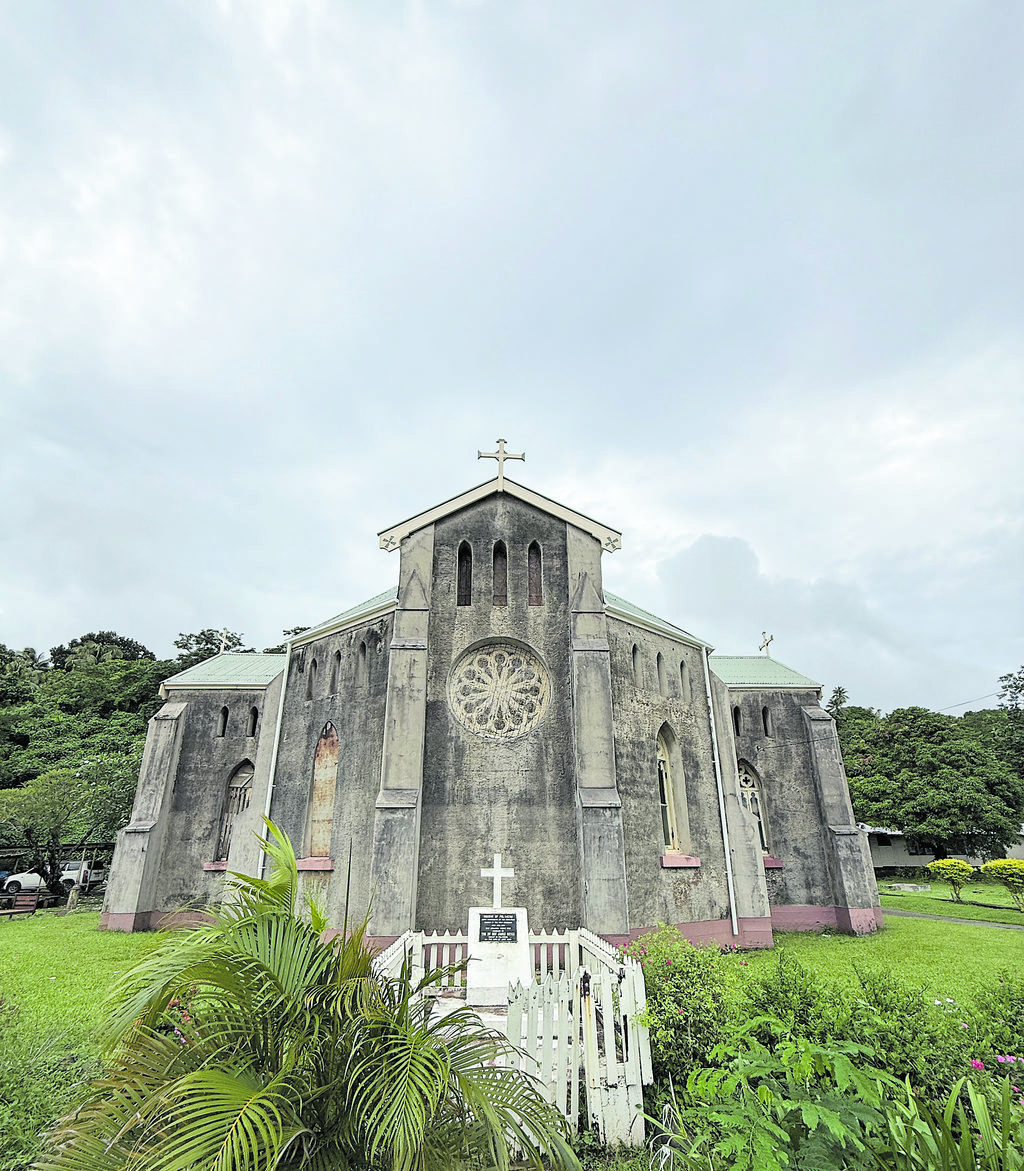
Church of the Holy Redeemer in Levuka. Picture: LENAITASI CAVUILATI
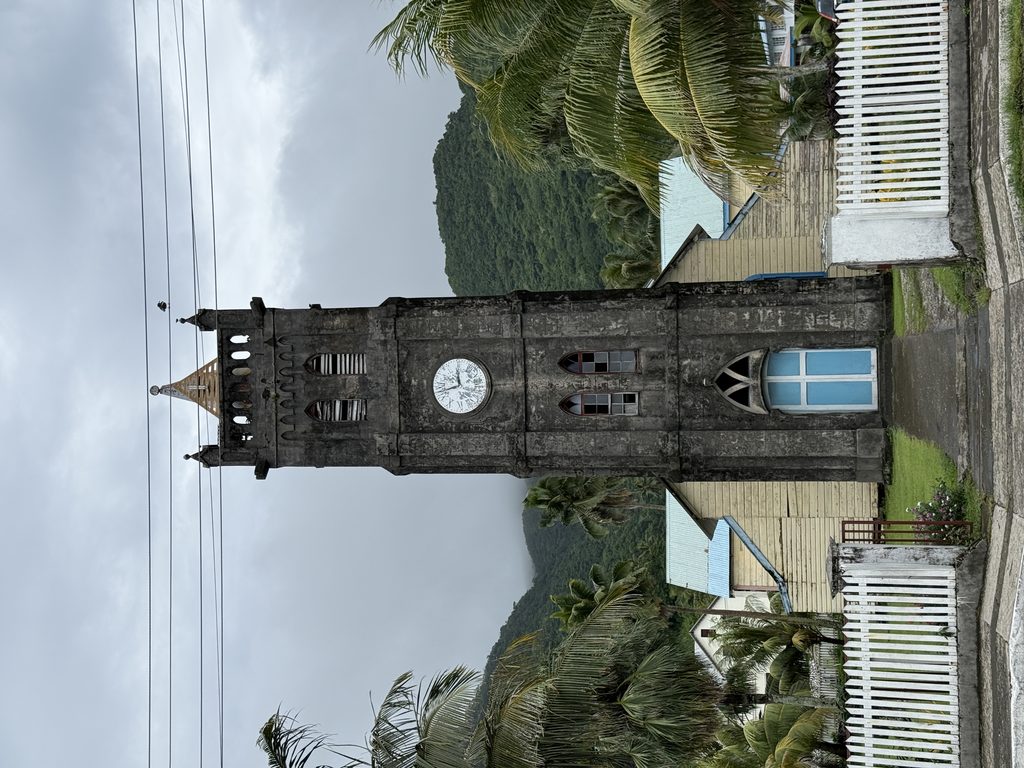
The Sacred Heart
Mission Church on Beach Street, Levuka.
Picture: LENAITASI CAVUILATI
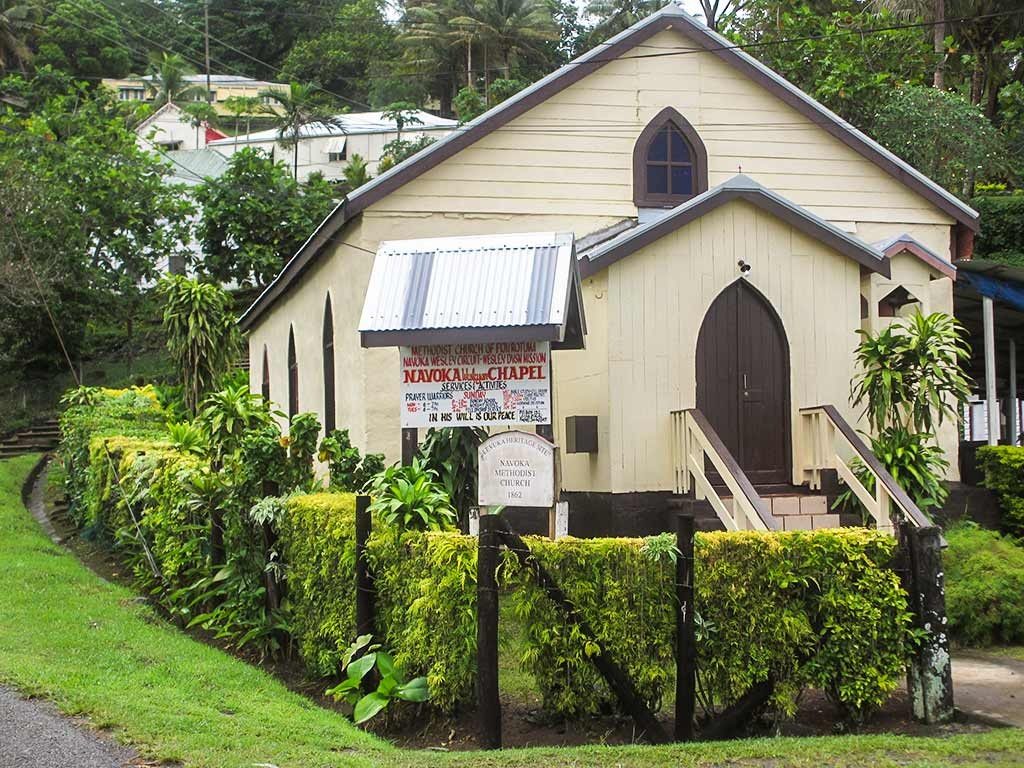
The Navoka Wesleyan Chapel at the foot of Mission Hill’s 199-steps.
Picture:twoatsea.com

