
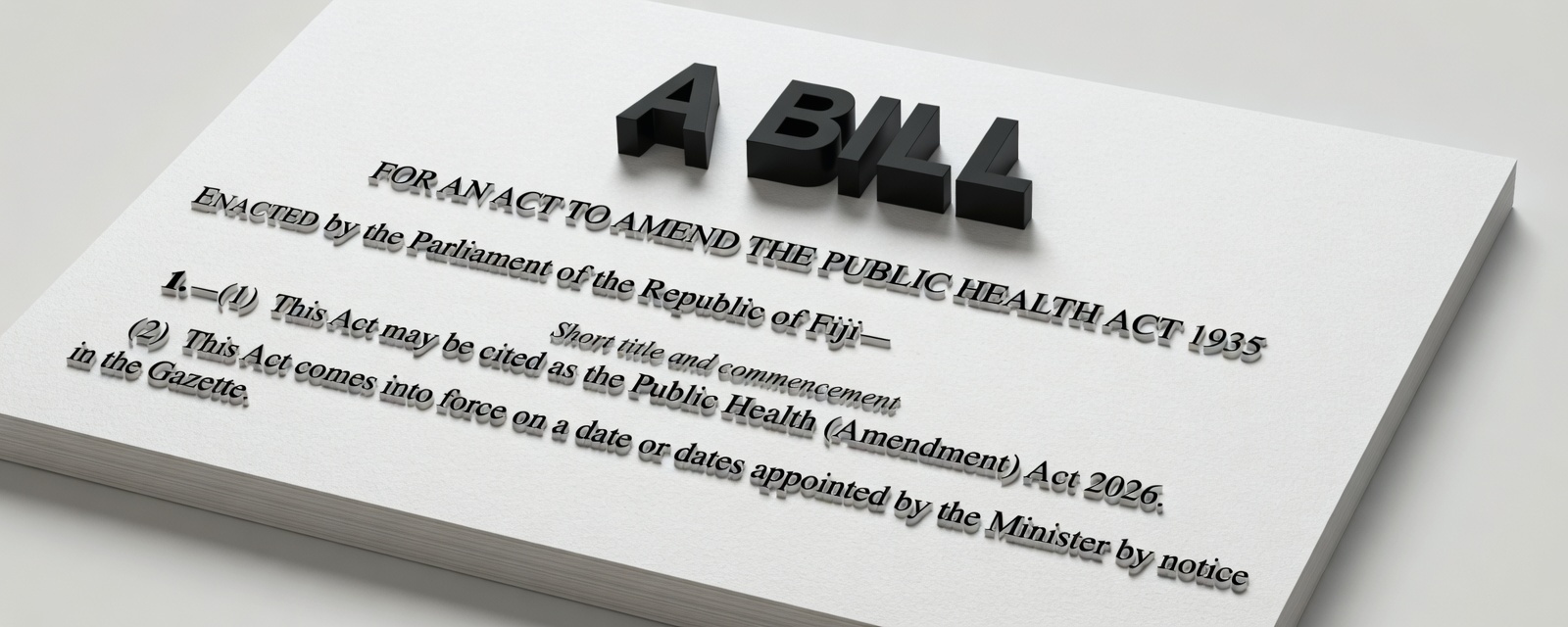
A new bill was tabled in Parliament yesterday that is seeking to modernise Fiji’s Public Health Act 1935, with stronger enforcement powers, higher penalties and expanded measures to address sanitation, disease control and environmental health risks.
The Public Health (Amendment) Bill 2026 proposes a wide-ranging update to the decades-old law, including making it clear that the Act applies to the whole of Fiji.
Among the key changes is a stronger role for the Central Board of Health, which would be restructured to include professionals from public environmental health, medicine, law, engineering, local government and consumer protection. The Board would also be given broader powers to supervise local authorities, review enforcement and oversee public and environmental health programmes.
The bill would replace outdated terms such as sanitary inspector with environmental health practitioner, while also expanding powers for health officers to inspect premises, collect samples, order the abatement of insanitary conditions and, in some cases, require vaccination, treatment or isolation during an epidemic or disease threat.
Significantly, the proposed law sharply increases penalties for a range of public health breaches. Fines for causing nuisances, obstructing health officers, failing to comply with notices, contaminating water sources and other offences would rise substantially, in some cases from a few dollars to as much as $1,000, $5,000 or $10,000.
The bill also introduces stricter requirements for water safety, waste management, mosquito breeding prevention, common lodging houses, healthcare waste plans, and sanitation on ships.
It further expands the list of activities considered nuisances, including noise, overcrowding, pollution, poor waste disposal and unsafe animal or bird keeping.
The Bill will be debated and referred to a Standing Committee in the next sitting of Parliament.

