
Minister for Foreign Affairs Sakiasi Ditoka says Fiji must focus not only on the cost of fuel but also on ensuring a reliable supply reaches the country during times of global uncertainty.
In a social media post explaining how international fuel pricing affects Fiji, Ditoka said many people mistakenly expect local fuel prices to move immediately whenever global oil prices rise or fall.
“The answer is actually quite simple,” Ditoka said.
“The fuel being sold at our service stations today was not bought today. It was purchased weeks earlier, shipped across international supply chains, landed in Fiji, processed through the regulatory system, and then released to the market.”
He said Fiji’s fuel prices reflect the cost of fuel when it was purchased and delivered, rather than the oil prices being reported internationally on any given day.
Ditoka described this process as the “lag effect”, noting that both increases and decreases in global oil prices take time to be reflected at the pump.
“If global oil prices suddenly rise today, Fiji does not immediately feel the full impact. Likewise, if global oil prices suddenly fall today, the benefit does not immediately appear at the pump either. The system works both ways,” he said.
The Foreign Affairs Minister said understanding the lag effect was important because Fiji remains heavily dependent on imported fuel and has little influence over international energy markets.
“Fiji is a price taker in global energy markets. We do not produce crude oil and we remain dependent on imported fuel.”
However, he said the country could strengthen its resilience by improving fuel security and diversifying supply arrangements.
“What we can do, however, is strengthen our fuel security, diversify our supply options, improve storage resilience, and build stronger contingency arrangements with our international partners.”
Ditoka said the Government’s focus on fuel security was driven by the need to prepare for disruptions caused by international conflicts, supply chain interruptions and other global events.
“The challenge is not only the price of fuel. Equally important is ensuring that fuel continues to reach Fiji during times of global uncertainty and disruption,” he said.
Emphasising the importance of supply security, Ditoka added:
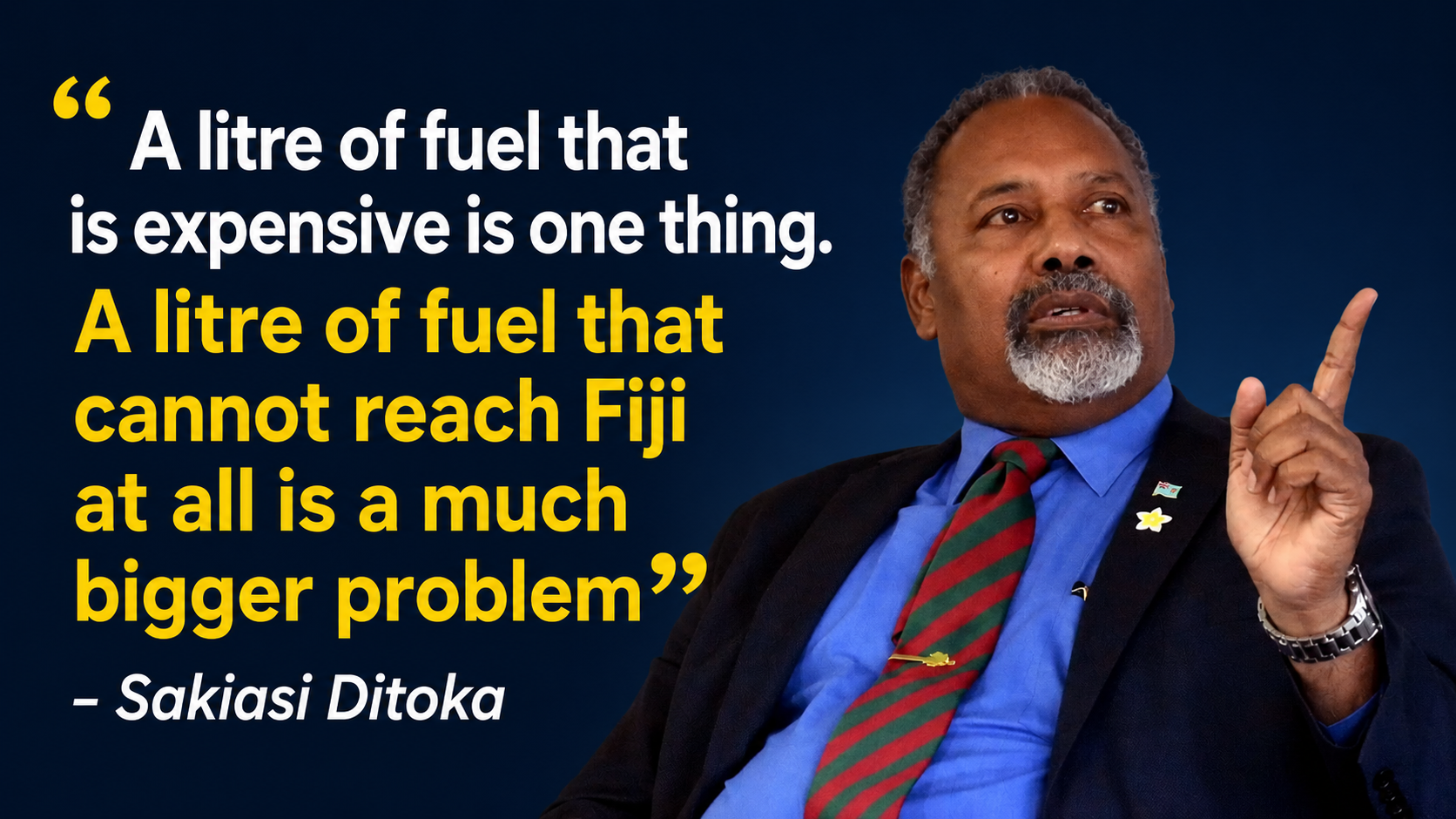
“A litre of fuel that is expensive is one thing. A litre of fuel that cannot reach Fiji at all is a much bigger problem.”
He said Government efforts are aimed at ensuring Fiji maintains access to fuel supplies even during periods of international instability.

