
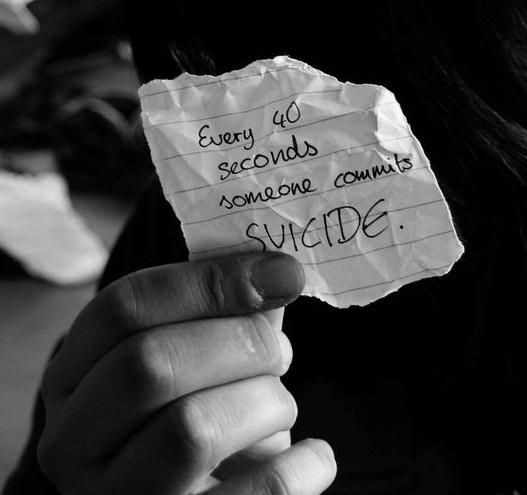
Across the sun-drenched archipelago of Fiji, so often romanticised for its cerulean waters and halcyon horizons, there persists a sorrow that seldom makes it into glossy brochures. Beneath the effulgent skies and convivial laughter lies a disquieting and dolorous reality: Suicide continues to claim lives, particularly among the young.
Although Fiji is celebrated as a paradise, paradise, too, can harbour profound anguish. This year, as in previous years, families have been convulsed by grief, communities rendered taciturn by shock, and schools forced into uncomfortable silence. The tragedy is not merely statistical; it is visceral. Each life lost is a universe extinguished, dreams truncated, laughter stilled, and futures rendered irrevocably void.
Therefore, it becomes not only necessary but morally imperative to speak about it with clarity, candour, and compassion.
The tragic reality: Why are teens so vulnerable?
1. Academic and Social Pressure
First and foremost, adolescents in Fiji often confront formidable academic expectations. In many households, education is perceived as the singular conduit to economic stability and social mobility. Consequently, failure or even the perception of inadequacy can assume catastrophic proportions in a teenager’s mind.
Moreover, in the era of social media, comparison has become omnipresent. A young person may feel diminished by curated portrayals of success, beauty, or popularity. The digital arena can be merciless, transforming minor insecurities into existential crises.
2. Family Conflict and Domestic Instability
Secondly, familial discord plays an undeniable role. Financial hardship, marital disputes, substance abuse, or generational misunderstandings can create an environment suffused with tension. Adolescents, who are already navigating hormonal turbulence, may feel trapped in circumstances beyond their control.
Sometimes, they misconstrue themselves as the problem, believing their absence would alleviate familial strain. This is a tragically erroneous but painfully common cognitive distortion.
3. Romantic disappointments and emotional turbulence
Young love, though often dismissed as frivolous by adults, can feel cataclysmic to a teenager. A breakup or betrayal may seem like the end of the world because, developmentally speaking, it is often their first profound emotional attachment.
In such moments, pain appears interminable. The mind whispers pernicious falsehoods: You will never feel joy again. You are unlovable. This is permanent.
Yet, feelings are transient; they are meteorological, not eternal.
4. Mental Health Stigma
Perhaps most perniciously, mental health struggles in Fiji are still cloaked in stigma. Depression and anxiety are sometimes trivialised or misunderstood. Young people may fear being labelled “weak” or “attention-seeking.”
As a result, they suffer in silence, a silence that can metastasise into despair.
The psychology of suicidal thoughts
It is crucial to understand that suicidal ideation is rarely about a genuine desire to die. Rather, it is about a desperate yearning to end pain. The mind, when overwhelmed, becomes myopic. It cannot envision tomorrow’s possibilities; it sees only today’s torment.
This cognitive constriction, where options appear limited and suffering appears infinite, is a hallmark of severe distress. However, distress, no matter how intense, is not immutable.
Storms, after all, exhaust themselves.
Death is certain – so why not live?
Here is an incontrovertible truth: Death will come for all of us. It requires no invitation, no acceleration, no assistance. It is punctual and inexorable.
Therefore, why hasten what is already inevitable?
If the denouement of every human story is assured, then the interlude, this messy, magnificent, bewildering interlude called life, deserves to be explored fully. Life, even in its most dolorous chapters, retains the potential for astonishing transformation.
The heartbreak that feels insurmountable at sixteen may become an anecdote at thirty. The failure that seems apocalyptic today may become the prologue to resilience tomorrow.
Moreover, existence is replete with serendipities we cannot foresee:
- The friend you have not yet met.
- The laughter you have not yet experienced.
- The love that will one day feel reciprocated and secure.
- The sunrise you have not yet witnessed from a place you have not yet travelled.
If death is inevitable, then living, truly living, becomes an act of defiance, courage, and even rebellion against despair.
How to avoid suicidal thoughts?
1. Speak, even if your voice trembles
Silence is despair’s accomplice. Speaking to a trusted friend, family member, teacher, or counsellor can dissipate the oppressive weight of secrecy. Words, once articulated, often lose their monstrous proportions.
2. Seek professional support
Counselling is not an admission of weakness; it is an act of prudence. Mental health professionals are trained to help untangle cognitive distortions and provide coping strategies. Just as one would seek medical attention for a fractured limb, one should seek care for a wounded psyche.
3. Limit catastrophic thinking
Our minds have an unfortunate penchant for hyperbole. A single setback becomes “My life is ruined.” A disagreement becomes “Everyone hates me.”
Learning to challenge these thoughts – to ask, Is this absolutely true? – can significantly reduce emotional intensity.
4. Build micro-moments of joy
Happiness need not be grandiose. It can reside in:
- A walk by the sea.
- A favourite song played loudly.
- Sharing tea with a friend.
- Laughter over an inside joke.
- These seemingly trivial moments accumulate into resilience.
5. Cultivate perspective
When engulfed in despair, time feels static. However, adolescence is a minuscule fragment of a potentially long life. The brain continues developing into the mid-twenties. Emotional regulation improves. Priorities shift. Pain that feels perennial often proves ephemeral.
How to be happy (or at least less miserable)?
Happiness is not perpetual euphoria; it is sustainable equilibrium. It is the quiet contentment that arises when one accepts imperfection.
To be happier:
Practice gratitude – Even on bleak days, there is usually something, however modest, for which to be grateful.
Engage in service – Helping others often attenuates one’s own distress.
Exercise – Physical movement releases endorphins, the body’s natural mood enhancers.
Limit comparison – Social media is a highlight reel, not a documentary.
Embrace imperfection – Nobody is perpetually composed, successful, or photogenic.
Furthermore, it is permissible to experience sadness without construing it as failure. Emotions are not moral verdicts; they are signals.
A gentle but humorous reality check
Now, after all this solemnity, allow a small injection of levity.
Imagine ending your story prematurely and missing out on:
- That one day when you will finally understand tax returns.
- The improbable satisfaction of assembling expansive furniture correctly on the first attempt.
- The vindication of proving your critics spectacularly wrong.
Discovering that the person who rejected you in high school now sells herbal tea on Instagram while you are thriving.
Life has a mischievous sense of irony. Sometimes, it rewards patience in the most unexpected ways.
Moreover, consider this: if you are determined to disappear, why not first attempt something audacious? Travel. Change careers. Start a ridiculous hobby. Adopt an eccentric fashion sense. The world is vast, and reinvention is free.
Death will arrive unbidden and unhurried. It does not require RSVP confirmation.
Until then, live. Live obstreperously. Live imperfectly. Live curiously. Live with the audacity to believe that today’s anguish is not tomorrow’s destiny.
Conclusion: Choose the next chapter
Suicide in Fiji is a tragic and heartrending reality, especially among young people. The reasons are complex, including academic pressure, family conflict, romantic despair, social stigma, and untreated mental health conditions. Yet, despite this complexity, greater awareness, early intervention, and community support can help prevent many of these tragedies.
Pain is real. Suffering is real. However, so too is recovery.
If you or someone you know is struggling, reaching out is not a weakness, it is wisdom. The world may sometimes appear implacable, but it is not devoid of kindness.
Death is certain. That is precisely why life, however chaotic, however painful, remains a rare and extraordinary interlude.
So stay.
Stay for the plot twists.
Stay for the improbable joys.
Stay for the day you look back and say, “I am profoundly glad I did.”
And if nothing else, stay out of sheer curiosity.
After all, the universe has already scheduled the ending. There is absolutely no need to arrive early.
- VIKRANT KRISHAN NAIR is a lecturer at Fiji National University, working in the Department of Aviation Studies. The views expressed are his own and do not reflect those of this newspaper or Fiji National University. For comments or suggestions, please email criznan@gmail.com.

